When Saving Money Today Can Cost You Tomorrow
Walk onto almost any refinery turnaround, pipeline spread, fabrication shop, or power plant outage, and you’ll notice something interesting. Experienced craftsmen rarely cut corners on the equipment they depend on every day. Welders invest in quality helmets. Pipefitters spend extra money on dependable hand tools. Electricians trust professional-grade meters because accuracy and reliability matter when their safety depends on them. Yet when it comes to flame-resistant clothing, many workers still ask the same question: “What’s the cheapest one you’ve got?”
On the surface, that question makes perfect sense. FR clothing gets dirty. It gets covered in grease, welding sparks, grinding dust, hydraulic oil, mud, insulation fibers, and whatever else the job throws at it. It works in the rain, under the summer sun, and through freezing winter mornings. Many people assume that because workwear is destined to get abused, buying the least expensive option is the smartest financial decision.
The reality is often very different.
Cheap FR clothing frequently becomes expensive long before it reaches the trash can. The hidden costs don’t appear on the receipt or show up the day you first wear the shirt. Instead, they emerge gradually through worn seams, fading fabric, shrinking after repeated washes, broken snaps, poor fit, restricted movement, and the constant need to replace garments sooner than expected. Those hidden expenses quietly add up until the initial savings disappear.
For workers who wear flame-resistant clothing every day, understanding the true cost of ownership is just as important as understanding the purchase price.
Industrial Work Is Hard on Everything You Wear
Few environments are tougher on clothing than industrial construction and maintenance. Every shift places enormous stress on the garments workers rely on. A pipefitter may spend the morning carrying heavy fittings across a refinery, the afternoon climbing scaffolding, and the evening installing overhead piping inside a process unit. A welder might kneel on steel plate for hours while sparks continuously bounce off sleeves and shoulders. Ironworkers crawl across structural steel, millwrights squeeze into confined spaces around rotating equipment, and electricians move through cable trays and switchgear rooms where every task requires unrestricted movement.
Unlike casual clothing, industrial workwear doesn’t get the luxury of easy days. Every movement tests the integrity of the garment. Every wash removes a little more life from the fabric. Every shift exposes it to abrasion, moisture, sunlight, chemicals, and heat.
This constant punishment reveals differences that aren’t obvious when comparing shirts on a store shelf.
A budget FR shirt may look nearly identical to a premium one during the first week. After six months of hard use, however, those similarities often begin to disappear. The fabric may become thinner. The collar may curl. Pocket corners can stretch, cuffs begin to fray, and seams start separating in high-stress areas. None of these issues happen overnight, but together they shorten the useful life of the garment.
Quality workwear is designed with these realities in mind. Stronger thread, reinforced stitching, better fabric construction, and higher-quality hardware all contribute to clothing that can better withstand the demands of industrial work. While no garment lasts forever, investing in better construction often means getting more dependable service over a longer period.
The Cheapest Price Is Not Always the Lowest Cost
One of the biggest mistakes buyers make is confusing purchase price with value. They are related, but they are not the same thing.
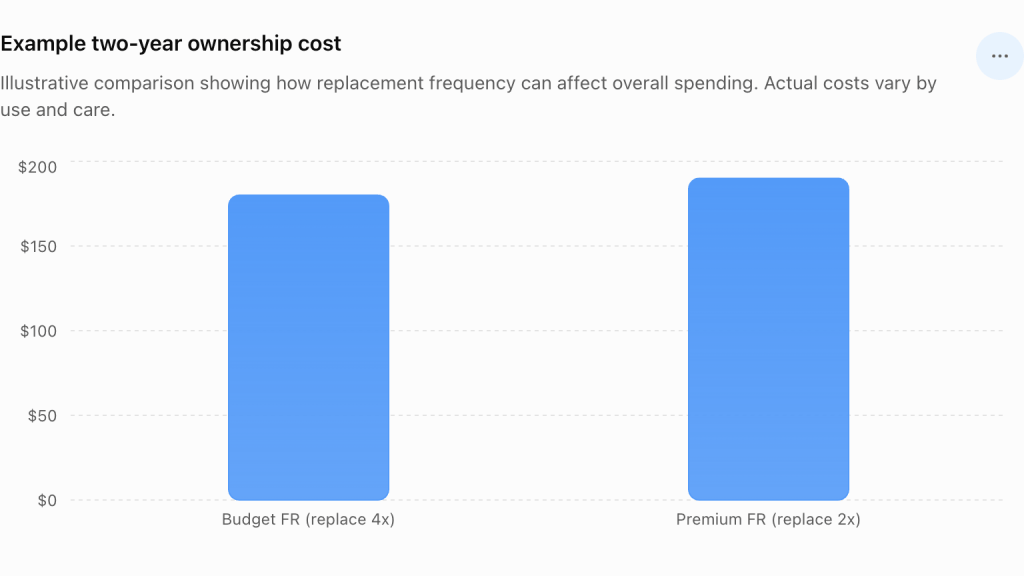
Imagine standing in front of two FR shirts. One costs forty-five dollars. The other costs ninety-five dollars. At first glance, the cheaper option seems like the obvious winner because you leave the store with fifty dollars still in your pocket.
Now imagine what happens over the next two years.
The inexpensive shirt begins to lose its shape after repeated washing. The pearl snaps no longer close as securely. The shoulders stretch, the cuffs wear thin, and eventually the garment needs replacing. The second shirt, while more expensive upfront, continues performing through the same demanding conditions with fewer signs of wear.
Suddenly the original purchase price becomes only one small part of the story.
The real question isn’t how much a shirt costs today. It’s how much value it provides over the entire period you own it.
Businesses understand this concept well. When purchasing equipment, they rarely choose the lowest bid without considering maintenance, reliability, and expected service life. Industrial workers should evaluate workwear the same way. Clothing is equipment. It protects the body, supports movement, and contributes to daily performance. Judging it solely by price ignores everything that happens after the cash register.
Comfort Has a Direct Impact on Job Performance
Many workers underestimate the importance of comfort because it doesn’t sound as important as safety or durability. In reality, comfort affects nearly every aspect of a workday.
Think about a twelve-hour turnaround shift during the middle of July. Temperatures climb into the nineties, humidity hangs in the air, and every task requires climbing, lifting, crawling, or reaching overhead. If your shirt traps heat, restricts movement, or becomes heavy with sweat, you’ll notice it every minute of the day.
At first it’s just a slight annoyance. Then you begin adjusting your sleeves. You tug at the collar. The fabric sticks to your skin. By the afternoon you’re spending more energy dealing with your clothing than you realize.
Those small distractions accumulate over hundreds of shifts every year.
Higher-quality FR garments often focus on features that improve long-term comfort. Softer fabrics, better ventilation, ergonomic construction, and thoughtful pattern design help workers stay cooler and move more naturally. While these details may not seem dramatic when trying on a shirt in a store, they become increasingly valuable after thousands of hours on the job.
Comfort isn’t about luxury. It’s about reducing unnecessary fatigue and allowing workers to focus their attention where it belongs—on performing quality work safely.
Durability Is an Investment
Experienced craftsmen often judge clothing the same way they judge tools. They want equipment that continues performing long after the excitement of buying something new has faded.
Durability isn’t simply about making a shirt last longer. It’s about maintaining performance over time.
A durable FR shirt keeps its shape. It continues fitting properly after repeated laundering. Its seams remain secure, its snaps continue functioning, and its fabric maintains the integrity expected from industrial workwear.
That reliability creates confidence. Workers stop worrying about whether their clothing will hold up and instead focus entirely on the task at hand.
Cheap clothing often asks for the opposite. Instead of becoming more dependable with time, it gradually demands more attention. Loose stitching requires repair. Missing buttons need replacement. Faded appearance encourages early retirement of otherwise usable garments. Before long, the worker finds themselves shopping for another replacement.
Every replacement costs money, but it also costs time. Finding the right size, placing an order, waiting for shipping, or making a trip to a retailer all represent hidden expenses that rarely get included in discussions about workwear pricing.
The most economical garment isn’t necessarily the one with the lowest purchase price. It’s often the one that quietly performs day after day without demanding anything in return.
When Heat Becomes the Real Enemy
Every experienced refinery worker understands that heat is more than an inconvenience—it is one of the biggest challenges on the job. During summer turnarounds, shutdowns, and maintenance outages, workers routinely spend ten to twelve hours wearing flame-resistant clothing, hard hats, gloves, safety glasses, and additional personal protective equipment. Add radiant heat from process equipment, reflective heat from steel structures, and physically demanding labor, and even the fittest workers begin to feel the effects.
This is where the quality of an FR shirt becomes immediately noticeable.
A poorly designed shirt can trap heat, hold moisture, and feel increasingly heavy throughout the day. Workers may find themselves constantly adjusting their clothing, searching for shade whenever possible, or feeling exhausted long before the shift ends. While no garment can eliminate heat stress, better-designed flame-resistant apparel often improves airflow, manages moisture more effectively, and feels lighter during prolonged use. Those differences may seem subtle at first, but over weeks and months they contribute to a more comfortable work experience.
Comfort should never be mistaken for luxury. In industrial environments, comfort helps workers remain focused, reduces unnecessary distractions, and supports consistent performance throughout long shifts.
Mobility Matters More Than Most People Realize
Industrial work is rarely performed while standing still.
Pipefitters climb ladders carrying tools and fittings. Welders spend hours reaching overhead. Ironworkers move across structural steel. Millwrights crawl into confined spaces around rotating equipment. Electricians work in awkward positions inside cable trays and switchgear rooms.
Every movement tests the design of a garment.
A shirt that pulls across the shoulders or restricts movement becomes another obstacle the worker must overcome. That resistance may seem minor at first, but repeated thousands of times throughout the year it contributes to unnecessary fatigue.
Higher-quality FR clothing often incorporates construction techniques that improve mobility without sacrificing durability. Better pattern design, articulated sleeves, reinforced shoulders, and strategically placed seams allow garments to move naturally with the worker instead of against them.
The result isn’t simply greater comfort—it is greater efficiency.
Workers spend less time adjusting their clothing and more time concentrating on the work in front of them.
Professional Appearance Still Matters
Some people argue that appearance is irrelevant because industrial clothing eventually gets dirty anyway.
Anyone who has spent time around experienced craftsmen knows that isn’t true.
Professional workers take pride in their appearance, not because they expect their clothing to remain spotless, but because it reflects their attitude toward the trade.
A clean, well-fitting FR shirt communicates professionalism. It shows respect for the job, the customer, the employer, and the coworkers standing beside you. Whether meeting an inspector, a superintendent, or a client walking through a project site, appearance contributes to first impressions.
Lower-quality garments often begin looking worn long before they are no longer usable. Colors fade, collars lose their structure, seams become distorted, and fabric begins to look tired after repeated washing.
Quality garments typically retain their appearance longer, allowing workers to look professional even after months of regular use.
Experienced Tradesmen Buy Differently
One of the easiest ways to learn about workwear is to observe the workers who have spent decades in the industry.
Many veteran welders, pipefitters, boilermakers, electricians, and refinery operators have learned the same lesson through experience.
They stopped buying clothing based solely on price.
Instead, they evaluate workwear according to the value it provides throughout its lifespan.
Questions become more important than the price tag itself.
Will this shirt still fit properly after dozens of washes?
Will the stitching survive another turnaround season?
Will I still be comfortable wearing it during twelve-hour shifts?
Can I depend on it every morning without wondering whether it will make it through another week?
Those questions reflect experience.
Workers who wear FR clothing every day understand that dependable workwear becomes part of their equipment just as much as their hard hat or welding hood.
Buying Quality Is an Investment in Yourself
Every skilled trade requires investment.
Mechanics purchase professional tools.
Electricians invest in dependable testing equipment.
Welders buy quality helmets and gloves.
Pipefitters purchase levels, measuring tools, and layout equipment they can trust.
Few professionals regret investing in equipment that makes their work easier, safer, and more efficient.
Flame-resistant clothing deserves the same consideration.
Unlike many tools that remain inside a toolbox until needed, workwear accompanies the worker throughout every shift. It experiences every climb, every weld, every confined-space entry, every inspection, and every challenging weather condition.
Choosing better workwear is not about purchasing expensive clothing for the sake of appearance.
It is about investing in equipment that supports your performance every single day.
Looking Beyond the Next Paycheck
It is understandable why many workers choose inexpensive clothing.
Everyone has bills to pay, families to support, and budgets to manage.
Saving money today can feel like the responsible decision.
However, the most successful long-term purchasing decisions often come from considering ownership costs rather than purchase price.
Replacing garments repeatedly, dealing with broken hardware, and accepting declining comfort can quietly cost far more than expected.
Quality workwear often reduces those frustrations.
It lasts longer.
It fits better.
It feels better.
It requires fewer replacements.
It supports workers through demanding conditions without constantly reminding them that corners were cut during manufacturing.
Those benefits become more valuable with every passing shift.
The True Cost Cannot Always Be Measured
Not every hidden cost appears on a receipt.
Some costs appear as frustration.
Others appear as lost confidence.
Some appear as unnecessary fatigue after another twelve-hour shift wearing uncomfortable clothing.
Others appear in the extra time spent shopping for replacements or dealing with garments that no longer perform as expected.
These costs are difficult to calculate, but every experienced tradesman recognizes them.
Quality workwear removes many of those distractions.
Instead of thinking about your shirt, you think about the work.
That is exactly how good equipment should perform.
Final Thoughts
The hidden cost of cheap flame-resistant clothing rarely appears the day it is purchased. Instead, it reveals itself gradually through shortened lifespan, declining comfort, repeated replacement, and reduced confidence in the garment’s ability to withstand demanding industrial environments.
For workers in refineries, power plants, fabrication shops, manufacturing facilities, pipelines, and oilfields, workwear is much more than clothing. It is part of the equipment relied upon every day. It deserves the same careful consideration given to boots, hard hats, gloves, welding helmets, and hand tools.
Price will always matter.
Budgets are real.
Every worker wants to make smart financial decisions.
But the smartest purchase is not always the one with the lowest price tag.
The best investment is often the garment that continues delivering comfort, durability, mobility, and dependable performance long after cheaper alternatives have worn out.
Whether you are just beginning your career or have spent decades in the skilled trades, choosing quality flame-resistant clothing is ultimately an investment in your safety, your comfort, your professionalism, and your long-term success.
When viewed through that perspective, the true cost of cheap FR clothing becomes impossible to ignore.
Frequently Asked Questions
1. Is expensive FR clothing always worth it?
Not necessarily. The best value comes from garments that combine certified protection, durability, comfort, and long-term performance rather than simply carrying a higher price.
2. How long should an FR shirt last?
Service life depends on the work environment, laundering practices, and garment construction. Regular inspection is essential, and garments should be replaced when they become damaged or no longer provide the intended protection.
3. Why do inexpensive FR shirts wear out more quickly?
Some lower-cost garments may use lighter materials, simpler construction methods, or lower-grade hardware. Durability varies by manufacturer and usage.
4. Does comfort really affect productivity?
Comfort can reduce distractions and fatigue, allowing workers to remain focused throughout long shifts.
5. Should I buy multiple inexpensive shirts or fewer premium ones?
The answer depends on your budget and work environment, but considering total ownership costs—not just purchase price—can help you make a better long-term decision.
6. Does washing reduce flame resistance?
Always follow the manufacturer’s care instructions. Proper laundering helps maintain the garment’s condition and service life.
7. What should I inspect before buying an FR shirt?
Look for appropriate certifications, quality stitching, durable hardware, comfortable fit, breathable fabric, and overall workmanship.
8. Why is fit so important?
A properly fitting garment allows unrestricted movement while reducing snagging and improving overall comfort during physically demanding work.
9. Is premium FR clothing only about appearance?
No. Better garments often improve comfort, durability, mobility, and long-term value in addition to maintaining a more professional appearance.
10. What is the biggest hidden cost of cheap FR clothing?
Frequent replacement, reduced durability, declining comfort, lost productivity, and the cumulative expense of owning garments that fail sooner than expected.