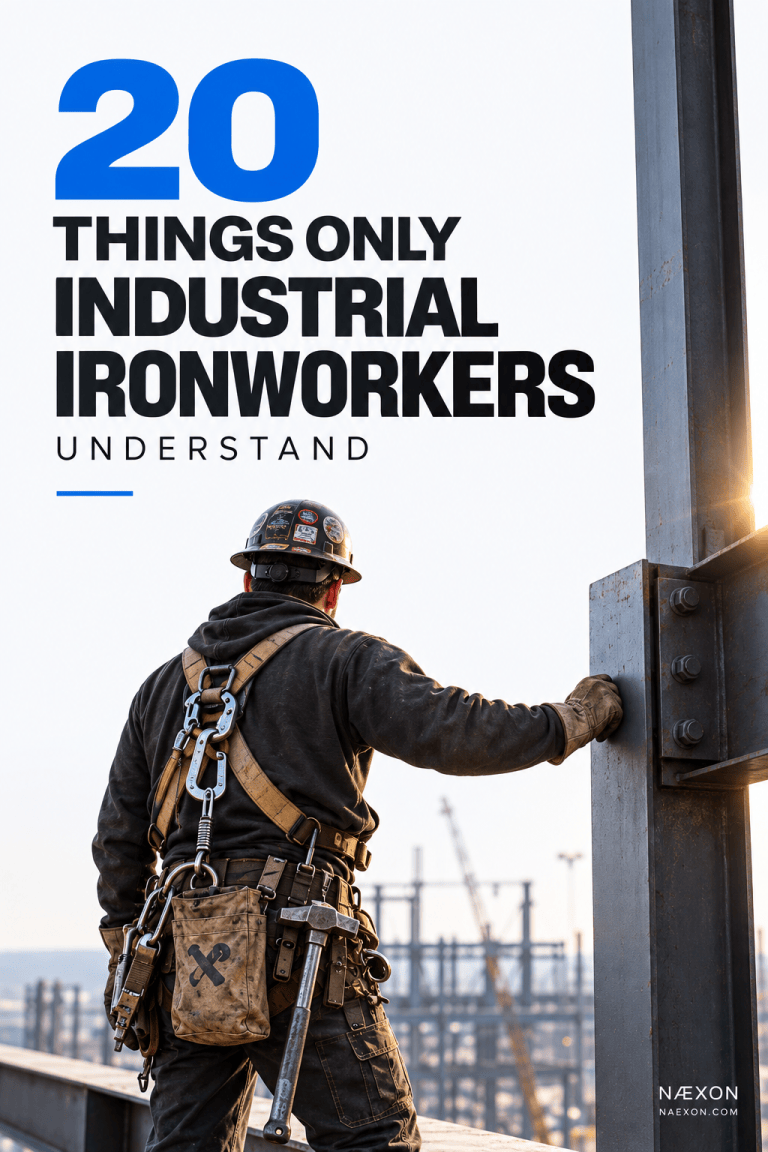
Pipe welders and structural welders are both highly skilled tradespeople, but they do not perform the same type of work.
The simplest difference is this:
Pipe welders specialize in welding piping systems.
Structural welders specialize in welding structural steel and supporting components.
Both work with heat, steel, welding machines, PPE, and demanding jobsite conditions. Both may work in refineries, power plants, fabrication shops, or major construction projects.
But the joints they weld, the positions they work in, the qualifications they may need, and the environments they work around can be very different.
For anyone considering a welding career—or simply trying to understand how industrial jobsites work—here is the real difference between a pipe welder and a structural welder.
What Is a Pipe Welder?
A pipe welder specializes in joining sections of pipe and piping components.
Those piping systems may carry:
Steam.
Water.
Natural gas.
Petroleum products.
Chemicals.
Compressed air.
Process fluids.
Other industrial materials.
Pipe welders are commonly found in industries such as oil and gas, refineries, chemical plants, power plants, pipelines, manufacturing, fabrication, and industrial construction.
The work can include welding:
Pipe to pipe.
Pipe to fittings.
Pipe to flanges.
Reducers.
Tees.
Elbows.
Branch connections.
Prefabricated pipe spools.
Field-installed piping.
Repair sections.
In industrial work, pipe welding can be critical because piping systems may operate under significant pressure, temperature, or chemical exposure.
The weld has to do more than look good.
It has to perform.
Why Pipe Welding Is So Challenging
Pipe welding can be especially difficult because the welder is working around a round surface.
On fixed pipe, the joint does not rotate to make the job easier.
The welder has to move around the circumference.
That can mean transitioning through different welding positions during a single weld.
The welder must maintain control of:
Arc length.
Travel speed.
Electrode or torch angle.
Heat.
Filler placement.
Weld puddle.
Body position.
Consistency.
The top of the pipe may feel completely different from the bottom.
A welder who looks perfect on flat plate may still need significant practice before becoming strong on fixed-position pipe.
What Is a Structural Welder?
A structural welder specializes in welding the steel components that make up buildings, industrial structures, bridges, platforms, supports, and other frameworks.
Structural welding may involve:
Beams.
Columns.
Plates.
Bracing.
Frames.
Supports.
Platforms.
Stairs.
Handrails.
Equipment supports.
Structural connections.
A structural welder may work in a fabrication shop or in the field.
Some structural welders spend their days welding large assemblies at ground level.
Others may work high above the ground on steel erection projects.
The environment can change dramatically depending on the project.
Pipe Welder vs Structural Welder: Main Difference
The biggest difference is what they are welding.
A pipe welder primarily works with cylindrical piping systems.
A structural welder primarily works with structural steel components.
That difference changes the nature of the job.
The pipe welder may be thinking:
How do I make a sound weld around this pipe joint?
The structural welder may be thinking:
How do I correctly weld this steel connection according to the drawing and procedure?
Both require skill.
The challenges are simply different.
Welding Positions
Welding position is one of the biggest differences between pipe and structural work.
Structural welders may work in flat, horizontal, vertical, and overhead positions.
Pipe welders can work in those positions too, but pipe geometry introduces positions that are especially associated with pipe welding.
Common pipe positions include:
1G
The pipe rotates while the welder stays in a relatively favorable position.
2G
The pipe is positioned vertically and remains fixed while the welder works around it.
5G
The pipe is horizontal and fixed, forcing the welder to move around the joint.
6G
The pipe is fixed at an angle, commonly around 45 degrees.
The 6G position is well known because the welder has to transition through multiple welding orientations while moving around the pipe.
Specific test and qualification requirements depend on the project, employer, procedure, and applicable welding code.
Pipe Welders Work Closely With Pipefitters
Pipe welding is closely connected with pipefitting.
Before the welder starts, the pipefitter may:
Read the drawing.
Measure the pipe.
Cut the material.
Prepare the bevel.
Position the fitting.
Align the joint.
Set the gap.
Check the fit-up.
Tack the joint.
Then the welder completes the permanent weld.
Good fit-up makes a major difference.
A skilled fitter can make the welder’s job much easier.
Poor alignment, bad gaps, or incorrect preparation can create problems before welding even begins.
That is why experienced fitter-welder teams can become extremely efficient.
Structural Welders Work Closely With Ironworkers and Fabricators
Structural welders often work alongside ironworkers, steel fabricators, riggers, crane operators, and structural crews.
A steel beam or column must often be positioned before the connection can be completed.
Structural welders may work on pieces that are:
Rigged into place.
Bolted temporarily.
Tacked.
Measured.
Aligned.
Then welded according to the required specifications.
The relationship is similar to pipe work.
The welder depends on proper preparation and positioning before making the final weld.
Materials Used
Both pipe and structural welders commonly work with steel, but the materials can differ.
Pipe welders may encounter:
Carbon steel.
Stainless steel.
Chrome-moly.
Nickel alloys.
Other specialty materials.
The material may be selected based on temperature, pressure, corrosion resistance, or process requirements.
Structural welders commonly work with structural steels used in buildings, bridges, frames, platforms, and heavy fabrication.
Neither specialty is limited to one type of metal.
But industrial pipe welding often exposes welders to a wide range of piping materials and specifications.
Common Welding Processes
Both pipe welders and structural welders may use multiple welding processes.
These can include:
SMAW
Shielded Metal Arc Welding, commonly called stick welding.
GTAW
Gas Tungsten Arc Welding, commonly called TIG welding.
GMAW
Gas Metal Arc Welding, commonly called MIG welding.
FCAW
Flux-Cored Arc Welding.
The exact process used depends on the project, material, joint, procedure, environment, and employer.
Pipe welders may commonly encounter TIG-and-stick combinations in certain industrial piping applications.
Structural welding may heavily use stick, flux-core, or wire processes depending on the project.
There is no single process that defines either specialty.
Work Environment
Pipe welders may work in:
Refineries.
Chemical plants.
Power plants.
Pipeline projects.
Industrial facilities.
Fabrication shops.
Shutdowns and turnarounds.
These environments can include tight pipe racks, scaffolding, manlifts, confined areas, existing equipment, and difficult access.
Structural welders may work in:
Steel fabrication shops.
Commercial construction.
Industrial construction.
Bridges.
High-rise projects.
Heavy fabrication.
Infrastructure projects.
Their work may involve large open structures, elevated steel, cranes, rigging, and exposure to weather.
Both can be physically demanding.
The environment is simply different.
Heights vs Tight Access
Structural welding is often associated with working at significant elevations.
That may include bridges, steel buildings, industrial frames, or structural platforms.
Pipe welders can also work at height, especially in refineries and industrial facilities.
But pipe welding often creates another challenge:
Access.
The joint may be behind equipment.
Between two other lines.
Near a wall.
Under a platform.
Above your head.
Or in a position where the welder can barely fit.
Passing a weld test in a comfortable booth is one thing.
Making the same quality weld in an ugly field position is another.
Which Is Harder?
There is no single answer.
Pipe welding is often considered technically difficult because the welder may need to maintain consistency while moving through multiple positions around a fixed joint.
Structural welding can be extremely demanding because of large welds, overhead work, production expectations, difficult access, and high-elevation field conditions.
At the highest level, both require years of practice.
A difficult pipe joint can challenge an excellent structural welder.
A difficult structural connection can challenge an excellent pipe welder.
Different work.
Different skills.
Same requirement:
Do it right.
Which Requires More Precision?
Both.
Pipe welds can be part of systems that carry high-pressure steam, fuel, chemicals, or other critical materials.
Structural welds may become part of components carrying significant loads.
Failure in either type of work can have serious consequences.
That is why welding procedures, inspections, qualification requirements, and quality standards matter.
Inspection
Depending on the project, welded joints may be examined through methods such as:
Visual inspection.
Radiographic testing.
Ultrasonic testing.
Magnetic particle testing.
Liquid penetrant testing.
The type and amount of inspection depend on the project, service, governing requirements, and specifications.
Pipe welders working on critical industrial systems may become especially familiar with nondestructive examination.
Structural welders can also work under strict inspection requirements.
Qualifications
Welding qualification is more complicated than simply being called a certified welder.
A worker may be qualified for one type of welding without automatically being qualified for another.
Qualification can depend on:
Process.
Position.
Material.
Thickness.
Pipe diameter.
Joint design.
Procedure.
Code.
Project requirements.
This is one reason job postings may ask for specific tests or welding experience.
Can a Structural Welder Become a Pipe Welder?
Yes.
Many welding fundamentals transfer.
A structural welder may already understand:
Arc control.
Travel speed.
Electrode angle.
Joint preparation.
Puddle control.
Welding positions.
Safety.
Blueprints.
Weld symbols.
Those skills create a strong foundation.
But pipe welding requires additional practice because of pipe geometry, fixed positions, and specialized fit-up.
A good structural welder can become a good pipe welder.
But it usually does not happen overnight.
Can a Pipe Welder Do Structural Welding?
Yes.
Many pipe welders can perform structural welding.
However, a pipe welder may still need specific qualifications or experience depending on the structural project.
Being excellent at pipe does not automatically make someone qualified for every structural application.
Each specialty deserves respect.
Which Makes More Money?
There is no universal winner.
Pay depends heavily on:
Location.
Industry.
Experience.
Qualifications.
Union agreements.
Employer.
Travel.
Per diem.
Overtime.
Shift.
Project duration.
Specialized materials.
Demand.
A traveling pipe welder working heavy overtime during a refinery turnaround may earn far more during that project than a structural welder working a regular 40-hour schedule.
A highly experienced structural welder on a major project can also earn excellent money.
The craft title alone does not determine earnings.
The opportunity does.
Who Should Become a Pipe Welder?
Pipe welding may appeal to someone who enjoys:
Precision.
Industrial work.
Piping systems.
Challenging positions.
Refineries.
Pipelines.
Shutdowns.
Travel.
Learning specialized processes.
Working closely with pipefitters.
Constantly improving technique.
Who Should Become a Structural Welder?
Structural welding may appeal to someone interested in:
Steel construction.
Buildings.
Bridges.
Heavy fabrication.
Ironwork.
Large steel assemblies.
Field welding.
Structural drawings.
Working outdoors.
Seeing a structure take shape.
The Best Welder Is the One Who Masters the Craft
There is always jobsite rivalry.
Pipe welders may say structural welding is easier.
Structural welders may say pipe welders spend too much time talking about 6G tests.
The truth is that both trades become extremely demanding at the professional level.
The weld doesn’t care about the argument.
Either the workmanship is there or it isn’t.
A great welder understands that learning never stops.
Materials change.
Processes change.
Projects change.
Every difficult joint teaches something.
The Næxon Perspective
Pipe welders and structural welders work in different worlds, but they share the same realities.
Heat.
Sparks.
Long shifts.
Dirty gloves.
Burned sleeves.
Uncomfortable positions.
Deadlines.
Inspections.
And the pressure to produce quality work every time.
One welder may spend the night welding process pipe during a refinery turnaround.
Another may be welding structural steel hundreds of feet away.
Different work.
Same pride.
At Næxon, we respect the people who build, repair, and maintain the industrial world—whether the weld is holding a piping system together or supporting the structure around it.
Different steel. Different job. Same standard.
Frequently Asked Questions
What is the main difference between a pipe welder and a structural welder?
A pipe welder primarily welds piping systems and components, while a structural welder primarily welds beams, columns, plates, supports, and other structural steel components.
Is pipe welding harder than structural welding?
Pipe welding can be especially difficult because the welder may need to move through multiple positions around a fixed pipe. Structural welding has its own challenges, including overhead work, large welds, high elevations, and demanding field conditions.
What is a 6G pipe welding position?
A 6G position involves fixed pipe placed at an angle, typically about 45 degrees, requiring the welder to work through changing positions around the joint.
Can structural welders become pipe welders?
Yes. Many welding fundamentals transfer, but pipe welding usually requires additional training and practice.
Can pipe welders do structural welding?
Many can, but specific structural jobs may require their own qualifications, procedures, and experience.
Do pipe welders make more money?
Sometimes, especially in specialized industrial work with overtime, travel, or per diem. However, earnings vary greatly by job and location.
Where do pipe welders work?
Common industries include refineries, pipelines, chemical plants, power plants, fabrication shops, industrial construction, and shutdown or turnaround work.
Where do structural welders work?
Structural welders commonly work in steel fabrication, buildings, bridges, industrial structures, infrastructure, and heavy construction.
What welding processes do pipe welders use?
Processes can include SMAW, GTAW, GMAW, FCAW, and others depending on the application.
What welding processes do structural welders use?
Structural welding may use SMAW, FCAW, GMAW, and other processes depending on project requirements.
Do pipe welders work with pipefitters?
Yes. Pipe welders and pipefitters commonly work closely together during fabrication and installation.
Which career is better?
That depends on your interests. Pipe welding may appeal more to workers interested in industrial piping and process facilities, while structural welding may appeal more to workers interested in steel structures, fabrication, bridges, and buildings.
Final Word
Pipe welding and structural welding come from the same basic craft.
But they solve different problems.
Pipe welders help build and maintain the systems that move materials through industrial facilities.
Structural welders help build the steel framework that supports those facilities and countless other structures.
Both take skill.
Both take discipline.
Both punish shortcuts.
And both can become serious careers for people willing to master the trade.
Pipe or structural—the weld still has to hold.
Disclaimer: Welding duties, qualifications, inspection requirements, procedures, trade jurisdiction, and terminology vary by project, employer, location, industry, union agreement, and applicable code.