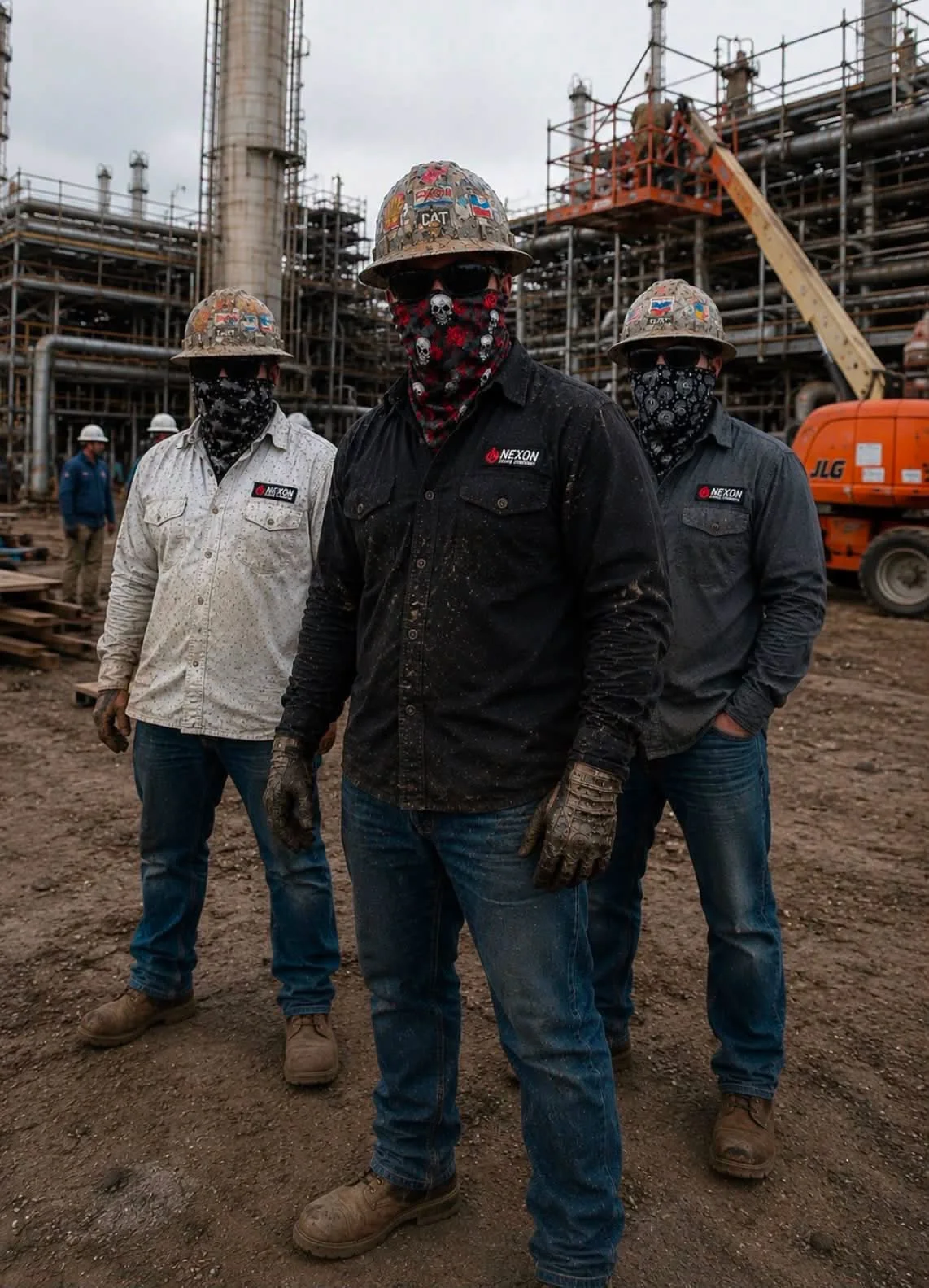
Walk through almost any refinery, fabrication shop, power plant, pipeline project, or industrial shutdown and you’ll eventually notice something: black work shirts are everywhere.
Workwear trends come and go. Colors become popular for a few years. New patterns show up. Somebody decides everyone needs to look tactical. Somebody else brings Western styling back.
Black just keeps working.
There’s something about a black FR shirt that fits industrial work perfectly. It’s simple, tough-looking, easy to pair with practically anything, and doesn’t scream for attention. A good black work shirt can look right underneath a welding hood at 7:00 in the morning and still look good when you’re grabbing dinner after the shift.
That’s probably why black FR shirts never really disappear.
Black Doesn’t Try Too Hard
There is a fine line between workwear that looks good and workwear that looks like somebody tried way too hard to make it look “blue collar.”
Experienced tradespeople can usually tell the difference.
Black avoids most of that.
It’s clean. It’s straightforward. It doesn’t need ten contrasting panels, giant graphics, fluorescent stitching, or a dozen pockets to look like workwear.
Put a well-fitting black pearl snap shirt with worn FR jeans, work boots, a welding cap, and safety glasses and you’re basically done.
The person wearing it can provide the dirt.
That’s part of what makes black such a dependable workwear color. It has enough attitude without needing decoration.
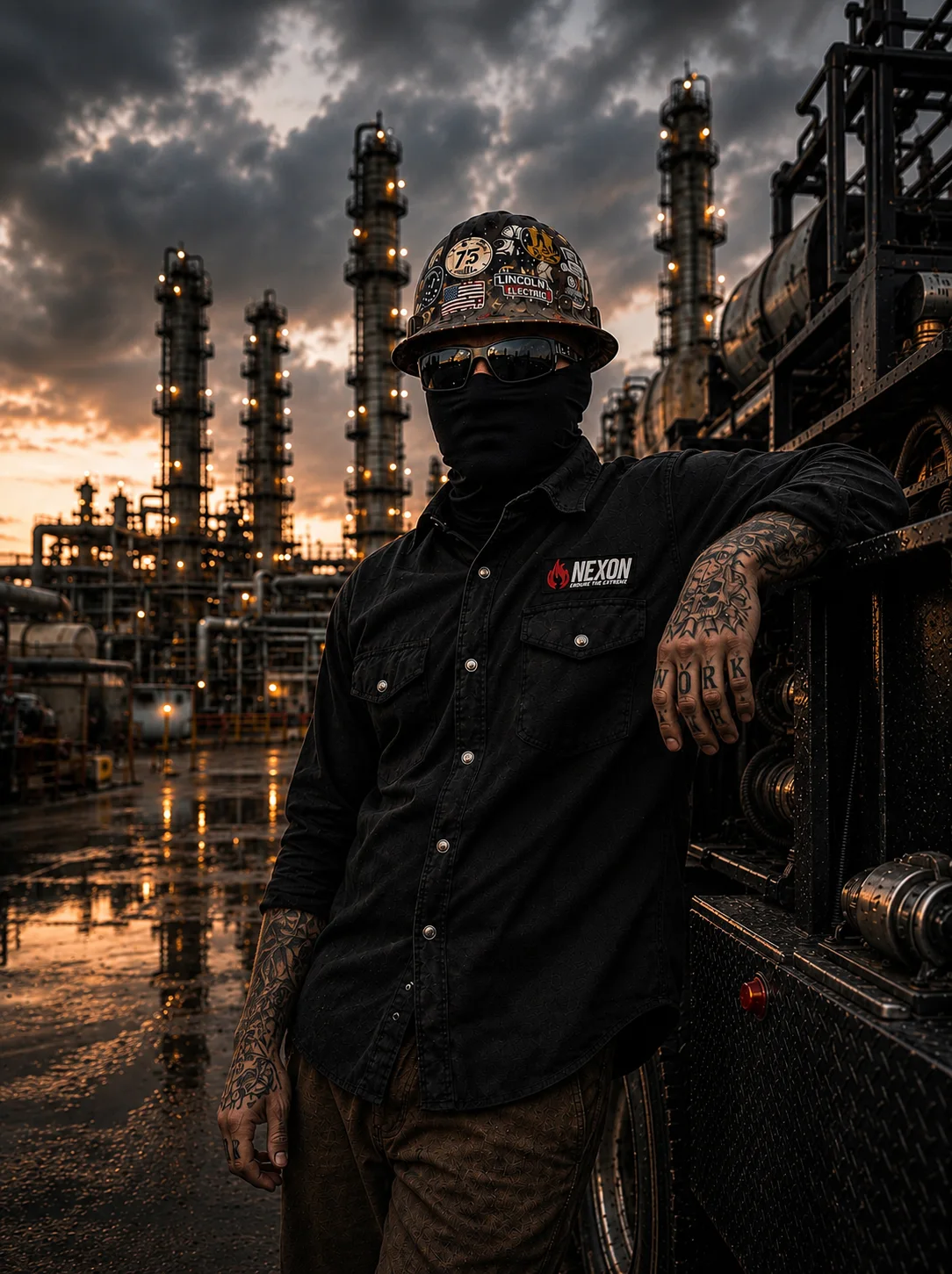
For workers who spend ten or twelve hours moving, climbing, welding, fitting, and working around equipment, however, appearance is only part of the equation. Proper workwear fit matters just as much, especially during long industrial shifts.
Black and Pearl Snaps Just Belong Together
Traditional button-down work shirts have been around forever.
Pearl snaps change the personality of the shirt.
They bring a little Western influence into industrial workwear without turning the shirt into something you’d only wear to a rodeo. On a black shirt, that contrast becomes even more noticeable.
The result sits somewhere between traditional workwear and something you’d actually choose to wear when you’re not working.
That’s an important distinction.
Workers don’t necessarily want clothing that makes them look like they’re wearing a company-issued uniform every second they’re off the clock.
A good work shirt should be able to leave the jobsite.
That’s one reason the Black Pearl remains one of the core styles in the current Næxon Pearl Snap collection. It’s built around the idea that industrial workwear doesn’t have to look boring just because it has a job to do.
Black Looks Better After It’s Been Worked In
There are clothes that look best when they’re brand new.
Workwear usually isn’t one of them.
A brand-new shirt tells one story.
A shirt that’s survived months of welding, fitting, shutdowns, fabrication work, climbing pipe racks, crawling underneath equipment, and being thrown into the washing machine at midnight tells another.
Black works particularly well with that progression.
A little fading doesn’t necessarily ruin the character of the shirt. Neither does normal jobsite wear.
In some ways, it makes the shirt look more like it belongs there.
Obviously, there’s an important difference between cosmetic wear and damage that affects the condition or protective performance of FR clothing. Industrial workers should inspect garments and replace them when damage, contamination, or wear makes them unsuitable for the required protection.
If you’re new to flame-resistant clothing, the Næxon guide to FR apparel for welders covers the fundamentals of FR garments, fit, care, and common mistakes.
It Hides the Reality of Industrial Work Better Than Most Colors
Let’s acknowledge the obvious.
Industrial jobs are dirty.
Grease doesn’t care how much your shirt cost.
Neither does carbon dust.
Neither does pipe dope, mill scale, soot, welding smoke, grinding dust, dirty scaffold, rusty structural steel, or whatever mystery substance was sitting on that handrail before you touched it.
A white work shirt can start the morning looking incredible and look like forensic evidence by lunch.
Black is considerably more forgiving.
That doesn’t mean a black shirt stays clean. It absolutely doesn’t.
It just doesn’t announce every little mark from thirty feet away.
For workers spending weeks on refinery shutdowns or maintenance outages, that’s a legitimate advantage. Our guide on what to wear during refinery turnarounds and maintenance outages goes deeper into choosing workwear for long shifts and demanding plant conditions.
Black Works With Almost Everything
Workwear shouldn’t require much thought at 4:30 in the morning.
Black shirt.
FR jeans.
Boots.
Done.
Tan pants? Works.
Denim? Works.
Gray? Works.
Brown boots? Works.
Black boots? Works.
Welding cap that looks like somebody designed it during a fever dream?
Somehow, black still works.
That’s another reason the color survives every workwear trend.
It’s difficult to screw up.
And considering most people heading into a refinery before sunrise aren’t standing in front of the mirror debating color theory, that’s probably a good thing.
Every Trade Can Wear It
Some workwear styles become strongly associated with one craft.
Black doesn’t really belong to anybody.
A welder can wear it.
A pipefitter can wear it.
A millwright can wear it.
An ironworker can wear it.
A boilermaker can wear it.
A refinery operator can wear it.
An industrial electrician can wear it.
A foreman can wear it while walking around asking everyone why something isn’t finished yet.
It crosses trades easily because it doesn’t depend on a particular jobsite identity.
That versatility matters in industrial work, where clothing needs can overlap even though the actual work being performed is completely different.
The Ultimate Guide to Industrial Workwear covers how workwear requirements and priorities change across different trades and industrial environments.
Black Has Always Had a Little Rebellion in It
There is also a cultural reason black works so well in the trades.
Black has never exactly been the color of corporate enthusiasm.
Johnny Cash wore it.
Motorcycle culture adopted it.
Metal bands practically claimed ownership of it.
Mechanics have worn it forever.
Welders discovered pretty quickly that sparks, smoke, and grinding dust don’t exactly improve pastel colors.
Black naturally carries a little independence with it.
And blue-collar culture has always had an independent streak.
These are industries where somebody can spend twenty years becoming exceptionally good at something and still communicate primarily through sarcasm.
If you’ve spent enough time around industrial crews, you’ll recognize plenty of that culture in The Language of the Blue Collar: 250 Funny Words, Phrases & Jobsite Lingo.
Black fits that world surprisingly well.
A Black Shirt Can Look Professional Without Looking Corporate
This might be black’s biggest advantage.
It can look clean without looking formal.
A quality black work shirt tucked in with clean boots can look professional enough for a foreman, supervisor, inspector, or customer-facing situation.
Untuck the same shirt, throw on your welding hood, and it immediately looks at home in the fab shop.
Very few colors make that transition as naturally.
That’s valuable because industrial workers don’t always stay in one environment.
Someone might attend a morning safety meeting, spend six hours in the field, walk into the office to review drawings, then stop somewhere after work without ever changing clothes.
Workwear that can handle all of those environments has an advantage.
The Best Black FR Shirt Still Has to Be a Good FR Shirt
Color can make a shirt look good.
It can’t make a bad shirt good.
A black FR shirt still needs to perform as workwear.
That means paying attention to the things that actually matter during a long shift: construction, fit, mobility, stitching, closures, pockets, fabric, durability, and the protective requirements applicable to the job.
That’s why buying industrial clothing based purely on appearance misses the point.
The shirt has to work first.
Then it can look good.
For a broader look at what separates industrial clothing from ordinary work clothes, read the Næxon Ultimate Guide to Industrial Workwear.
And Yes, Black Gets Hot
We have to address it.
Wear black outside in direct summer sunlight and you’re probably not going to convince anyone that you’ve discovered a revolutionary cooling technology.
Dark surfaces generally absorb more incoming solar radiation than lighter ones.
But industrial clothing selection involves more than color alone. Fabric weight, construction, breathability, fit, humidity, airflow, layering, workload, sun exposure, and required PPE can all affect how comfortable someone feels.
So yes, that black FR shirt may not be your first choice for standing in direct Texas sunlight all afternoon.
Then again, anybody who has worked a Gulf Coast turnaround knows there comes a point in August when everything feels hot anyway.
Choose clothing appropriate for the conditions and, more importantly, for the hazards and PPE requirements of the job.
Why Næxon Keeps Black in the Lineup
There’s a reason Black Pearl remains part of Næxon’s current Pearl Snap lineup.
Black isn’t a seasonal workwear experiment.
It’s one of those colors that simply belongs in industrial clothing.
It looks tough without pretending to be tough.
It pairs with practically everything.
It handles the visual abuse of industrial work better than many lighter colors.
And when the shift ends, it still looks like something you’d actually want to wear.
You can explore the current Næxon Pearl Snap FR shirt collection along with welding caps, crew shirts, safety sunglasses, PPE, welding gear, and other industrial products.
The Black FR Shirt Isn’t Going Anywhere
Twenty years from now, workwear will probably have better fabrics, better construction, better moisture management, and features we haven’t thought of yet.
There will be new colors.
New patterns.
New cuts.
New brands will decide they’ve reinvented the work shirt.
And somewhere inside a refinery, a welder will still be wearing a black shirt covered in grinding dust.
Because some things don’t need reinventing.
Black works.
It always has.
And on an industrial jobsite, that’s about the highest compliment you can give anything.