The best compliment you can give a pair of safety glasses might be that you stopped thinking about them.
They aren’t sliding down your nose every five minutes. They aren’t digging into the side of your head. You aren’t constantly taking them off, wiping them down, adjusting them, and putting them back on.
You put them on at the beginning of the shift and go to work.
For someone who wears eye protection for 10 or 12 hours at a time, that matters.
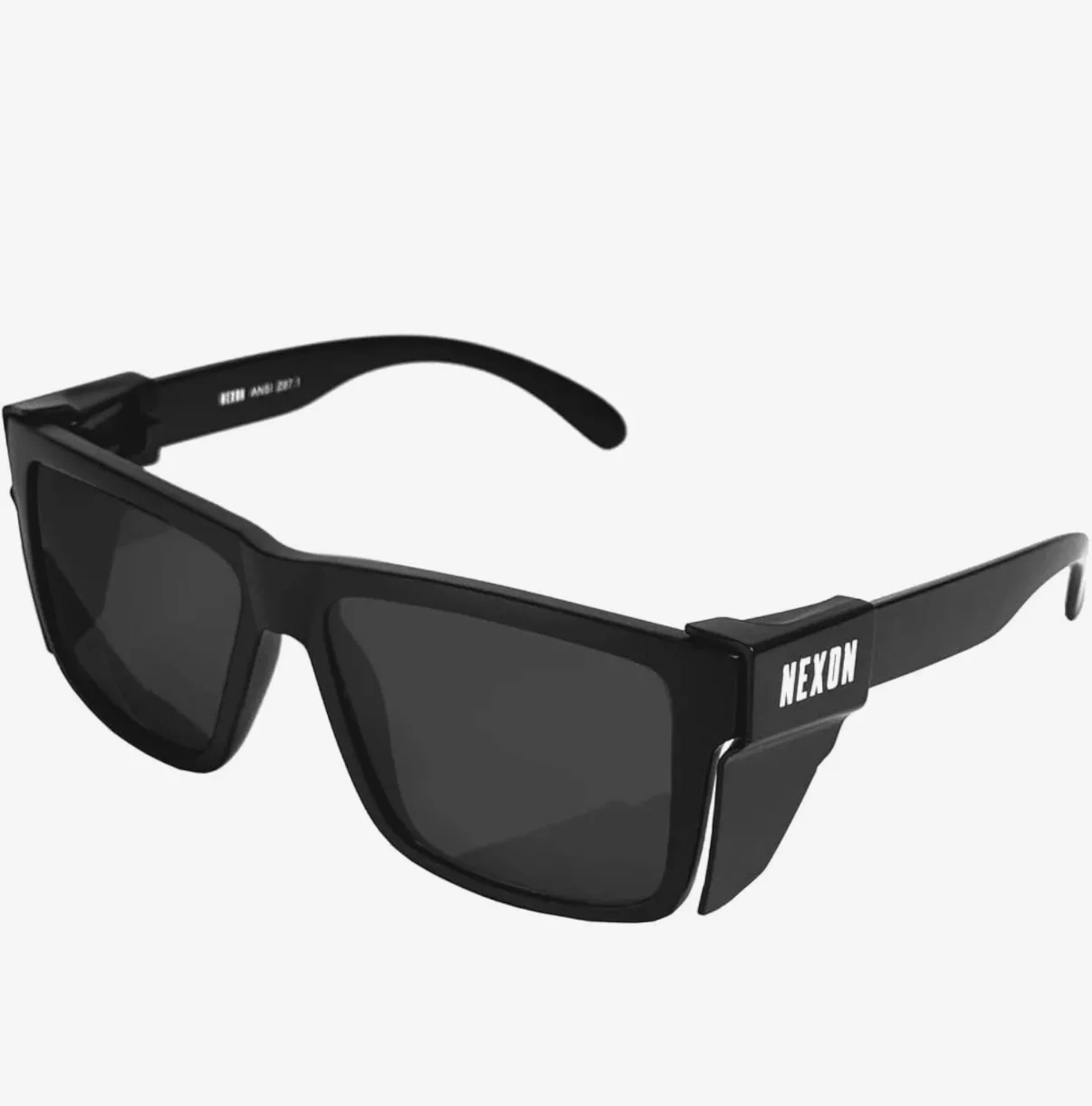
It’s also one of the ideas behind the Næxon Badger Z87 Polarized Safety Sunglasses: safety eyewear shouldn’t constantly remind you that you’re wearing safety eyewear.
Twelve Hours Changes Everything
Almost any pair of glasses can feel comfortable for five minutes.
The real test starts several hours into a shift.
Industrial workers don’t wear PPE for a quick trip outside. A refinery turnaround, power plant outage, pipeline project, or industrial construction job can mean 10-hour shifts, 12-hour shifts, six or seven days a week.
During those hours, you’re constantly moving.
You’re climbing stairs.
Walking pipe racks.
Looking overhead.
Bending down.
Reading drawings.
Checking measurements.
Moving between sunlight and shade.
Working around equipment.
Wearing a hard hat and sometimes additional PPE at the same time.
Something that feels insignificant at 7:00 in the morning can become incredibly irritating by 4:00 in the afternoon.
That’s why comfort isn’t just a nice feature in industrial eyewear.
It matters every single day.
The Problem With Disposable Safety Glasses
There will always be a place for inexpensive safety glasses.
Companies need eyewear they can keep available for employees, contractors, visitors, and replacements. Workers also need backups.
But there’s a difference between glasses you can wear and glasses you actually want to wear.
Most industrial workers have experienced the disposable cycle.
Grab a pair.
Wear them for a few days.
Scratch the lenses.
Throw them on the dashboard.
Lose them somewhere in the truck.
Grab another pair.
Repeat.
When eyewear feels completely disposable, workers tend to treat it that way.
Næxon wanted to approach the problem differently.
What if your safety glasses felt more like a personal piece of gear?
Something you intentionally keep.
Something you reach for every morning.
Something you don’t immediately replace just because another free pair is sitting in the tool room.
That’s where the Badger fits.
Safety Glasses Should Fit Into Your Gear
Experienced tradespeople are extremely particular about certain equipment.
A pipefitter might use the same torpedo level for years.
A welder may refuse to give up a favorite hood.
A millwright knows exactly which tools belong in which drawer.
Workers break in their boots, find the welding-cap size they like, choose gloves based on the work they’re doing, and modify tools to make them perform better.
Why should eyewear be treated differently?
If something is going to sit on your face for most of your waking hours, it should feel like your gear, not something temporarily borrowed from the safety department.
What Z87 Means
Z87 is one of the most familiar markings in industrial PPE.
It refers to the ANSI/ISEA Z87.1 standard for occupational and educational eye and face protection.
But it’s important to understand that “Z87” isn’t shorthand for “safe for absolutely everything.”
Specific markings and workplace hazards matter.
Some operations require additional protection, including goggles, face shields, welding helmets, specialty lenses, or other task-specific equipment.
Workers should always follow their employer’s PPE requirements and the hazard assessment for the work being performed.
The Næxon Badger Z87 Safety Sunglasses are designed as occupational safety eyewear while maintaining the appearance and functionality workers expect from everyday sunglasses.
Side Protection Matters on Industrial Sites
The hazard isn’t always directly in front of you.
Anyone who has worked industrial construction understands how much activity can be happening simultaneously.
A grinder might be running nearby.
Someone may be drilling overhead.
A crew could be cutting material.
Wind can move dust and debris across an open structure.
Work may be happening on multiple elevations.
That makes protection around the sides of the eyes an important consideration.
The Badger incorporates side shields into the sunglass-inspired design, providing side protection without giving the glasses the oversized appearance commonly associated with traditional industrial eyewear.
The idea is simple.
Keep the jobsite functionality.
Lose as much of the “generic safety glasses” look as possible.
Why Næxon Chose Polarized Lenses
Industrial workers spend a surprising amount of time fighting sunlight.
It’s not only direct sunlight that’s the problem.
It’s reflection.
Sunlight bouncing off stainless steel piping can be brutal.
So can glare from equipment, vehicles, sheet metal, concrete, water, painted surfaces, and metal roofs.
On large industrial projects, workers can spend an entire shift surrounded by reflective surfaces.
Polarized lenses are designed to reduce certain reflected glare.
That’s why polarization makes sense for safety sunglasses intended for outdoor industrial workers.
The Badger isn’t designed only for the moment you’re physically performing a task.
It’s designed around the entire workday.
The Drive to Work Matters Too
Think about a normal day on the road.
You leave the hotel early.
The sun comes up while you’re driving.
You arrive at the plant.
You put on your hard hat.
You walk through the gate.
You spend the day outside.
The shift ends.
You walk back across the parking lot.
Then you drive to the hotel, restaurant, grocery store, or wherever you’re going next.
Traditional safety glasses often create a two-pair routine.
Regular sunglasses for driving.
Safety glasses for work.
Regular sunglasses again when you leave.
There’s nothing wrong with that.
But why carry two pairs if one appropriate pair can serve both purposes?
That’s one of the biggest advantages of designing safety glasses that actually look like sunglasses.
Built for More Than One Trade
The Badger isn’t designed around a single craft.
Safety eyewear crosses trade boundaries.
A pipefitter needs it.
A welder needs it.
A millwright needs it.
So does an ironworker, boilermaker, electrician, fabricator, operator, mechanic, laborer, foreman, inspector, and supervisor.
Different crafts face different hazards, and certain tasks require additional eye or face protection.
But basic occupational eyewear is one of the few pieces of PPE nearly everyone on an industrial site has in common.
That’s why Næxon designed the Badger around the industrial worker, not one particular job title.
Comfort Can Affect How Gear Gets Used
There’s a practical reason comfort matters beyond simply feeling good.
Workers are more likely to consistently use equipment that doesn’t interfere with their work.
If glasses constantly slide, pinch, obstruct vision, or become irritating, the worker notices them all day.
Good PPE should do the opposite.
It should become part of the routine.
Hard hat on.
Glasses on.
Gloves ready.
Go to work.
You shouldn’t need to think about your safety glasses every ten minutes.
Safety Doesn’t Have to Look Generic
Industrial workwear has changed dramatically.
FR shirts have evolved from basic uniforms into clothing workers intentionally choose.
Welding caps have become personal.
Hard hats tell stories through stickers collected across years of projects.
Workers customize welding hoods, tool boxes, trucks, bags, and nearly everything else they use.
Safety eyewear doesn’t have to be excluded from that evolution.
Function comes first.
Protection comes first.
But once those requirements are addressed, there’s nothing wrong with wanting your equipment to look good too.
The Næxon Badger was built around that philosophy.
When You Stop Thinking About Them, They’re Doing Their Job
A good pair of work boots eventually feels like part of your feet.
A good welding hood becomes an extension of the welder using it.
A good level becomes something a fitter reaches for without looking.
Safety glasses should work the same way.
Put them on.
Do your job.
Forget about them.
That’s what Næxon wanted from the Badger Z87 Polarized Safety Sunglasses.
They’re not supposed to become the most noticeable piece of equipment you’re wearing.
They’re supposed to become one of the pieces you automatically grab before leaving the truck.
Because after enough 10-hour and 12-hour shifts, you realize something:
The best safety glasses aren’t the ones you think about all day.
They’re the ones you forget you’re wearing.