Walk through a refinery gate and you’ll see pipefitters, welders, operators, electricians, boilermakers, millwrights, scaffold builders, instrument technicians, supervisors, and dozens of other workers wearing flame-resistant clothing.
Drive to a different industrial project and some of those exact same trades may be wearing ordinary work clothes.
So who actually needs to wear FR clothing?
The answer isn’t determined by whether someone is a welder, pipefitter, electrician, or refinery worker.
FR clothing is selected because of the hazard—not simply because of the worker’s trade.
When a workplace hazard assessment identifies potential exposure to hazards such as flash fire or electric arc flash, appropriate protective clothing may be required as part of the employer’s PPE program. The exact clothing required depends on the hazard, applicable standards and regulations, employer requirements, facility rules, and the work being performed.
That’s why two workers with the exact same job title can have completely different FR requirements.
What Does FR Clothing Actually Protect Against?
FR stands for flame resistant.
Flame-resistant clothing is designed to resist ignition and flame propagation and to self-extinguish after the ignition source is removed rather than continuing to burn against the body like ordinary combustible clothing can.
That doesn’t make someone fireproof.
Heat can still transfer through an FR garment, and serious burns are still possible during a thermal event. FR clothing is intended to reduce injury associated with particular hazards, not create an invisible shield around the worker.
If you’re new to protective workwear, Næxon’s What Does FR Mean on Clothing? The Complete Guide to Flame-Resistant Workwear explains the fundamentals before getting into specific industries and occupations.
Why Do Refinery Workers Wear FR Clothing?
Refineries are one of the environments most closely associated with FR workwear.
The reason isn’t the refinery itself.
It’s what the facility processes.
Refineries contain systems handling flammable and combustible hydrocarbons. Pipes, pumps, compressors, valves, vessels, exchangers, columns, tanks, and other equipment can contain process materials capable of creating serious hazards if released and ignited.
Facilities use multiple layers of protection to prevent those incidents: process controls, detection systems, isolation, permitting, procedures, training, engineering controls, and safe work practices.
Protective clothing can provide another layer when workers may be exposed to a flash-fire hazard.
This is where NFPA 2112 frequently enters the conversation.
Næxon’s What Is NFPA 2112? A Tradesman’s Guide to the FR Standard explains how the standard relates to flame-resistant clothing intended to protect industrial personnel against short-duration thermal exposures from fire.
Do Pipefitters Need FR Clothing?
Sometimes.
Pipefitters frequently work in environments where FR clothing is required, particularly refineries, petrochemical facilities, chemical plants, oil and gas operations, and certain power-generation or industrial facilities.
But being a pipefitter doesn’t automatically create the requirement.
Consider two pipefitters.
One is replacing process piping inside an operating refinery.
Another is installing chilled-water piping in a commercial building.
They’re both pipefitters.
They’re not necessarily facing the same hazards.
The first may work under a facility-wide FR requirement because of potential flash-fire exposure. The second may have completely different PPE requirements.
The trade doesn’t determine the hazard.
The work environment does.
Do Welders Need FR Clothing?
Welders obviously work around heat, sparks, spatter, and molten metal.
However, the phrase “welding clothing” and the term “FR clothing” shouldn’t automatically be treated as interchangeable.
Welding PPE needs to be appropriate for welding hazards, while additional FR requirements may apply depending on the facility and surrounding hazards.
A welder performing fabrication in a shop can face different hazards from a welder performing hot work inside an operating petrochemical facility.
Both are welding.
The surrounding risk isn’t identical.
That’s why welding PPE should be selected for the actual task and environment rather than assuming one shirt covers every possible hazard.
Næxon’s MIG vs. TIG vs. Stick Welding: What’s the Difference and When Is Each Used? provides a useful foundation for understanding how dramatically welding processes and working conditions can vary.
Do Electricians Need FR Clothing?
Electrical work introduces another important category of thermal hazard: electric arc flash.
This is where workers need to understand the difference between FR and AR.
AR means arc rated.
Arc-rated clothing is flame resistant, but not every flame-resistant garment is necessarily arc rated.
An electrician performing work with an arc-flash hazard may therefore require protective clothing carrying an appropriate arc rating rather than simply any shirt marketed as FR.
This distinction is covered in detail in Næxon’s AR vs. FR Clothing: They Are Not the Same Thing.
If you’ve seen ratings expressed in cal/cm² and wondered what they mean, continue into Næxon’s What Is an ATPV Rating? Understanding cal/cm² Without the Engineering Talk.
For electrical workers especially, knowing those differences matters.
Do Instrument Technicians Wear FR Clothing?
Instrument technicians frequently work inside the same industrial facilities as electricians, pipefitters, and operators.
They may troubleshoot transmitters, control valves, analyzers, switches, sensors, and other instrumentation installed throughout process units.
Whether FR or arc-rated clothing is required depends on the hazards and work being performed.
An instrument technician entering an operating refinery may be subject to the facility’s general FR requirements. Specific electrical tasks could introduce additional requirements.
Again, the letters on the worker’s job title aren’t what matter.
The exposure does.
Do Boilermakers Need FR Clothing?
Boilermakers work around some of the toughest conditions in industrial construction and maintenance.
They may work around boilers, pressure vessels, tanks, furnaces, structural components, welding operations, cutting, grinding, and confined spaces.
Depending on the facility and task, FR clothing may be required.
A boilermaker working a refinery turnaround may operate under different clothing requirements from someone fabricating equipment in a controlled shop environment.
This pattern repeats across almost every industrial trade.
Same trade. Different workplace. Different hazards.
Do Millwrights Need FR Clothing?
Millwrights work around machinery, pumps, turbines, compressors, conveyors, rotating equipment, and countless other industrial systems.
In an operating refinery or petrochemical facility, they may be required to wear FR clothing because of facility hazards.
On another construction project, the requirements may differ.
Millwright work also introduces another important consideration: contamination.
Grease, lubricants, hydraulic fluids, and other substances can end up on work clothing. Some can create additional concerns when they contaminate protective garments.
Næxon’s How to Wash FR Clothing Without Ruining Its Protection explains why industrial contamination needs to be taken seriously and why heavily contaminated workwear isn’t simply a laundry problem.
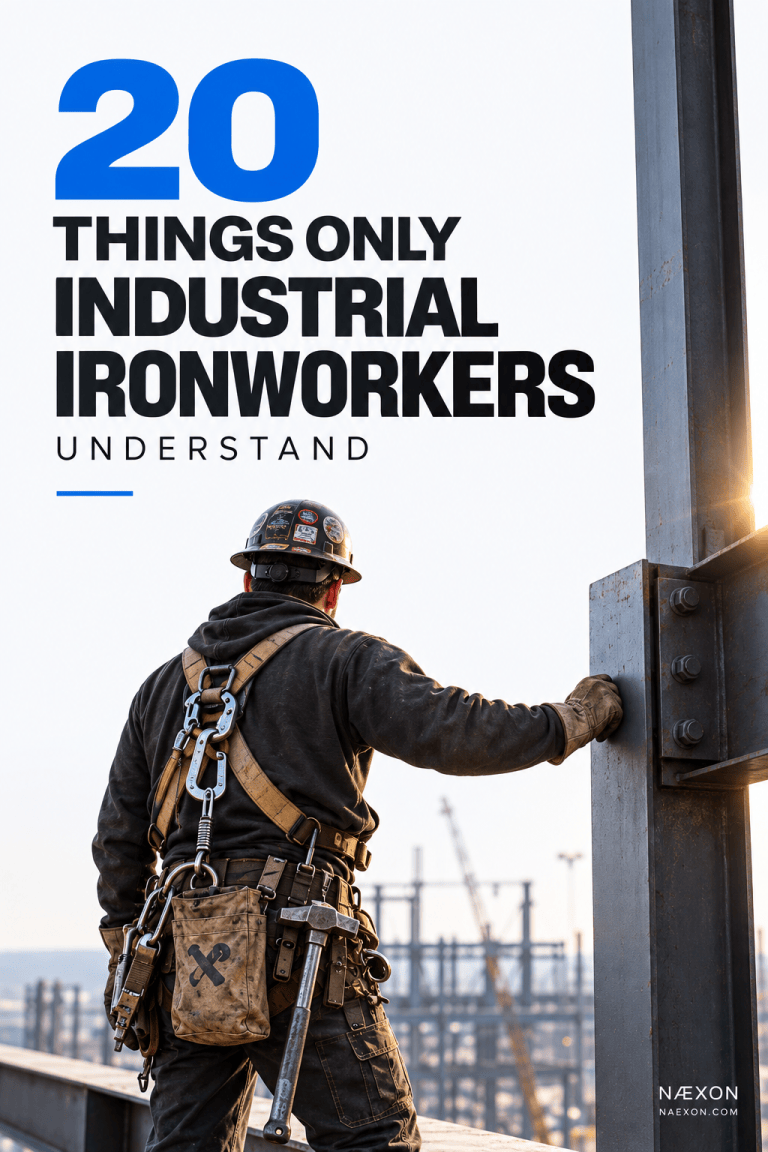
What About Ironworkers?
Ironworkers encounter welding, cutting, grinding, structural steel, rigging, elevated work, and numerous other hazards.
But again, FR requirements depend on the task and workplace.
An ironworker performing structural work on one construction project shouldn’t automatically assume the clothing requirements will be identical when working inside a refinery or power-generation facility.
Site orientation and PPE requirements matter.
Experienced travelers already know this.
You can leave one job Friday wearing one set of required PPE and arrive at another project Monday where the rules are different.
Do Scaffold Builders Wear FR Clothing?
In operating refineries and petrochemical facilities, scaffold builders often work directly inside process units.
They may build access around piping, vessels, exchangers, columns, and other operating equipment.
If the facility establishes an FR requirement for personnel entering those areas, scaffold builders may be subject to it just like the trades using the scaffold.
The fact that someone isn’t personally opening piping or performing hot work doesn’t necessarily remove exposure to the surrounding process hazard.
This is an important concept:
Your task isn’t the only thing that can determine your exposure.
Your environment matters too.
Do Crane Operators and Riggers Need FR Clothing?
Crane operators and riggers may also work inside facilities with established FR requirements.
A rigger guiding equipment into an operating process unit can be exposed to the same surrounding facility hazards as other personnel in that area.
Likewise, crane operators may need protective clothing depending on where and how they’re operating.
Again, facility rules and hazard assessments determine what is required.
The crane doesn’t decide.
The location and hazard do.
Do Heavy Equipment Operators Need FR Clothing?
Heavy equipment operators sometimes assume that being inside an enclosed cab means FR requirements don’t apply.
That isn’t a safe assumption.
Requirements can depend on the facility, work area, equipment, exposure, and whether the operator needs to exit the cab.
Operators working inside refineries, petrochemical facilities, oil and gas operations, and other industrial sites should follow the site’s PPE requirements rather than assuming the machine itself exempts them.
What About Oilfield Workers?
Oil and gas operations are another major environment where FR clothing is commonly encountered.
Workers may operate around hydrocarbons during drilling, production, completion, maintenance, processing, transportation, and related operations.
Potential flash-fire hazards can make flame-resistant protective clothing an important part of workplace PPE programs.
But “oilfield worker” covers an enormous range of jobs.
The hazard assessment still matters.
A worker’s exact task, location, equipment, and exposure determine the required protection.
Do Pipeline Workers Need FR Clothing?
Pipeline work can involve welding, cutting, maintenance, pressure systems, hydrocarbons, equipment, and numerous other hazards.
FR requirements can vary considerably depending on whether workers are constructing new pipeline, performing maintenance, working around active hydrocarbon systems, or operating within another facility.
That’s why traveling hands should never assume the rules from the previous job automatically carry over.
Read the site’s PPE requirements.
Ask when you’re unsure.
Do Power Plant Workers Wear FR?
Many do, particularly where electrical arc-flash hazards or other thermal hazards are present.
But “power plant” also covers a wide range of facilities and tasks.
An industrial electrician troubleshooting energized equipment can face different clothing requirements from a worker performing unrelated work elsewhere in the facility.
This is where the distinction between flame-resistant and arc-rated clothing becomes especially important.
Næxon’s AR vs. FR Clothing should be considered required reading for anyone trying to understand why an ordinary FR label doesn’t automatically tell you everything you need to know about electrical protection.
What About Data Center Construction?
Data centers have become a major source of work for electricians, pipefitters, welders, mechanical contractors, controls technicians, and other skilled trades.
But workers shouldn’t assume that industrial-looking construction automatically means NFPA 2112-type FR clothing is required.
The hazards of a data center project can differ significantly from those of an operating refinery.
Electrical work may introduce arc-flash considerations, while other construction activities may have completely different PPE requirements.
Again:
Identify the hazard first. Select the PPE second.
Not the other way around.
Does OSHA Require Everyone to Wear FR Clothing?
There isn’t a simple rule saying every industrial worker must wear the same FR uniform.
Employers are responsible for assessing workplace hazards and providing or requiring appropriate protective equipment where applicable.
Specific requirements can depend on the industry, task, hazard, applicable regulations, standards, and company policies.
That’s why workers shouldn’t reduce FR requirements to:
“OSHA says everybody has to wear it.”
The actual situation is more specific than that.
Employers need to identify the hazards and establish appropriate protective measures.
Who Decides What FR Clothing You Need?
In the workplace, protective-clothing requirements generally come from the employer’s hazard assessment, applicable safety regulations and standards, facility requirements, and the nature of the task.
Workers should know what their employer requires before beginning work.
That includes understanding whether the garment needs to meet a particular standard or carry a specific rating.
If the requirement says NFPA 2112, don’t assume any shirt advertised as FR automatically qualifies.
If the task requires an appropriate arc rating, don’t assume NFPA 2112 certification automatically satisfies that requirement.
Read the label.
Know the hazard.
Wear the correct garment.
FR Clothing Is Not Fireproof
This point deserves repeating.
An FR shirt does not make someone fireproof.
A severe thermal exposure can still cause serious or fatal injuries.
FR clothing is one protective layer within a much larger safety system.
Hazard elimination, engineering controls, process safety, isolation, gas monitoring, permitting, electrical safety practices, training, and proper work procedures come first.
PPE is not permission to take greater risks.
What You Wear Under FR Clothing Can Matter Too
The outer FR shirt isn’t necessarily the entire clothing system.
What you wear underneath can matter during a thermal exposure.
Certain materials can behave differently under intense heat, including some synthetic fabrics that may melt.
Workers should therefore follow their employer’s requirements and garment manufacturer’s guidance regarding base layers and undergarments.
Næxon’s What Should You Wear Under FR Clothing? A Practical Layering Guide covers this subject in detail.
How You Wear FR Clothing Matters
Buying the correct protective garment is only part of the equation.
It also needs to be worn correctly.
Leaving required closures open, rolling sleeves above exposed skin, altering the garment, or wearing it in a way that reduces required coverage can undermine the purpose of protective clothing.
Næxon’s Should You Tuck In an FR Shirt? What Industrial Workers Need to Know explains why coverage and garment configuration matter.
FR material can’t protect skin it isn’t covering.
Maintaining FR Clothing Matters Just as Much
Even correctly selected FR clothing doesn’t last forever.
Industrial work is hard on garments.
Welding burns, abrasion, torn seams, worn cuffs, damaged closures, grease, hydrocarbons, and repeated laundering eventually take their toll.
That’s why Næxon’s How Long Does FR Clothing Last? When to Repair It and When to Replace It explains how to evaluate garment condition instead of relying on an arbitrary age or number of washes.
And when it’s time for laundry, How to Wash FR Clothing Without Ruining Its Protection explains why care labels, contamination, detergents, drying, and regular inspection deserve attention.
The Job Title Isn’t the Answer
Ask:
“Do pipefitters need FR?”
Sometimes.
“Do welders need FR?”
Sometimes.
“Do electricians need FR?”
Sometimes—and they may specifically require arc-rated protection depending on the electrical hazard.
“Do refinery workers need FR?”
Often, depending on facility requirements and identified hazards.
That’s why the better question isn’t:
“Does my trade wear FR?”
It’s:
“What hazards am I exposed to, and what protective clothing is required for those hazards?”
That question works whether you’re a first-year apprentice or a twenty-year journeyman.
Know the Hazard Before You Choose the Shirt
FR clothing has become part of the visual identity of industrial work.
Pearl snaps. Welding caps. Work boots. Safety glasses. Hard hats. FR shirts faded from hundreds of shifts.
But protective workwear isn’t a costume.
The reason workers wear it is protection.
Before buying or wearing any FR garment for occupational protection, understand what the job requires. Check the garment’s labeling and certifications. Follow the manufacturer’s instructions. Follow your employer’s PPE program. Maintain the garment correctly and replace it when it is no longer serviceable.
Because ultimately, your trade doesn’t determine your PPE. Your hazard does.
Continue through the Næxon FR knowledge series with What Does FR Mean on Clothing?, What Is NFPA 2112?, How to Wash FR Clothing Without Ruining Its Protection, How Long Does FR Clothing Last?, Should You Tuck In an FR Shirt?, AR vs. FR Clothing, What Is an ATPV Rating?, and What Should You Wear Under FR Clothing? Together, these Næxon resources build a complete foundation for understanding industrial flame-resistant workwear.