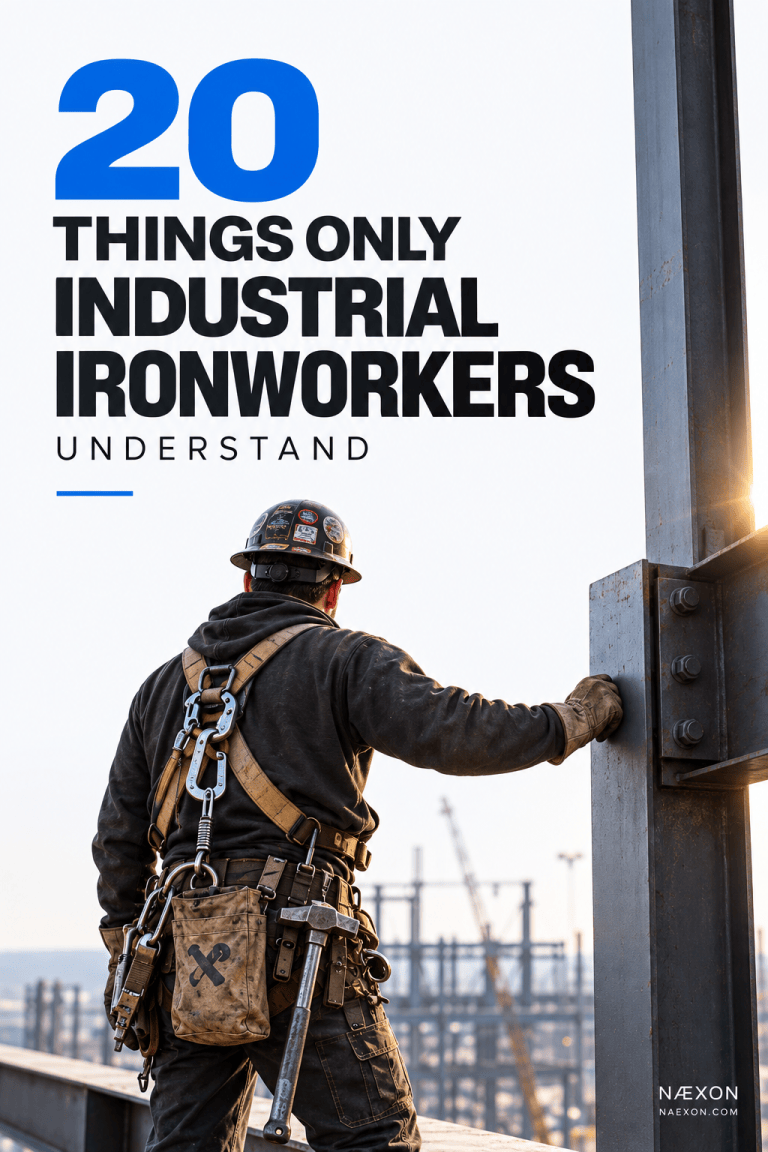
A refinery turnaround may officially happen inside the fence.
Its economic impact doesn’t.
Weeks before the first major unit comes down, another operation is already beginning outside the refinery gates. Hotel rooms start disappearing. RV parks fill up. Rental properties get booked. Restaurants get busier. Gas stations see more traffic. Grocery stores notice unfamiliar faces. Laundromats stay busy late into the evening.
Then the workforce arrives.
Pipefitters. Welders. Boilermakers. Millwrights. Electricians. Instrument technicians. Ironworkers. Scaffold builders. Insulators. Painters. Riggers. Crane operators. Laborers. Safety personnel. Quality-control inspectors. Supervisors. Engineers. Planners. Project managers.
A large industrial turnaround can temporarily bring a substantial outside workforce into a community, and those workers don’t simply earn money at the facility.
They live somewhere.
They eat.
They drive.
They buy fuel.
They wash clothes.
They purchase supplies.
They repair trucks.
They spend money.
For several weeks, a maintenance event happening inside an industrial facility can create what amounts to a temporary economy outside it.
What Is a Refinery Turnaround?
A refinery turnaround is a planned period when part of a facility is taken out of normal operation so major inspection, maintenance, repairs, modifications, replacements, and upgrades can be performed.
Unlike ordinary maintenance, turnaround work is often highly concentrated.
Large amounts of work must be completed within a relatively short schedule. That can require contractors and specialized crafts from outside the normal local workforce.
Depending on the facility and scope, the workforce can expand significantly during the event.
For traveling industrial workers, this is familiar territory.
For the surrounding community, however, the arrival of a large temporary workforce can change everyday economic activity almost overnight.
The Turnaround Starts Before the Worker Reaches the Gate
Imagine an industrial town preparing for a major outage.
Contractors begin mobilizing.
Workers start calling hotels.
RV sites are reserved.
Supervisors arrive early.
Temporary offices and equipment are brought in.
Rental vehicles appear.
Material begins moving.
Then the main craft workforce starts arriving.
A worker might spend hundreds or thousands of dollars locally before performing a single hour of work.
The first major expense is usually somewhere to sleep.
Housing Feels the Impact First
Traveling workers need temporary housing, and industrial projects can create concentrated demand in places that may not normally accommodate large numbers of visitors.
Workers may use:
- Hotels
- Motels
- Extended-stay properties
- Apartments
- Short-term rentals
- RV parks
- Campgrounds
- Rooms rented from local residents
- Crew houses
- Company-provided accommodations
A community with plenty of rooms during an ordinary month can suddenly become tight on availability when a major industrial event begins.
Workers who have traveled for shutdowns know what happens next.
The closest rooms disappear first.
Then workers begin looking farther away.
A twenty-minute commute becomes forty minutes.
Forty minutes becomes an hour.
RV parks that normally have open spaces may become crowded with welding rigs, work trucks, campers, and traveling crews.
For local property owners and hospitality businesses, turnaround season can represent a major temporary increase in demand.
Then Comes Food
A twelve-hour industrial shift creates an extremely predictable economic activity:
People have to eat.
Some traveling workers cook almost everything themselves.
Others eat at restaurants regularly.
Many do both.
That means turnaround activity can reach:
- Restaurants
- Fast-food locations
- Diners
- Grocery stores
- Convenience stores
- Coffee shops
- Food trucks
- Meal-preparation businesses
Timing matters too.
Thousands of workers may be released around similar shift-change periods.
A restaurant that is normally quiet late at night may suddenly receive customers coming off the night shift.
Coffee shops and convenience stores may see early-morning traffic before day shift.
Grocery stores may notice workers buying several days of food at once because nobody wants to grocery shop after working twelve hours.
The industrial schedule begins influencing the commercial schedule around it.
Every Worker Needs Transportation
Most traveling industrial workers don’t teleport from their hotel to the gate.
They drive.
That creates another layer of spending.
Fuel is the obvious expense, but transportation spending can extend much further.
Workers may need:
- Gasoline or diesel
- Oil changes
- Tires
- Batteries
- Windshield repairs
- Car washes
- Towing
- Mechanical repairs
- Parking
- Rental vehicles
Industrial workers often drive pickups and work vehicles carrying tools, welding equipment, campers, or trailers.
A sixty-day project means sixty days of commuting between housing and the jobsite.
Multiply that by hundreds or thousands of workers and transportation becomes a meaningful part of the turnaround’s local economic footprint.
The Welding Rig Economy
Pipeline and industrial construction communities understand another distinctive part of traveling trade culture: the welding rig.
A rig welder arriving for work isn’t simply bringing transportation.
The truck can be a mobile business.
That worker may purchase fuel, welding supplies, consumables, replacement tools, mechanical repairs, tires, parts, oil, hardware, and other equipment while working in the area.
One truck may not change a local economy.
Hundreds of industrial vehicles purchasing goods and services over several weeks can.
Workwear and Tools Get Destroyed
Turnarounds are hard on equipment.
Gloves wear out.
Safety glasses get scratched.
Work shirts take abuse.
Boots fail.
Tape measures disappear.
Markers run dry.
Grinding wheels get consumed.
Tools break.
Workers forget something at home.
That creates business for local industrial suppliers, hardware stores, tool stores, workwear retailers, welding suppliers, and safety-equipment vendors.
The longer and more intense the project, the more opportunities there are for workers to need replacement equipment.
A refinery turnaround therefore supports an entire network of businesses that may have no contractual relationship with the refinery itself.
Laundry Becomes an Industry
Anyone who has worked a turnaround knows what happens to clothing after several consecutive twelve-hour shifts.
It piles up quickly.
Workers staying in hotels without laundry facilities may use local laundromats.
Others use hotel machines.
RV workers may use campground laundry facilities.
Some pay for wash-and-fold services simply because their time becomes more valuable than the cost of doing laundry themselves.
It’s a small example, but it demonstrates how widely industrial spending can spread.
The refinery hires contractors.
The contractors hire workers.
The workers spend money at businesses that may otherwise have nothing to do with oil and gas.
An Illustrative $10 Million Turnaround Economy
Consider a hypothetical example.
Suppose 2,500 traveling workers arrive in an area for a 60-day turnaround.
Now assume each worker spends an average of $70 per day locally outside the refinery on some combination of lodging, food, fuel, groceries, laundry, supplies, recreation, and other personal expenses.
The calculation is:
2,500 workers × 60 days × $70 = $10,500,000
That’s $10.5 million in illustrative local spending during a single industrial event.
This is not an estimate for any particular refinery or turnaround. Actual spending could be dramatically higher or lower depending on workforce size, project duration, lodging arrangements, per diem, commuting patterns, employer-provided services, and local prices.
The example simply demonstrates the scale.
Small daily purchases become large numbers when multiplied by thousands of people and dozens of days.
Now Imagine a Larger Daily Spend
Traveling for industrial work can be expensive.
A worker paying personally for lodging may easily spend much more than $70 per day when housing, food, and transportation are combined.
Using the same hypothetical workforce, suppose average local spending reached $120 per worker per day.
The calculation becomes:
2,500 × 60 × $120 = $18,000,000
That’s $18 million flowing through the surrounding economy in sixty days.
Again, this is purely an illustrative scenario—not measured spending from a specific turnaround.
But it shows why large industrial projects can become economically significant well beyond the facility fence.
Per Diem Is Part of the Story
Per diem plays an interesting role in this temporary economy.
For traveling workers, per diem may be intended to help offset expenses associated with working away from home, depending on the employer and arrangement.
Workers then make individual decisions about how to use that money.
One worker might stay in a hotel alone.
Another might split a rental house with several coworkers.
Another brings an RV.
Another drives a longer distance every day because cheaper housing is available farther away.
Those decisions influence where money flows.
A worker minimizing living expenses may keep more of their earnings.
Another may prioritize comfort and convenience.
Neither approach automatically applies to everyone.
But collectively, thousands of individual decisions shape the temporary economy surrounding the project.
Local Workers Spend Differently
Not everyone working the turnaround traveled from another state.
Local workers participate too.
Their economic impact is different.
They may not need hotels or RV spaces, but overtime earnings can increase household spending.
A worker putting in six or seven twelve-hour shifts may suddenly have substantially more income during the turnaround period.
Some of that money may go toward:
- Paying down debt
- Home improvements
- Vehicles
- Tools
- Savings
- Family expenses
- Restaurants
- Recreation
- Major purchases
That means the economic effect isn’t limited to travelers.
Additional wages earned by local workers can circulate through the community as well.
The Multiplier Doesn’t Stop at the Cash Register
Imagine a restaurant becomes substantially busier because of turnaround workers.
The owner may schedule more employees.
The restaurant purchases more food.
A supplier delivers more inventory.
Employees work additional hours.
Those employees then spend their wages elsewhere.
The same pattern can occur with hotels, repair shops, grocery stores, laundromats, and other businesses.
Economists often describe this broader process through multiplier effects, although the size of any multiplier depends heavily on the local economy and how much spending remains within the area.
The important concept is straightforward:
One worker’s spending can become another person’s income.
Temporary Jobs Can Appear Outside the Plant
The turnaround itself creates industrial employment, but increased local demand can also influence jobs outside the facility.
Businesses may need additional:
- Hotel staff
- Restaurant workers
- Cleaning crews
- Retail employees
- Drivers
- Security personnel
- Maintenance workers
- Food-service employees
- Rental-property support
- Administrative staff
Not every turnaround will produce large increases in outside employment.
But when demand rises sharply enough, local businesses may need more labor to serve it.
Traffic Tells You When the Turnaround Has Started
Sometimes you don’t need access to the refinery schedule to know something is happening.
Look at the road.
Suddenly there are pickups everywhere.
Welding rigs.
Out-of-state license plates.
Company trucks.
Crew vans.
Traffic at 5:00 in the morning.
Traffic again around shift change.
Gas stations packed before daylight.
Restaurants full late at night.
Industrial work operates on schedules that can temporarily change traffic patterns around a facility.
For residents, that can be inconvenient.
For local businesses, it can mean customers.
Not Every Effect Is Positive
Large temporary workforce increases can also create challenges.
Communities may experience:
- Higher short-term lodging demand
- Increased traffic
- Crowded restaurants
- Pressure on RV and rental availability
- Longer commutes
- Noise
- Parking issues
- Greater demand for local services
A turnaround can therefore be both an economic opportunity and a logistical challenge.
Understanding both sides gives a more realistic picture of industrial project impacts.
Then, Almost Overnight, It Ends
This may be the strangest part.
For weeks, the town feels different.
Parking lots are full.
Hotels are booked.
Workers are everywhere.
Then units begin returning to service.
Contractors start demobilizing.
Workers get laid off, transferred, or sent to another project.
Toolboxes get loaded.
Campers disappear.
Welding rigs head down the highway.
Hotel parking lots empty.
The temporary economy begins shrinking.
A community that adapted to thousands of additional customers may return toward normal surprisingly quickly.
The Workers Move the Economy Somewhere Else
The economic activity doesn’t necessarily disappear.
Much of the workforce simply moves.
A pipefitter finishes a turnaround in Louisiana and heads to Texas.
A boilermaker leaves Texas for Oklahoma.
A welder travels to a pipeline project.
A millwright heads toward a power-plant outage.
A scaffold crew moves to another refinery.
The spending moves with them.
New hotel.
New gas station.
New grocery store.
New laundromat.
New restaurants.
New community.
Traveling industrial workers are unusual economic participants because their spending geography changes repeatedly throughout the year.
Shutdown Season Creates Economic Migration
Industrial workers sometimes think of shutdown season purely in terms of employment.
Where is the next job?
Who’s paying the best rate?
Where is the per diem?
How many hours?
How long will it last?
But from a broader perspective, shutdown season also represents temporary economic migration.
Workers follow industrial maintenance schedules.
Their income follows the work.
And part of their spending follows them into whichever communities host those projects.
That makes industrial maintenance schedules relevant not only to contractors and workers but also to businesses located near major facilities.
Why Small Towns Can Feel It More
The same workforce can have very different effects depending on where a project occurs.
An additional 2,000 workers may barely be noticeable across a massive metropolitan area.
Put those same workers near a community with a relatively small population and limited lodging inventory, and the effect can be much more visible.
That is why certain refinery, chemical-plant, LNG, pipeline, power-generation, and industrial-construction communities develop entire business ecosystems around traveling workers.
Hotels understand shutdown schedules.
RV parks understand them.
Restaurants understand them.
Industrial suppliers understand them.
Local landlords understand them.
The turnaround becomes part of the local economic calendar.
The Industrial Worker Is Also a Consumer
It is easy to discuss industrial workers entirely in terms of labor.
A refinery needs 300 pipefitters.
A contractor needs 150 welders.
A project needs scaffold crews.
But every one of those workers is also a consumer.
After the worker leaves the gate, another part of their economic life begins.
They need somewhere to sleep.
Something to eat.
Fuel to get back tomorrow.
Clean clothes.
Maybe a haircut.
Maybe a gym.
Maybe a tire.
Maybe a replacement pair of gloves.
Maybe somewhere to spend Sunday if they finally get a day off.
That is why the economic footprint of industrial work extends so far beyond payroll.
Follow the Pickup Trucks
There is a simple way to understand the hidden economy of industrial America.
Follow the trucks.
When hundreds of pickups begin arriving in a community, money is moving with them.
Those workers may be earning their wages inside a refinery, chemical plant, power plant, LNG facility, pipeline project, fabrication facility, or construction site.
But they don’t spend every dollar inside the gate.
The surrounding community becomes part of the project whether it realizes it or not.
Field Perspective
A traveling worker might see a $15 dinner.
A hotel owner sees another occupied room.
A gas station sees another tank of diesel.
A laundromat sees another load of FR clothing.
A mechanic sees another work truck needing repair.
A grocery store sees another week’s groceries.
Individually, these are ordinary transactions.
Collectively, they can represent millions of dollars moving through a community during a major industrial event.
The Bigger Picture
Industrial facilities are sometimes discussed as isolated economic units.
A refinery produces fuels and other products.
A power plant produces electricity.
An LNG facility processes and moves energy.
A petrochemical complex manufactures chemical products.
But industrial facilities also support networks of contractors, suppliers, workers, transportation providers, service companies, and surrounding businesses.
Turnarounds make that network particularly visible because so much activity becomes concentrated into a short period.
For a few weeks, the entire economic ecosystem accelerates.
Then the workforce moves on.
Final Thoughts
A refinery turnaround may begin with a unit shutdown, an inspection schedule, and thousands of work packages.
But its economic footprint can extend miles beyond the fence.
It reaches the hotel clerk checking workers in.
The restaurant serving dinner after a twelve-hour shift.
The RV park filling spaces with traveling crews.
The mechanic replacing a tire on a welding rig.
The grocery store stocking extra food.
The laundromat cleaning another week’s work clothes.
The gas station filling another truck before daylight.
And the families receiving money earned hundreds or thousands of miles from home.
A major turnaround isn’t simply a maintenance event.
For the workers, it can mean weeks of intense earning.
For the facility, it can mean restoring equipment and preparing for another operating cycle.
For contractors, it can mean a major project.
And for the community outside the gate, it can temporarily mean something else entirely:
A small economy built around the people who came to rebuild the plant.