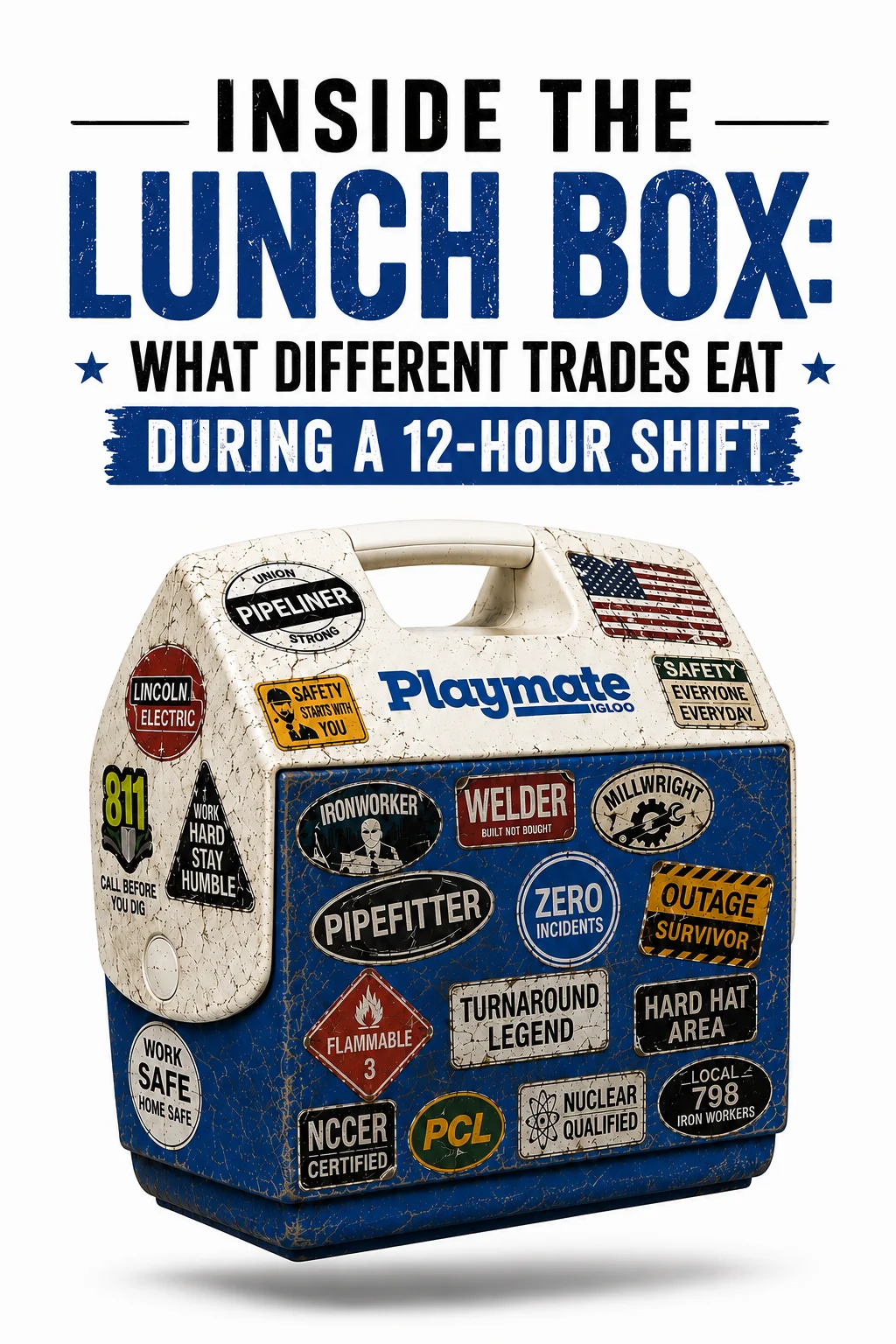
Thousands of workers may be doing completely different jobs, but one thing brings everyone together—the lunch box.
Some workers carry expensive electric lunch warmers. Others still use the same old metal lunch pail they’ve had for years. Some pack healthy meals prepared the night before, while others survive on gas station burritos and energy drinks.
If you spend enough time working shutdowns, turnarounds, or maintenance outages, you’ll start noticing patterns. Different trades often have different eating habits, not because of tradition, but because the work itself demands different fuel.
Here’s a look inside the lunch boxes of America’s skilled trades.
The Pipefitter
A pipefitter rarely has a light day.
Whether installing high-pressure steam lines, fitting stainless process piping, or working inside a refinery turnaround, every task burns energy.
Their lunch usually reflects that.
Common meals include:
- Chicken and rice
- Steak leftovers
- Pulled pork sandwiches
- Pasta
- Burritos
- Homemade chili
- Beef jerky
- Protein bars
- Bananas
Most pipefitters know one thing:
If lunch isn’t filling, the afternoon is going to feel twice as long.
The Welder
Welders often work in intense heat while wearing multiple layers of PPE.
Hydration becomes almost as important as food.
A typical welder’s lunch box might contain:
- Cold pasta salad
- Sandwiches packed with meat
- Trail mix
- Apples
- Beef sticks
- Pickles
- Sports drinks
- Plenty of water
Many experienced welders avoid greasy foods during hot summer shutdowns because heavy meals combined with high temperatures can make the afternoon miserable.
The Electrician
Electricians frequently move between multiple locations throughout the day.
Convenience matters.
Their lunch often includes:
- Turkey sandwiches
- Yogurt
- Granola bars
- Fruit
- Mixed nuts
- Coffee
- Water
- Protein shakes
A lighter meal helps many electricians stay alert when troubleshooting complicated systems or performing precision work.
The Millwright
Millwrights spend their days moving heavy equipment, aligning machinery, rebuilding pumps, and installing rotating equipment.
Their calorie demands can be surprisingly high.
Popular meals include:
- Homemade casseroles
- Burgers
- Rice bowls
- Eggs
- Potatoes
- Leftover barbecue
- High-protein snacks
Many millwrights also keep extra snacks in their gang box because breakdown work rarely follows a predictable schedule.
The Ironworker
Ironworkers are constantly climbing, lifting, connecting steel, and working at elevation.
Calories disappear quickly.
Lunch often consists of:
- Double sandwiches
- Hard-boiled eggs
- Beef jerky
- Chips
- Fruit
- Energy drinks
- Plenty of water
Many ironworkers joke that if they’re still hungry after lunch, it wasn’t a real lunch.
The Crane Operator
Unlike many field crafts, crane operators spend much of the day inside the cab.
Meals are usually simple and easy to eat during breaks.
Common choices include:
- Wraps
- Sandwiches
- Fresh fruit
- Crackers
- Nuts
- Coffee
- Water
Heavy meals can make long hours behind the controls uncomfortable, so many operators prefer smaller portions throughout the day.
The Heavy Equipment Operator
Excavator, dozer, loader, and grader operators often start before sunrise.
Breakfast is just as important as lunch.
Their lunch bags commonly contain:
- Homemade sandwiches
- Chili
- Soup during winter
- Fruit
- Cookies
- Jerky
- Sports drinks
Many operators also carry extra snacks because the nearest food may be miles away.
The Boilermaker
Boilermakers work in confined spaces, elevated structures, and around extremely hot equipment.
Long shifts require serious fuel.
Lunch often includes:
- Rice and meat
- Pasta
- Homemade stews
- Burritos
- Protein bars
- Electrolyte drinks
- Fruit
Most know from experience that skipping lunch during a turnaround usually catches up with them before quitting time.
The Scaffolder
Scaffold builders spend the day climbing, carrying, and assembling thousands of pounds of material.
Energy burns fast.
Their lunches often feature:
- Large sandwiches
- Chicken and rice
- Peanut butter snacks
- Bananas
- Protein shakes
- Plenty of water
Hydration becomes especially critical during summer shutdowns.
The Foreman
The foreman’s lunch often looks different.
Not because the job is easier—but because interruptions never stop.
Many foremen joke they’ve perfected eating a sandwich in five minutes between radio calls.
Typical lunches include:
- Sandwiches
- Leftovers
- Coffee
- Protein bars
- Whatever they can finish before someone says…
“Hey boss… got a minute?”
The Universal Jobsite Foods
No matter the trade, some foods appear everywhere.
Walk through enough lunch trailers and you’ll almost always find:
- Beef jerky
- Peanut butter sandwiches
- Hard-boiled eggs
- Bananas
- Apples
- Trail mix
- Chips
- Homemade leftovers
- Protein bars
- Coffee
- Water
- Sports drinks
Simple.
Reliable.
Easy to eat.
Built for long days.
Why Nutrition Matters More Than People Think
Working industrial construction isn’t like sitting behind a desk.
Workers routinely spend 10 to 12 hours:
- Walking miles
- Climbing stairs
- Lifting heavy materials
- Working in extreme heat
- Wearing heavy PPE
- Standing for long periods
- Operating equipment
- Concentrating around dangerous hazards
Poor nutrition can lead to fatigue, slower reaction times, dehydration, and reduced focus—all of which can affect both productivity and safety.
Packing a balanced lunch with protein, complex carbohydrates, healthy fats, fruits, and plenty of water helps workers maintain energy throughout the shift.
The Lunch Box Is Part of the Trade
A lunch box might seem like a simple piece of gear.
But for industrial workers, it’s every bit as important as a hard hat, gloves, or boots.
It carries the fuel needed to finish the shift, support teammates, and return home safely after another demanding day.
Every trade has its own habits. Every worker has their favorite meal. But one thing stays the same across every refinery, pipeline, fabrication shop, and power plant:
A good lunch can make a long shift feel a whole lot shorter.
At Næxon, we know that the right gear—and the right fuel—helps hardworking men and women perform at their best. Whether you’re welding in the summer heat, fitting pipe during a turnaround, climbing steel, or maintaining critical equipment, preparation matters. Great work starts long before the first tool comes out of the box.