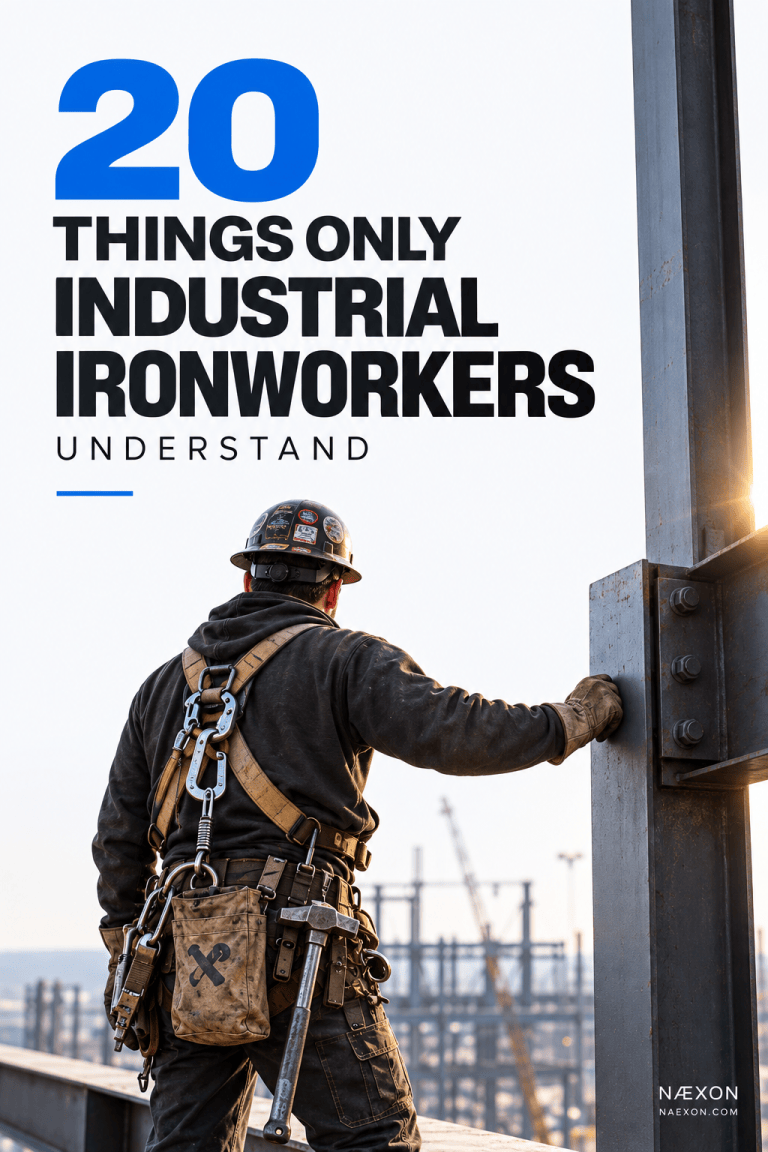
The oil and gas industry is one of the largest, most technologically advanced, and highest-paying industries in the world. It powers transportation, manufacturing, electricity generation, chemical production, and countless products used every day. Whether you’re a pipefitter, welder, millwright, electrician, operator, inspector, scaffold builder, or engineer, understanding the industry helps you appreciate the scale of the work you’re part of.
Here are 100 interesting facts every industrial worker should know.
Industry Basics
1. The oil and gas industry employs millions of people worldwide.
2. Oil is measured in barrels, with one barrel containing 42 U.S. gallons.
3. Natural gas is commonly measured in cubic feet.
4. Crude oil is not gasoline—it must be refined into usable products.
5. There are hundreds of different grades of crude oil.
6. Light crude is generally easier to refine than heavy crude.
7. Sweet crude contains less sulfur than sour crude.
8. The United States is one of the world’s largest oil producers.
9. Offshore platforms can operate hundreds of miles from shore.
10. Some refineries process more than 500,000 barrels of crude every day.
Refineries
11. Refineries convert crude oil into gasoline, diesel, jet fuel, asphalt, lubricants, and chemicals.
12. Every refinery is designed differently.
13. Distillation towers are among the tallest structures in a refinery.
14. Heat separates crude oil into different products.
15. Catalytic crackers improve gasoline production.
16. Hydrocrackers use hydrogen to produce cleaner fuels.
17. Sulfur recovery units reduce harmful emissions.
18. Refineries operate 24 hours a day.
19. Planned shutdowns are called turnarounds.
20. Turnarounds often create thousands of temporary jobs.
Pipeline Industry
21. Pipelines transport oil, gas, chemicals, steam, and water.
22. Some pipelines extend for thousands of miles.
23. Pigging tools clean and inspect pipelines.
24. Compressor stations keep natural gas moving.
25. Pump stations move crude oil through pipelines.
26. Weld quality is critical for pipeline safety.
27. Every weld is typically inspected before service.
28. Pipelines cross rivers, mountains, deserts, and cities.
29. Buried pipelines have protective coatings.
30. Cathodic protection helps prevent corrosion.
Construction Trades
31. Pipefitters install piping systems.
32. Welders permanently join metal.
33. Millwrights install rotating equipment.
34. Electricians maintain power systems.
35. Instrument technicians calibrate controls.
36. Scaffold builders provide safe access.
37. Crane operators move massive equipment.
38. Ironworkers erect structural steel.
39. Boilermakers build and repair pressure vessels.
40. Insulators help conserve energy.
Safety
41. Safety is the industry’s highest priority.
42. Every worker has stop-work authority.
43. Lockout/Tagout prevents accidental energization.
44. Hot work permits are required before welding.
45. Confined spaces require special permits.
46. Gas testing is mandatory in many work areas.
47. Flame-resistant clothing protects workers.
48. Hard hats have expiration guidelines.
49. Safety glasses are required in most plants.
50. Near misses are reported to prevent future accidents.
Pipefitting & Welding
51. Isometric drawings guide pipe installation.
52. Pipe schedules indicate wall thickness.
53. Carbon steel and stainless steel require different welding techniques.
54. TIG welding produces precise welds.
55. Stick welding remains common in industrial construction.
56. Orbital welding is often used in pharmaceutical facilities.
57. Pipefitters calculate offsets every day.
58. Precision measuring saves thousands of dollars.
59. Expansion loops absorb thermal movement.
60. Proper pipe support is essential.
Equipment
61. Heat exchangers transfer heat efficiently.
62. Pumps move liquids.
63. Compressors increase gas pressure.
64. Valves control flow.
65. Pressure vessels store fluids under pressure.
66. Boilers generate steam.
67. Cooling towers remove excess heat.
68. Turbines generate electricity.
69. Large refineries may contain thousands of pumps.
70. Some valves weigh over a ton.
Careers
71. Skilled trades often earn excellent wages.
72. Shutdown work usually pays more because of overtime.
73. Traveling workers often receive per diem.
74. Union apprenticeship programs provide world-class training.
75. NCCER certifications improve employability.
76. Experience is often as valuable as formal education.
77. Specialty welders are in high demand.
78. Supervisors usually begin as craftsmen.
79. Industrial maintenance offers year-round employment.
80. Many workers travel across North America following projects.
Technology
81. Drones inspect flare stacks and towers.
82. Robotics inspect hazardous equipment.
83. Laser scanning creates accurate plant models.
84. Digital work permits improve efficiency.
85. Predictive maintenance reduces downtime.
86. Artificial intelligence is entering industrial maintenance.
87. 3D modeling improves project planning.
88. Smart sensors monitor equipment continuously.
89. Thermal cameras detect hidden problems.
90. Digital twins are becoming common in large facilities.
Interesting Facts
91. Petroleum is used in thousands of everyday products beyond fuel.
92. Modern refineries resemble small cities.
93. Some refinery flare stacks exceed 400 feet tall.
94. One shutdown can involve more than 10,000 contractors.
95. Industrial plants often operate continuously for years between major turnarounds.
96. A single refinery may contain hundreds of miles of piping.
97. Some pressure vessels are larger than houses.
98. Industrial projects require thousands of coordinated workers.
99. Every successful project depends on teamwork across dozens of different trades.
100. Behind every gallon of fuel is the skill, dedication, and craftsmanship of the men and women who build, maintain, and operate the world’s energy infrastructure.
Final Thoughts
The oil and gas industry is far more than drilling wells or refining fuel. It is a massive network of engineers, operators, pipefitters, welders, electricians, millwrights, scaffold builders, inspectors, safety professionals, and countless other skilled workers who keep the world’s energy flowing.
Every shutdown completed safely, every weld that passes inspection, every valve installed correctly, and every pipe aligned perfectly contributes to an industry that powers modern life. Understanding these 100 facts not only builds knowledge—it also highlights the professionalism and expertise required to succeed in one of the world’s most demanding industries.