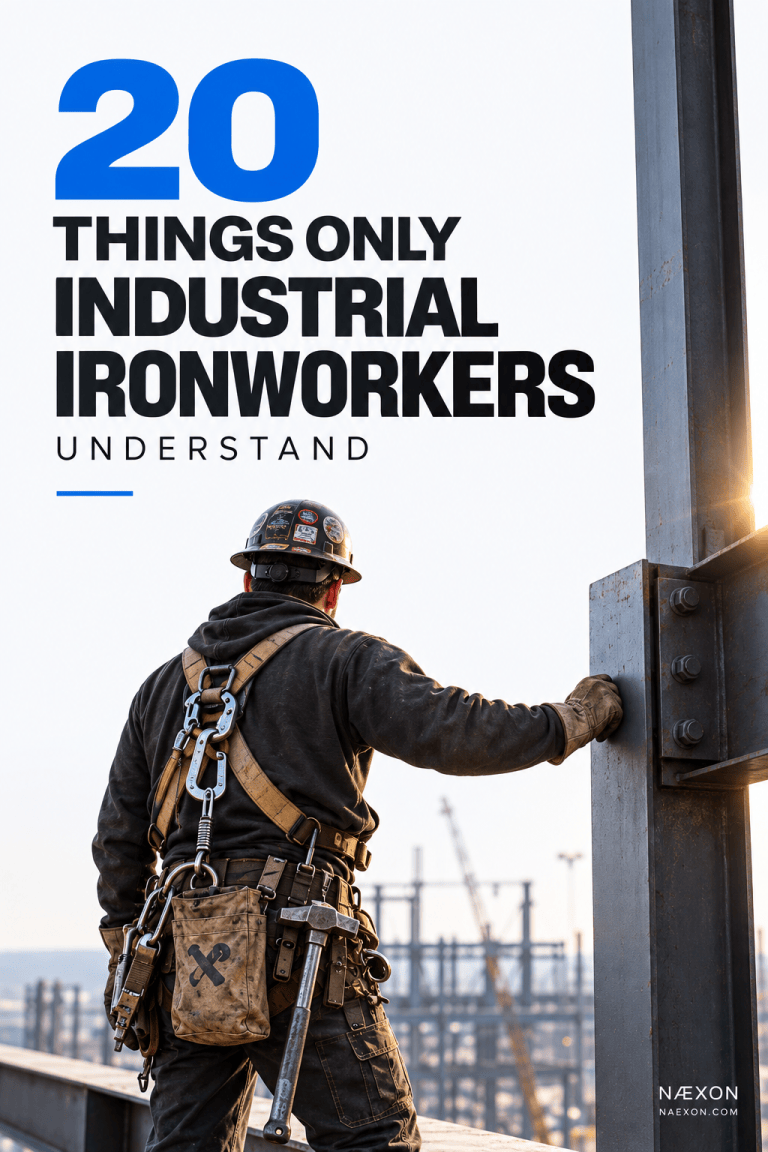
The apprentice is usually carrying a tool bag that looks like it weighs 50 pounds.
The journeyman? Sometimes he’s carrying a small pouch, a tape measure, a level, and maybe one wrench in his hand.
At first glance, it doesn’t make sense.
Wouldn’t the most experienced pipefitters carry the most tools?
Actually, it’s usually the exact opposite.
The best pipefitters almost never carry a full tool bag—and there’s a very good reason why.
Experience Teaches You What You’ll Actually Need
One of the biggest differences between an apprentice and an experienced journeyman isn’t strength or speed.
It’s prediction.
A seasoned pipefitter can read the prints, understand the work package, walk the job, and know exactly what tools are required before ever leaving the gang box.
They don’t pack for every possible scenario.
They pack for today’s task.
Instead of carrying fifteen wrenches, they’ll carry the three sizes they’re almost certain to use.
Instead of bringing every measuring device they own, they grab the one that’s appropriate for the job.
That confidence only comes from experience.
Apprentices Pack for Fear
There’s nothing wrong with wanting to be prepared.
Every apprentice has had that embarrassing moment when someone says,
“Go grab a 1-1/8 wrench.”
…and they don’t have it.
Nobody wants to make two trips.
So beginners often respond by carrying everything.
Every socket.
Every crescent wrench.
Every marker.
Every screwdriver.
Every Allen key.
Every pair of channel locks.
Before long, they’re hauling around enough steel to build another pipe rack.
They’re preparing for every possible situation instead of the actual one.
Your Brain Should Do More Work Than Your Back
Industrial work is already physically demanding.
Adding unnecessary weight every day only creates more fatigue.
A heavy tool bag means:
- More strain on your shoulders.
- More stress on your knees.
- More fatigue by lunchtime.
- Less energy at the end of a twelve-hour shift.
Veteran pipefitters understand something simple:
Every pound you don’t carry is a pound you don’t have to lift hundreds of times throughout the day.
Work smarter—not heavier.
Organization Beats Quantity
Have you ever watched someone spend five minutes digging through a cluttered tool bag?
Meanwhile, another pipefitter reaches in and instantly pulls out exactly what he needs.
The difference isn’t the number of tools.
It’s organization.
Experienced workers know where every tool belongs.
Everything has a place.
Nothing is buried.
Nothing rattles around loose.
A clean tool bag saves more time than an oversized one.
Good Pipefitters Trust Their Crew
Industrial work is rarely a one-man show.
You’re surrounded by welders, millwrights, operators, electricians, laborers, and other pipefitters.
Sometimes another worker already has the specialty tool you need.
Sometimes the gang box is only a short walk away.
Sometimes the foreman already staged the equipment.
Experienced craftsmen know that carrying duplicate tools “just in case” usually isn’t worth the extra weight.
They Understand the Job Before They Touch a Tool
One of the biggest lessons every pipefitter eventually learns is this:
Tools don’t solve problems.
Knowledge does.
Before grabbing a single wrench, experienced pipefitters ask themselves questions like:
- What am I building?
- What size line is this?
- What material am I working with?
- Is this temporary or permanent?
- Is welding involved?
- Will I need alignment tools?
- Are torque values specified?
- Is this maintenance or new construction?
Once those questions are answered, the tool selection becomes obvious.
Less Weight Means More Mobility
Refineries and power plants aren’t small.
Some jobs require climbing multiple flights of scaffolding.
Others involve walking hundreds of yards across units.
Pipeline crews may hike through mud, hills, woods, or uneven terrain.
Dragging an overloaded tool bag through all of that quickly becomes exhausting.
The lighter your load, the faster you move.
The faster you move, the more productive you become.
A Heavy Tool Bag Doesn’t Impress Anyone
Many apprentices believe carrying a massive tool bag proves they’re hardworking.
Most seasoned workers see something different.
They see someone who hasn’t yet learned how to plan.
Nobody is impressed by unnecessary weight.
They’re impressed by efficiency.
The worker who consistently has the right tool at the right time earns far more respect than the worker carrying every tool ever made.
There Are Exceptions
Of course, there are days when you’ll need nearly everything you own.
Shutdowns.
Turnarounds.
Remote pipeline spreads.
Service trucks.
Fabrication shops.
Some jobs require specialty tools throughout the day.
Others involve multiple phases where returning to the gang box wastes valuable time.
Experienced pipefitters know the difference.
The key isn’t carrying less all the time.
It’s carrying only what today’s work demands.
Build Your Knowledge Before Your Tool Collection
Many new tradesmen spend thousands of dollars buying tools before they’ve mastered the trade.
But the most valuable investment isn’t another wrench.
It’s experience.
Learn to read drawings.
Understand specifications.
Study fabrication.
Practice layouts.
Improve communication.
Develop problem-solving skills.
The more knowledge you gain, the fewer unnecessary tools you’ll carry.
Ironically, as your experience grows, your tool bag often gets lighter.
Final Thoughts
A full tool bag doesn’t make someone a great pipefitter.
Good judgment does.
The best pipefitters aren’t trying to prove how many tools they own.
They’re proving they understand the job before they even unzip the bag.
Experience teaches you that preparation isn’t measured by weight—it’s measured by thinking ahead.
So the next time you see a veteran walking onto the job carrying only a handful of tools, don’t assume he’s underprepared.
Chances are, he already knows exactly what the job requires.
And that’s the difference between carrying tools…
…and carrying experience.