Long Radius vs. Short Radius Elbows: When and Why Each Is Used
A Complete Pipefitter’s Guide to LR and SR Elbows
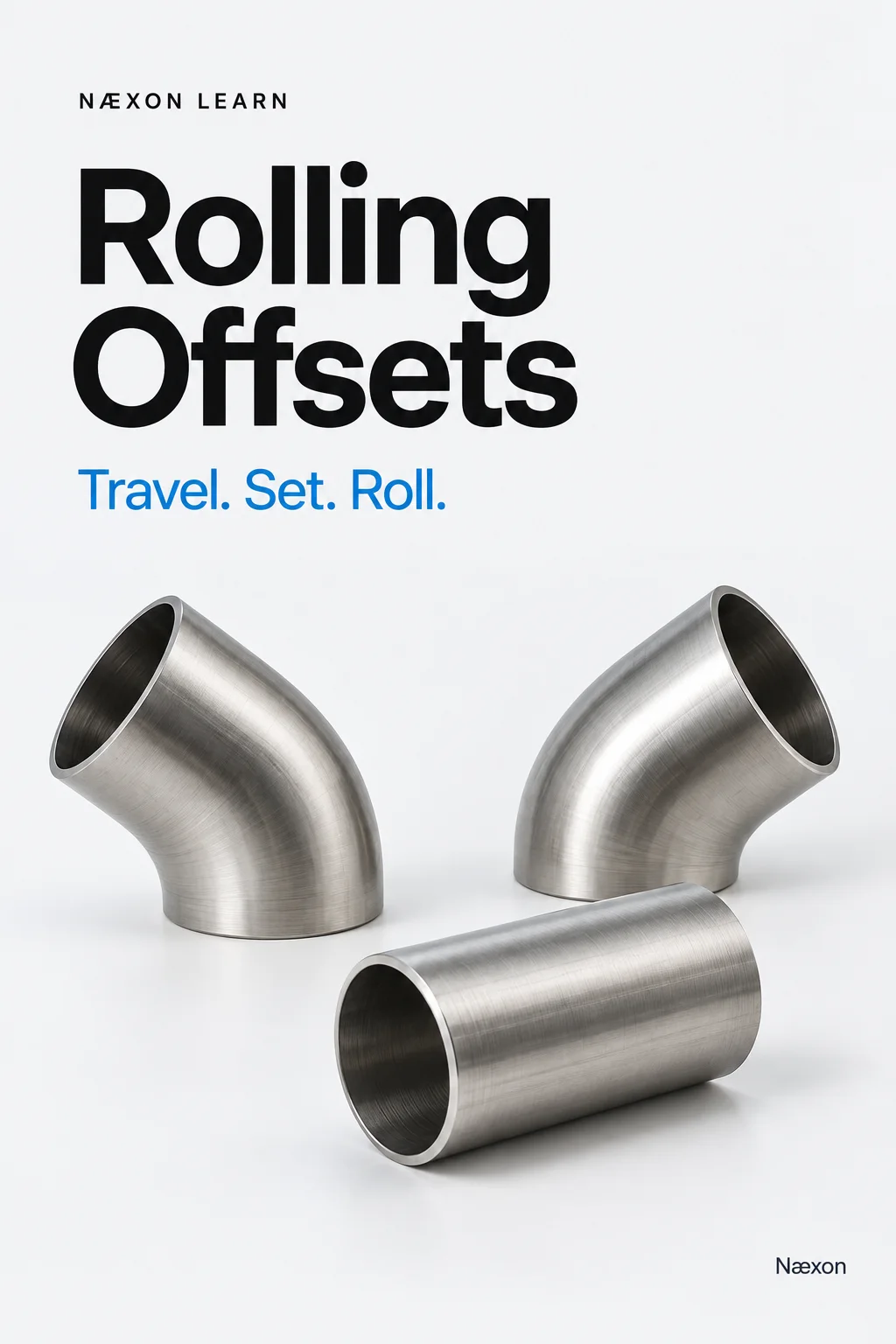
One of the first things every apprentice notices when working with piping is that not all elbows are the same. Two elbows may both be 90°, fit the same pipe size, and look nearly identical—but they can have completely different centerline radii and applications.
Understanding the difference between Long Radius (LR) and Short Radius (SR) elbows is essential for proper fabrication, accurate takeoffs, and successful field installation.
What Is an Elbow?
An elbow is a pipe fitting used to change the direction of a piping system.
Common elbow angles include:
- 90°
- 45°
- 180°
- 60° (less common)
- 22.5° (less common)
The angle tells you how much the pipe changes direction.
The radius tells you how gradual or tight that turn is.
What Does “Radius” Mean?
The radius is measured from the centerline of the elbow to the center of the elbow’s curve.
There are two standard types:
- Long Radius (LR) = Radius is 1.5 × the nominal pipe size
- Short Radius (SR) = Radius is 1.0 × the nominal pipe size
Long Radius Elbows (LR)
A long radius elbow has a centerline radius equal to 1.5 times the nominal pipe size.
Examples:
Pipe Size
LR Radius
2”
3”
4”
6”
6”
9”
8”
12”
10”
15”
For example, a 6-inch LR 90° elbow has a 9-inch center-to-center radius.
Short Radius Elbows (SR)
A short radius elbow has a centerline radius equal to the nominal pipe size.
Examples:
Pipe Size
SR Radius
2”
2”
4”
4”
6”
6”
8”
8”
10”
10”
A 6-inch SR elbow therefore has a 6-inch centerline radius.
Visual Difference
Imagine drawing two 90° turns.
The long radius elbow forms a wide, sweeping curve.
The short radius elbow makes a much tighter turn.
That difference affects:
- Flow
- Pressure loss
- Space requirements
- Pipe stress
- Fabrication dimensions
Where Long Radius Elbows Are Used
Long radius elbows are the most common elbows in industrial construction.
You’ll find them in:
- Refineries
- Chemical plants
- Power plants
- Food processing
- Pharmaceutical facilities
- Water treatment plants
- Pipelines
They are preferred because they allow fluids to change direction more smoothly.
Advantages of Long Radius Elbows
Lower Pressure Drop
A gradual bend creates less turbulence.
This helps reduce pressure losses.
Better Flow Characteristics
Liquids, steam and gases travel through the bend more efficiently.
Less Wear
Abrasive products have less impact on the outside wall of the elbow.
This often increases service life.
Easier Pigging
Pipeline cleaning tools (“pigs”) pass through long radius elbows much more easily than short radius elbows.
Where Short Radius Elbows Are Used
Short radius elbows are generally used when installation space is limited.
Common examples include:
- Mechanical rooms
- Pump skids
- Equipment packages
- Tight process units
- Compact fabricated assemblies
They allow a direction change in less space.
Advantages of Short Radius Elbows
Save Space
The biggest advantage is compactness.
When equipment is crowded together, every inch matters.
Lower Material Cost
Shorter pipe runs can slightly reduce material usage in some layouts.
Easier Equipment Connections
Many packaged systems are designed specifically around short-radius fittings.
Disadvantages of Short Radius Elbows
Because the turn is tighter:
- Pressure loss is higher.
- Turbulence increases.
- Erosion can occur more quickly in abrasive service.
- Pigging may be difficult or impossible, depending on the system.
For these reasons, short-radius elbows are generally selected only when required by the design.
Why Pipefitters Must Know the Difference
Using the wrong elbow affects far more than appearance.
It changes:
- Center-to-end dimensions
- Pipe cut lengths
- Spool dimensions
- Support locations
- Equipment alignment
A spool built with an SR elbow instead of an LR elbow can be several inches short or long, depending on the pipe size.
Center-to-End Dimensions Matter
Pipefitters often use the center-to-end dimension when laying out spools.
For a standard 6-inch 90° elbow:
- Long Radius: 9-inch center-to-end
- Short Radius: 6-inch center-to-end
That’s a 3-inch difference per elbow.
If two elbows are used, the overall spool can be 6 inches off if the wrong radius is assumed.
Always verify the fitting type before calculating takeouts.
Identifying LR and SR Elbows
Before installation, check:
- Stamped markings on the fitting
- Material specification
- Isometric drawing
- Bill of materials
- Manufacturer’s documentation
Never assume every elbow delivered to the jobsite is long radius.
Common Applications
Long Radius
- High-flow process lines
- Steam systems
- Oil and gas pipelines
- Cooling water
- Utility piping
- Refinery process piping
Short Radius
- Pump connections
- Skid packages
- Congested pipe racks
- Compact mechanical equipment
- Space-restricted modifications
Common Apprentice Mistakes
New pipefitters often:
- Assume all elbows are long radius.
- Forget to verify center-to-end dimensions.
- Use the wrong fitting in spool calculations.
- Ignore the bill of materials.
- Estimate instead of measuring.
A few minutes spent confirming the elbow type can prevent costly rework.
Best Practices
Before fabrication:
- Verify the fitting radius on the isometric.
- Check the fitting markings.
- Confirm center-to-end dimensions.
- Use the correct takeout values.
- Dry-fit critical spools before final welding.
These habits improve accuracy and reduce field adjustments.
Final Thoughts
Long radius and short radius elbows may appear similar, but they serve different purposes. Long radius elbows provide smoother flow, lower pressure loss, and are the standard choice for most industrial piping systems. Short radius elbows are used when space is limited and a tighter turn is necessary.
For a pipefitter, knowing the difference isn’t just about terminology—it’s about building accurate spools, making correct takeoffs, and avoiding expensive mistakes in the field. The best craftsmen don’t guess which elbow they’re using. They verify it before making the first cut.