Introduction
Every industrial piping system moves.
When a pipe heats up, it expands. When it cools down, it contracts. Although these movements may seem small, they can generate thousands of pounds of force if the piping is not designed to absorb them. Left unmanaged, thermal expansion can cause leaking flanges, cracked welds, damaged equipment, failed supports, and even complete piping system failures.
Expansion loops are one of the simplest and most effective ways to control these forces. Whether you’re working in a refinery, power plant, pipeline, chemical facility, or manufacturing plant, understanding how expansion loops work is essential for every pipefitter, welder, and maintenance technician.
This guide explains what expansion loops are, why they are used, how they work, common designs, installation considerations, and the mistakes that should be avoided.
What Is an Expansion Loop?
An expansion loop is a section of pipe intentionally routed into a U-shaped, L-shaped, Z-shaped, or offset configuration that allows the piping to flex as it expands and contracts.
Instead of forcing thermal growth directly into equipment or rigid supports, the loop bends slightly, absorbing movement and reducing stress throughout the system.
Unlike mechanical expansion joints, expansion loops contain no moving parts. They rely entirely on the natural flexibility of the pipe itself.
Why Pipes Expand
Nearly every material expands when heated.
In industrial plants, piping systems often experience significant temperature changes due to:
- Steam systems
- Hot process fluids
- Boiler piping
- Heat exchangers
- Furnace connections
- High-temperature chemical processing
For example:
A 100-foot carbon steel pipe carrying high-temperature steam can grow by more than an inch as it reaches operating temperature.
That movement has to go somewhere.
Without an expansion loop, the force transfers into:
- Pumps
- Valves
- Pressure vessels
- Anchors
- Pipe supports
- Welds
- Flanges
Eventually something fails.
How Expansion Loops Work
Expansion loops act like a spring.
As the pipe expands, the legs of the loop flex slightly, distributing the movement over a much longer section of piping.
Instead of compressing equipment, the pipe itself absorbs the movement.
When the system cools, the loop returns to its original position.
This cycle may occur thousands of times over the life of a plant.
Common Types of Expansion Loops
U-Loop
The U-loop is the most common design.
It consists of two 90-degree elbows connected by a straight section.
Advantages include:
- Excellent flexibility
- Simple fabrication
- Long service life
- No moving parts
- Minimal maintenance
These are commonly found on:
- Steam lines
- Refinery process piping
- Boiler systems
- Utility piping
L-Loop
Sometimes existing pipe routing naturally creates an L-shaped expansion path.
While not as flexible as a U-loop, it still provides room for thermal movement.
Z-Loop
A Z-loop changes direction twice, creating additional flexibility.
They are often used where space restrictions prevent installing a full U-loop.
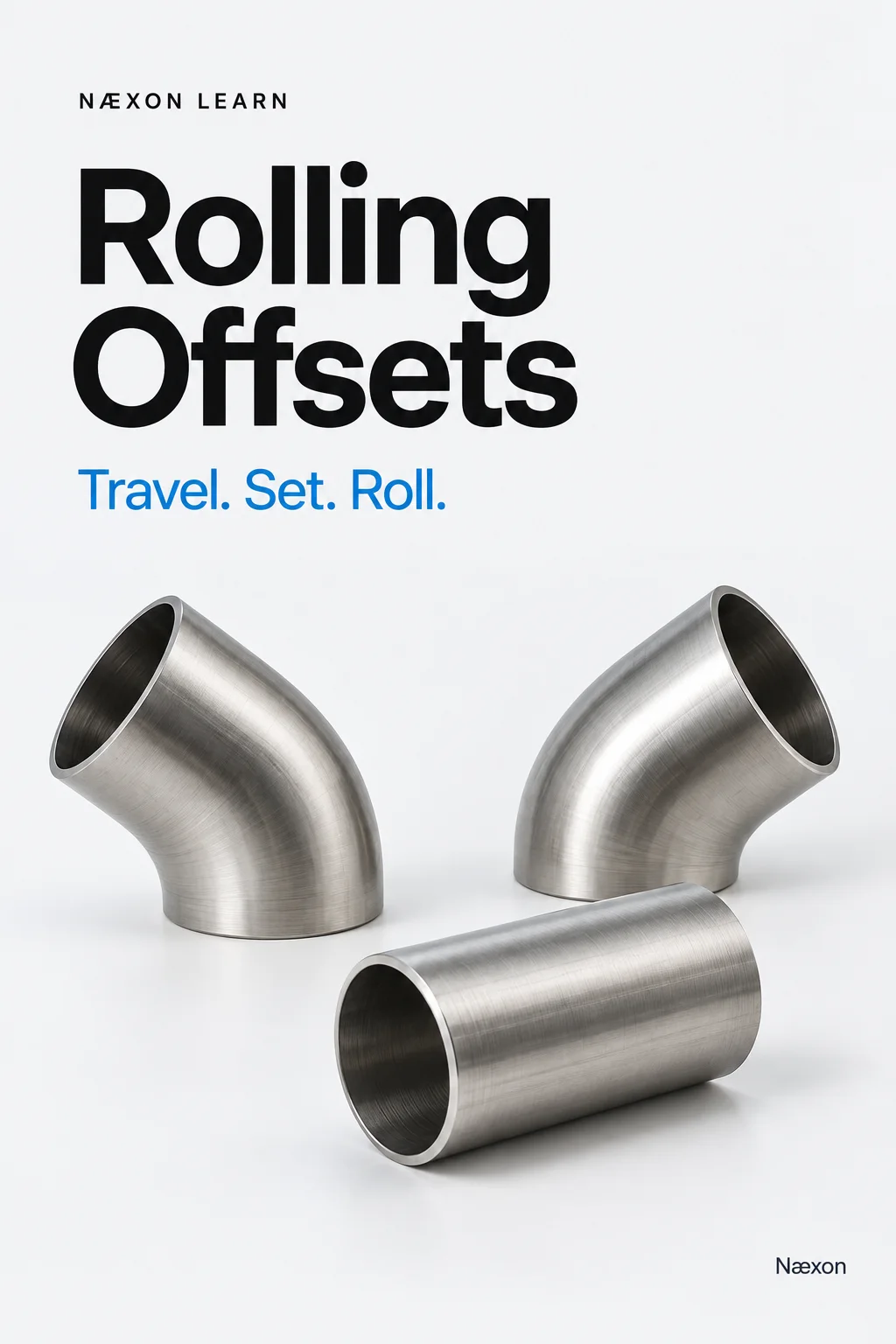
Offset Expansion Loop
Many industrial systems use existing pipe offsets as expansion loops.
Proper design allows these offsets to absorb thermal movement without requiring additional components.
Where Expansion Loops Are Used
Expansion loops are common in:
- Oil refineries
- Power plants
- LNG terminals
- Chemical plants
- Food processing facilities
- Pharmaceutical plants
- Paper mills
- District heating systems
- Boiler plants
- Industrial steam systems
Anywhere temperatures change significantly, expansion must be considered.
Anchors and Guides
Expansion loops only work correctly when the piping is properly restrained.
Two key components are:
Anchors
Anchors prevent pipe movement at specific locations.
They direct thermal growth toward the expansion loop.
Without proper anchors, the entire pipe may shift unpredictably.
Guides
Guides keep the pipe moving in the intended direction while preventing sideways movement.
Proper guide spacing is critical.
Poorly placed guides can reduce the effectiveness of the expansion loop.
Pipe Supports
Pipe supports work together with expansion loops.
Common support types include:
- Sliding supports
- Roller supports
- Spring supports
- Variable spring hangers
- Constant supports
These allow controlled movement while supporting the pipe’s weight.
Common Materials
Expansion loops can be fabricated from virtually any piping material, including:
- Carbon steel
- Stainless steel
- Chrome-moly alloys
- Duplex stainless steel
- Copper
- Plastic piping systems
- High-alloy materials
The required loop size depends on both the material and the expected thermal expansion.
Advantages of Expansion Loops
Expansion loops offer several important benefits:
- No mechanical components
- No seals to replace
- Minimal maintenance
- Long service life
- High reliability
- Low operating cost
- Excellent fatigue resistance
- Proven industrial design
Many plants operate expansion loops for decades without major repairs.
Expansion Loops vs. Expansion Joints
Although they perform the same function, they are very different.
Expansion Loops
- Made from standard pipe
- No moving parts
- Extremely reliable
- Minimal maintenance
- Longer lifespan
- Requires more installation space
Expansion Joints
- Compact design
- Bellows or mechanical components
- Useful in tight spaces
- Require inspection
- Can eventually wear out
- More expensive to maintain
Both have their place depending on project requirements.
Common Installation Mistakes
Several problems can reduce the effectiveness of an expansion loop:
- Installing guides incorrectly
- Missing pipe anchors
- Undersized loop dimensions
- Welding the loop out of alignment
- Blocking movement with rigid supports
- Forgetting insulation clearance
- Installing equipment too close to the loop
Small installation errors can create large stress loads.
Inspection During Shutdowns
During plant outages, expansion loops should be inspected for:
- Cracked welds
- Pipe deformation
- Corrosion
- Support damage
- Missing guides
- Anchor movement
- Insulation damage
- Contact with nearby structures
Routine inspections help prevent expensive failures.
Safety Considerations
Never assume an expansion loop is unloaded.
During startup and shutdown, piping can move suddenly as temperatures change.
Always:
- Follow lockout/tagout procedures
- Stay clear of moving pipe
- Inspect supports before working nearby
- Never remove anchors without engineering approval
- Understand the expected direction of pipe movement
Thermal movement can create tremendous force.
Key Takeaways
Expansion loops are one of the simplest and most reliable methods of controlling thermal expansion in industrial piping systems. By allowing pipe to flex naturally, they reduce stress on equipment, protect welds and flanges, and extend the life of the entire system.
For pipefitters, understanding how expansion loops interact with anchors, guides, and supports is essential. A properly installed expansion loop may go unnoticed for years—but without it, even a well-built piping system can suffer premature failures.
Whether you’re fabricating a new steam line or maintaining an existing refinery unit, knowing how expansion loops work will help you build safer, more reliable piping systems.