There is a moment almost every refinery worker recognizes.
The tools have been running for hours. Radios are going off in every direction. Welders are burning rod. Grinders are screaming somewhere in the unit. Operators are making rounds. Scaffold crews are moving material. Pipefitters are trying to finish the next fit. The foreman is already thinking three steps ahead.
Then somebody finally says:
“Break.”
For some workers, that means coffee. For others, it means grabbing a bottle of water, eating something, checking the phone, sitting down for a few minutes, or heading to an approved smoking area for a cigarette.
From the outside, it might look like ten minutes of doing nothing.
To somebody working a long refinery shift, it can mean much more.
It is one of the few moments during the day when everything slows down.
The Refinery Never Really Gets Quiet
Even when the crew stops working, the refinery doesn’t.
Pumps continue running. Compressors keep moving product. Steam rises from equipment. Cooling fans turn. Radios crackle in the distance. Trucks move through the facility. Somewhere, a backup alarm is probably sounding.
During a major turnaround or shutdown, the activity can be even more intense. Hundreds or even thousands of workers may be inside the facility at the same time, with numerous crafts performing maintenance, repairs, inspections, demolition, fabrication, welding, rigging, and construction simultaneously.
When you take a break, you don’t really leave that environment.
You simply stop participating in it for a few minutes.
Sometimes that’s exactly what you need.
Why the Refinery Smoke Break Became Such a Familiar Image
There is a reason the image of an industrial worker standing alone with a cigarette has become so recognizable in blue-collar culture.
It isn’t necessarily about the cigarette.
It’s about the worker finally standing still.
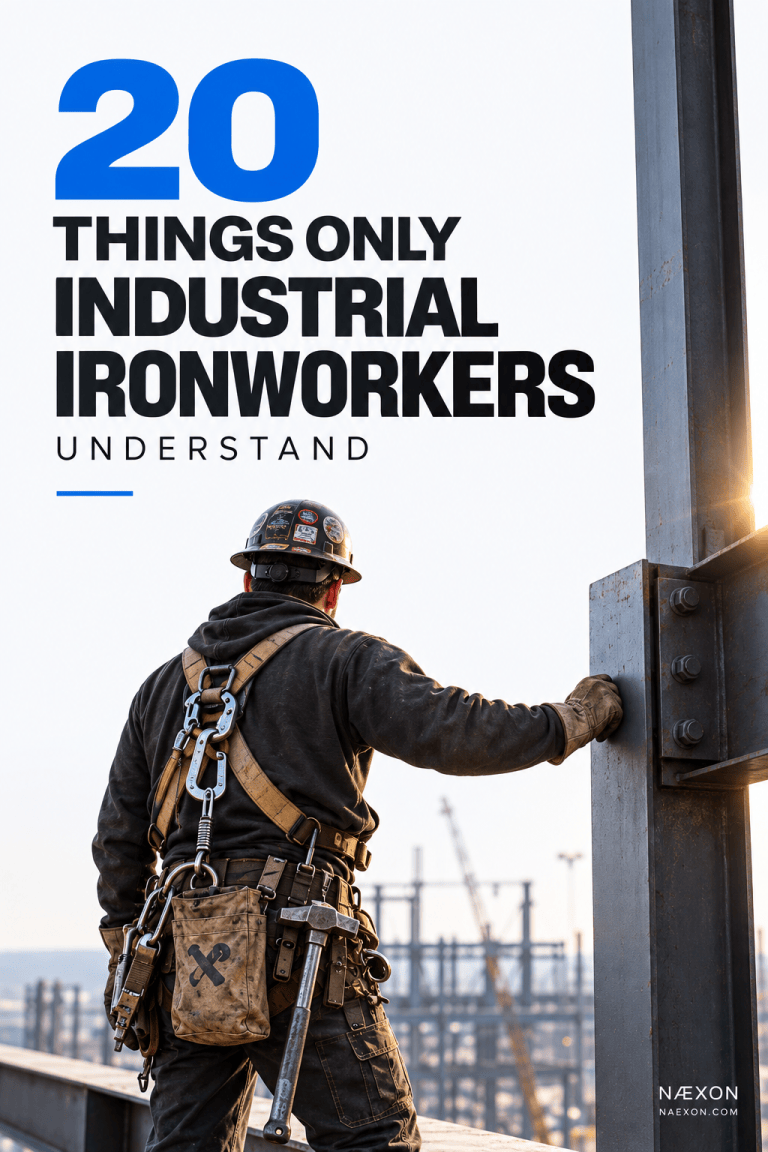
The hard hat is scratched and covered with evidence of previous jobs. The work shirt isn’t perfectly clean anymore. The boots are worn. The gloves have seen better days. The worker has spent hours climbing, fitting, welding, rigging, grinding, carrying material, or working around equipment.
For a few minutes, nobody needs another measurement.
Nobody is asking where the material is.
Nobody is waiting for the next weld.
Nobody is calling over the radio.
It’s simply a worker standing there between one part of the shift and the next.
That moment has existed in industrial work for generations.
Smoking Inside a Refinery Is Completely Different
There is one extremely important distinction.
A refinery isn’t an ordinary outdoor workplace.
Refineries can contain flammable gases, vapors, liquids, hydrocarbons, and other process materials. A source of ignition in the wrong location can create an extremely dangerous situation.
A cigarette is an ignition source.
So is the lighter used to light it.
That means a worker should never assume that smoking is acceptable simply because they’re outside or standing away from other people.
Facilities establish specific smoking policies and approved locations according to their rules and hazards. Workers must follow those requirements.
If smoking is permitted only inside a designated smoking area, that’s where you smoke.
Not beside the unit.
Not behind a trailer.
Not somewhere that “looks safe.”
The refinery’s rules come first.
Being Outside Doesn’t Automatically Mean You’re Safe
This is something new refinery workers quickly learn.
You can have open sky above your head and still be standing inside a hazardous process environment.
The absence of walls doesn’t mean the absence of hazards.
That’s why refineries have controlled areas, permits, gas testing, barricades, restricted zones, alarms, evacuation procedures, PPE requirements, and numerous other controls.
Workers learn to respect those boundaries.
Smoking requirements should be treated exactly the same way.
Follow the facility’s designated smoking policy every time.
The Break Is Bigger Than the Cigarette
For many industrial workers, the most valuable part of a smoke break isn’t necessarily smoking.
It’s stopping.
Think about what the body might have been doing during the previous several hours.
Climbing ladders.
Walking steel.
Dragging welding leads.
Carrying material.
Moving scaffold components.
Grinding.
Welding.
Torquing bolts.
Working from a manlift.
Kneeling on grating.
Crawling underneath piping.
Standing on concrete.
Working overhead.
A short break gives the body an opportunity to stop doing all of that.
A worker who doesn’t smoke can experience exactly the same thing while drinking coffee, eating a snack, drinking water, or simply sitting down.
The ritual may be different.
The pause is what matters.
Long Shifts Change the Way Workers Think About Time
Industrial shutdowns and turnarounds have their own clock.
When you’re working ten- or twelve-hour shifts for days or weeks at a time, you don’t always think about the entire shift.
You divide it into smaller pieces.
Start of shift.
Morning break.
Lunch.
Afternoon break.
Last few hours.
End of shift.
Those little milestones become mental checkpoints.
Instead of thinking, “I still have nine hours left,” you think, “Get to break.”
Then you get to lunch.
Then you get through the afternoon.
Then you’re looking at the last few hours.
Anyone who has spent time working extended industrial schedules understands how much those small checkpoints can matter.
Break Areas Become Jobsite Information Centers
Put a group of experienced industrial workers together for ten minutes and eventually the conversation turns toward work.
Who’s hiring?
Where’s the next shutdown?
Which contractor picked up the turnaround?
Who needs welders?
Who’s paying per diem?
Which job is working seven twelves?
Who’s laying people off next week?
Which power plant has an outage coming?
Who’s paying travel?
Which superintendent is running the next project?
Someone almost always knows someone.
Of course, not everything you hear during break is accurate. Jobsite rumors can travel incredibly fast.
But refinery break areas have always been places where information moves between workers.
A Five-Minute Conversation Can Lead to the Next Job
Industrial construction is enormous, yet sometimes it feels surprisingly small.
You might work beside someone in Texas and see them again two years later in Louisiana.
A welder from a refinery turnaround may show up on your next power plant outage.
A pipefitter you worked with several years ago may suddenly become a foreman somewhere else.
Workers move.
Contractors move.
Projects end.
New ones begin.
Relationships travel from job to job.
That’s why networking matters so much in the trades.
Sometimes one of the most valuable conversations on a jobsite begins during break:
“We’re going to another shutdown after this. You looking for work?”
A conversation that lasts two minutes can sometimes lead to several months of employment.
Break Is Where the Stories Come Out
Spend enough years working industrial construction and eventually you collect stories.
Everybody has them.
The shutdown that became a complete disaster.
The superintendent everybody respected.
The foreman nobody wanted to work for.
The lift that seemed impossible.
The weld that took forever.
The job where everybody made incredible overtime.
The job where half the crew dragged up.
The apprentice who made one mistake and heard about it for the next three years.
The motel everyone regretted staying at.
The food truck everybody still remembers.
The turnaround that was supposed to last three weeks and somehow turned into three months.
Those stories become part of industrial culture.
And many of them are told while workers are sitting around during break.
Sometimes the Best Break Is the Quiet One
Not every break involves stories and jokes.
Sometimes everybody is simply tired.
It’s hot.
You’ve been working since before sunrise.
Your clothes are dirty.
Your boots feel heavier than they did that morning.
Everybody finds somewhere to sit.
Nobody says much.
You drink some water.
You stare at absolutely nothing for ten minutes.
And that’s perfectly fine.
Experienced crews don’t always need to fill the silence.
Sometimes everybody understands exactly what everyone else is thinking:
We’re tired.
Your Body Needs the Break More Than Your Ego Does
Industrial workers can sometimes become competitive about toughness.
Who works the hardest?
Who never complains?
Who can handle the heat?
Who works through everything?
Who never sits down?
But fatigue is real.
A refinery worker may spend an entire shift climbing, carrying tools, lifting material, welding overhead, crawling through tight spaces, working from scaffolds, walking long distances, and standing on hard surfaces.
Combine that with summer heat, heavy work clothing, PPE, and extended shifts and fatigue can build quickly.
Rest periods, hydration, heat-stress programs, and other workplace controls exist for a reason.
Being exhausted isn’t impressive when you’re working around heavy equipment, process systems, elevated structures, hazardous energy, and moving machinery.
Staying alert matters.
Being on Break Doesn’t Automatically Cancel PPE Requirements
You’re still inside an industrial facility.
Being on break doesn’t necessarily mean the hazards around you disappeared.
If you’re still in an area where hard hats, safety glasses, protective footwear, FR clothing, hearing protection, or other PPE are required, those requirements generally remain in effect according to facility rules.
The grinder may have stopped.
The refinery hasn’t.
Follow the site’s PPE requirements until you’re actually in an area where different rules apply.
Look at an Experienced Refinery Worker
There is something distinctive about someone who has spent years working inside industrial facilities.
The hard hat isn’t perfectly clean.
The boots aren’t spotless.
The shirt doesn’t look like it just came out of the package.
The gloves are worn.
Everything carries evidence of work.
Behind that worker may be towers, exchangers, vessels, pipe racks, pumps, compressors, valves, structural steel, scaffolding, and miles of piping.
Most people will never see those systems from the inside.
But they don’t maintain themselves.
Somebody has to inspect them.
Somebody has to isolate them.
Somebody has to scaffold them.
Somebody has to open them.
Somebody has to repair them.
Somebody has to fit the replacement piping.
Somebody has to weld it.
Somebody has to rig the equipment.
Somebody has to bolt everything together.
Somebody has to test it.
And somebody has to help bring that unit back online.
Those are the workers behind the refinery.
Real Industrial Workwear Eventually Looks Used
There is something almost unnatural about seeing industrial workwear remain perfectly clean.
Real refinery clothing eventually begins showing where it has been.
Dust settles into the fabric.
Oil leaves marks.
Cuffs wear.
Knees fade.
Shirts get washed repeatedly.
Boots get scratched.
Leather gets broken in.
That’s what happens when clothing is actually worn in industrial environments.
Refinery workers don’t need clothing designed to look good sitting on a shelf.
They need workwear designed around movement, abrasion, heat, dirt, long shifts, climbing, bending, kneeling, welding, grinding, and the realities of industrial work.
That’s the environment Næxon is built around.
Not the hanger.
The shift.
Most Industrial Careers Are Built From Ordinary Moments
When people imagine refinery work, they often picture the dramatic parts.
Huge cranes.
Flare stacks.
Welding arcs.
Massive equipment.
Turnarounds.
Heavy lifts.
But an industrial career is mostly built from thousands of ordinary moments.
Walking through the gate before sunrise.
Going through the toolbox talk.
Waiting on the permit.
Dragging tools into the unit.
Finding the correct elevation.
Checking coordinates.
Climbing the scaffold.
Making the fit.
Waiting on QC.
Cleaning the work area.
Going to break.
Coming back.
Doing it again tomorrow.
Then doing it on another project.
And another.
Eventually those ordinary days add up to ten, twenty, thirty, or forty years in the trade.
The Smoke Break Isn’t Really About Smoke
Smoking has serious health risks, and none of this is meant to encourage anyone to start smoking.
The cigarette is simply part of an old industrial image that generations of workers recognize.
The real story is the person behind it.
It’s about those few minutes away from the tools.
A conversation with the crew.
A bottle of water.
A cup of coffee.
A chance to sit down.
A phone call home.
A job lead from somebody you worked with five years ago.
Or maybe it’s simply standing quietly and watching the refinery operate around you.
For a few minutes, the worker stops.
The refinery doesn’t.
Then break ends.
The cigarette is properly extinguished in the approved smoking area. The coffee cup goes into the trash. The worker gets up. Required PPE is checked. The crew starts walking back toward the unit.
And eventually somebody says the words almost every tradesperson has heard thousands of times:
“All right. Let’s get back to it.”