Why Do Welders Wear Arm Pads? The Purpose Behind One of Welding’s Most Useful Pieces of Gear
Watch an experienced pipe welder long enough and you’ll probably notice something strapped around one of their forearms.
It may look like a simple piece of leather.
But when you’re spending hours welding pipe, especially in awkward positions, that small piece of gear can serve a very practical purpose.
It’s a welding arm pad.
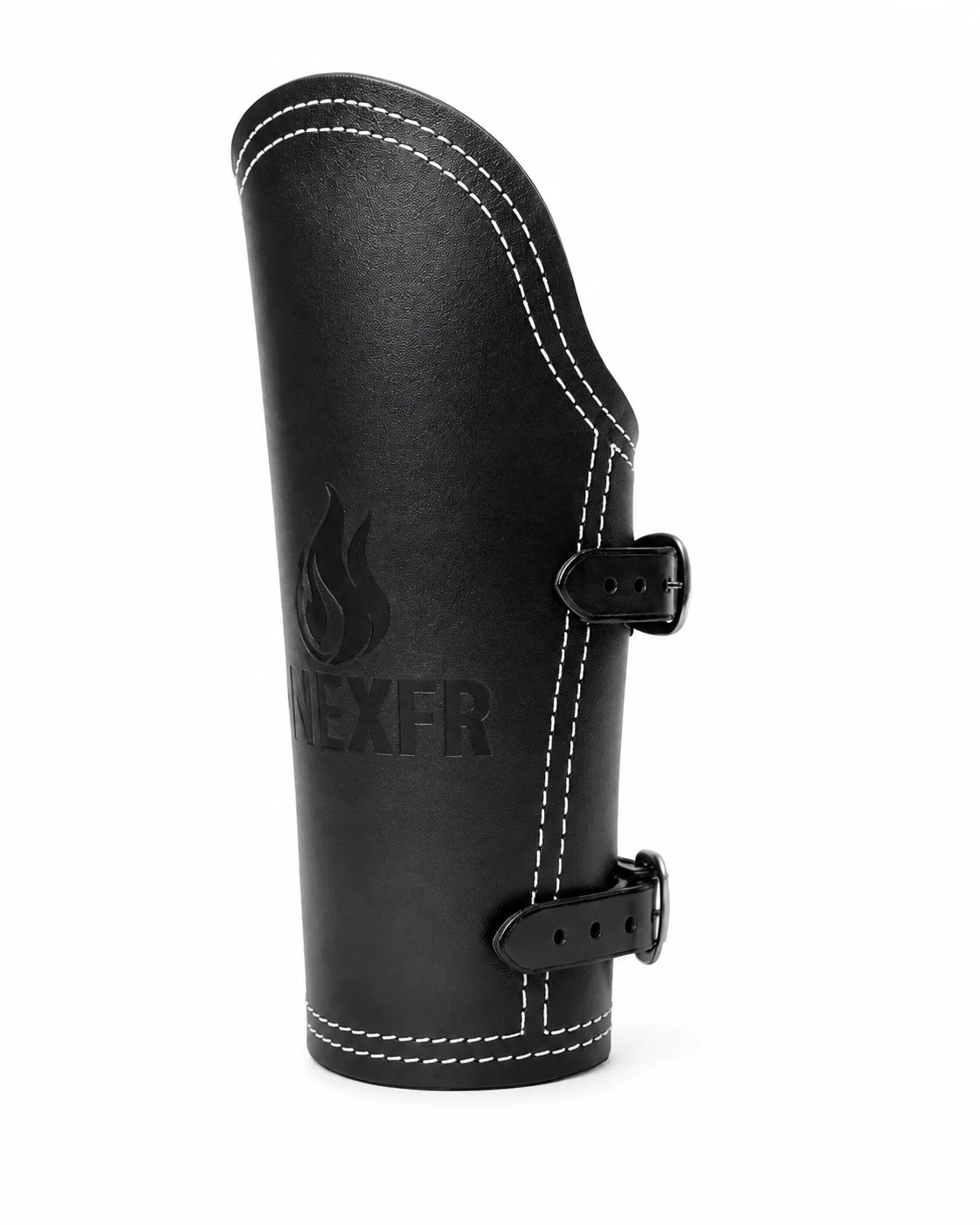
Arm pads are designed to add a durable barrier over the forearm while also giving welders a surface they can use when positioning and stabilizing their arm. Næxon’s Bully Welding Arm Pads use top-grain hide, adjustable straps, and a design intended for welding applications including MIG, TIG, and stick welding.
For some welders, an arm pad isn’t something they think about much.
For others, once they become accustomed to welding with one, it becomes part of their everyday setup.
Welding Isn’t Always Done in a Comfortable Position
People who don’t weld professionally often picture welding happening at a bench.
The workpiece is sitting directly in front of you. Your arms are comfortable. Everything is positioned exactly where you want it.
Field welding can be completely different.
A pipe weld might be near the floor.
It might be overhead.
It might be squeezed between other piping.
You may be reaching around a structural member, leaning against steel, or trying to maintain a steady body position while following the joint around the pipe.
The welder has to find a way to become comfortable enough to make a consistent weld.
And sometimes that means using the forearm as a point of support.
That’s where an arm pad becomes especially useful.
The Forearm Often Becomes Part of the Welder’s Position
Experienced welders understand how important body positioning is.
The steadier your body is, the easier it becomes to control the electrode or torch.
That doesn’t mean every weld requires bracing your arm against something. But when the situation allows it, welders often find ways to stabilize themselves.
The forearm may end up resting against nearby steel or another suitable surface.
Without an additional barrier, that can become uncomfortable quickly.
Steel can be rough.
Nearby surfaces can be warm.
Grinding leaves edges and abrasive areas.
And welding itself produces sparks and spatter.
A leather arm pad creates another layer between the welder’s forearm and that environment.
Why Leather?
There’s a reason leather has been associated with welding PPE for generations.
Leather is durable and well suited to many welding environments when properly selected for the application. Welding PPE commonly uses leather to help protect workers from heat, sparks, spatter, and abrasion.
Næxon’s Bully Arm Pads are constructed from top-grain hide, according to the current product information.
That’s an important part of the product.
An arm pad isn’t supposed to feel like a disposable accessory.
It’s going into an environment where it can be scraped against steel, exposed to welding debris, bent repeatedly, thrown into a gang box, carried around the jobsite, and used again the next shift.
The material needs to make sense for that environment.
Protection Is Only Half the Story
This is where welding arm pads differ from ordinary protective sleeves.
A full welding sleeve is primarily about providing coverage along the arm.
An arm pad can serve another practical purpose:
support.
A welder can use the padded area when positioning the forearm against an appropriate surface.
That can make certain positions more comfortable and help the welder establish a repeatable working position.
This is especially valuable during longer welds.
Anyone can hold an awkward position for thirty seconds.
Holding it while making repeated passes around pipe is another story.
Small improvements in positioning can matter over the course of an entire shift.
Think About a 6G Pipe Weld
Consider a fixed pipe in the 6G position.
The pipe isn’t rotating for you.
You’re moving around the pipe.
Your electrode angle changes.
Your body position changes.
Your visibility changes.
The comfortable position you had at one portion of the joint may disappear as you progress around it.
Experienced welders learn to reposition their feet, shoulders, hands, elbows, and forearms while keeping control of the weld.
Sometimes the arm needs somewhere to rest.
A welding arm pad gives the worker another option for making that contact more comfortable where it is safe and appropriate to do so.
It doesn’t make someone a better welder automatically.
It simply becomes another tool for managing position.
Welding Is About Eliminating Unnecessary Movement
Watch an excellent pipe welder closely.
One of the things you’ll notice is how controlled everything looks.
There isn’t a lot of unnecessary motion.
The body establishes a position.
The hand moves deliberately.
The arc remains controlled.
The welder adjusts gradually as the weld progresses.
Anything that helps create a stable, comfortable working position can potentially help the welder concentrate on what actually matters:
the puddle.
That’s one reason experienced welders spend so much time developing their personal setup.
Hood.
Lens.
Gloves.
Cap.
Jacket or FR shirt.
Arm protection.
Body position.
Everything eventually becomes familiar.
Why Adjustable Straps Matter
An arm pad that constantly moves isn’t very useful.
The pad needs to remain positioned where the welder wants it.
That’s why adjustability matters.
The Bully Arm Pads use adjustable straps designed to provide a customizable fit, allowing workers to position the pad according to their arm and working preference.
Different welders have different forearm sizes.
They also don’t necessarily wear the pad exactly the same way.
Some may position it farther toward the elbow.
Others may prefer it farther down the forearm.
Adjustability allows the worker to find the position that makes sense for the job.
Arm Pads vs. Welding Sleeves
These products shouldn’t automatically be treated as interchangeable.
A welding sleeve generally provides extended coverage along much of the arm.
An arm pad concentrates material and protection around a particular portion of the forearm.
That makes an arm pad especially useful for welders who want localized protection and a durable resting surface without necessarily adding a full additional sleeve.
But the correct PPE always depends on the hazard.
If the job requires full arm coverage, an arm pad shouldn’t be used as an excuse to eliminate required protective clothing.
An arm pad supplements the welder’s PPE system. It doesn’t replace it.
An Arm Pad Doesn’t Make Your Arm Heatproof
This needs to be clear.
Leather welding equipment provides useful protection, but it doesn’t make the person wearing it immune to heat.
Don’t intentionally lean against dangerously hot material because you’re wearing an arm pad.
Don’t use an arm pad to handle hot material.
Don’t assume leather eliminates the possibility of burns.
And don’t use one as a replacement for required gloves, sleeves, FR clothing, or other PPE.
The first rule remains the same:
Avoid unnecessary exposure whenever possible.
The arm pad provides an additional barrier. It doesn’t eliminate the hazard.
Why Top-Grain Hide Makes Sense for the Bully
Næxon could have approached the Bully as a lightweight disposable accessory.
Instead, the product is built around top-grain hide. Current product information specifically describes the material as high-quality cowhide/top-grain hide intended to provide protection against heat, sparks, weld spatter, and abrasion associated with welding work.
That fits the purpose of the product.
The Bully isn’t intended to live in a clean environment.
It’s going into fabrication shops.
Refineries.
Pipe racks.
Power plants.
Shutdowns.
Turnarounds.
Construction sites.
And wherever else welders are working.
A welding arm pad should look better after being broken in than it did sitting untouched in a package.
Leather Changes With Use
One of the interesting characteristics of real leather work gear is that it develops with the worker.
At first, leather can feel relatively stiff.
Then it starts moving.
Bending.
Forming.
Breaking in.
Eventually, a frequently used piece of leather equipment can begin conforming to the way its owner wears it.
Scratches appear.
Discoloration develops.
The leather picks up marks from the job.
For industrial workwear, that’s not necessarily a bad thing.
It’s evidence that the equipment is actually being used.
Why Næxon Calls It the Bully
The philosophy behind the Næxon Bully Welding Arm Pad is straightforward.
This isn’t supposed to be delicate equipment.
It’s a piece of leather work gear designed for welders who operate in environments where clothing and equipment get abused.
The current Bully line includes top-grain hide arm pads and has been offered in black and brown versions.
The emphasis is durability, adjustability, protection, and comfort during welding.
Not unnecessary complexity.
When Does an Arm Pad Make the Most Sense?
Arm pads can be particularly useful when a welder repeatedly uses the forearm for positioning or works around rough, abrasive surfaces.
They can also make sense during welding processes where sparks and spatter regularly reach the forearm.
That doesn’t mean every welder needs one for every weld.
Like most welding equipment, its usefulness depends on the work.
A TIG welder sitting comfortably at a clean bench may have completely different needs from a pipe welder squeezed between piping inside a refinery.
Industrial welding gear needs to reflect those differences.
Don’t Forget the Rest of Your PPE
An arm pad protects only a relatively small area.
Your hands still need appropriate gloves.
Your eyes and face still require proper welding protection.
Your clothing still needs to be appropriate for the hazards.
Your footwear, head protection, hearing protection, respiratory protection, and other PPE still depend on the job and workplace requirements.
Think of an arm pad as one component in the complete welding setup.
Never allow one good piece of PPE to create a false sense of protection everywhere else.
Small Gear Can Make a Big Difference
Some of the most useful pieces of welding equipment aren’t machines costing thousands of dollars.
They’re simple things that make working twelve hours slightly easier.
A good welding cap.
Comfortable gloves.
The lens you trust.
A shirt that moves properly.
And, for welders who like to brace and protect their forearm, a good leather arm pad.
None of those things will teach someone how to weld.
But once you already know your craft, good equipment helps you concentrate on performing it.
That’s what the Næxon Bully Welding Arm Pad is built around.
A durable piece of top-grain hide between your forearm and the industrial environment, adjustable to your preferred position and designed for the heat, sparks, spatter, abrasion, and physical demands that come with welding work.
Because sometimes the difference between fighting your position and settling into it comes down to a surprisingly small piece of gear.