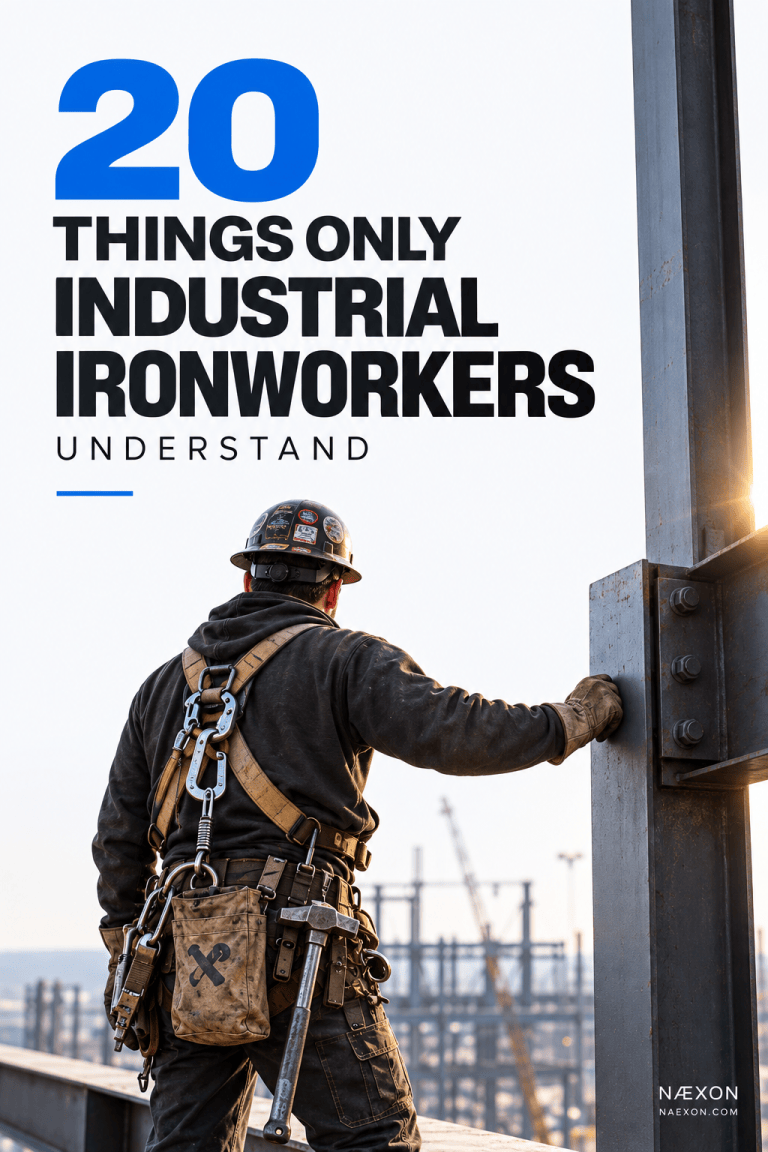
A refinery is one of the most complex industrial workplaces ever built.
Thousands of feet of piping move hydrocarbons, steam, water, hydrogen, chemicals and gases through interconnected process units. Pumps and compressors keep those fluids moving. Electrical systems provide power. Instruments continuously measure what the process is doing. Structural steel supports the equipment. Insulation controls temperature. And during shutdowns and turnarounds, skilled craft workers inspect, repair, replace and rebuild critical equipment.
Yet much of that work still comes down to a skilled tradesperson standing in the field with a tool in their hand.
A tape measure in a pipefitter’s hand can determine whether a spool fits.
A welder’s gauge can catch a problem before inspection.
A millwright’s dial indicator can detect movement measured in thousandths of an inch.
A rigger’s calculation can determine whether a massive component can be moved as planned.
An instrument technician’s loop calibrator can help uncover why the control room is receiving the wrong process value.
The individual tools may look simple.
What matters is knowing when to use them, what their limitations are and what the information they provide actually means.
This NÆXON field guide brings together 10 essential tools for 10 major skilled trades found throughout refineries, petrochemical plants and industrial facilities.
That’s 100 tools—and, more importantly, the field knowledge behind them.
1. Refinery Pipefitter
Pipefitters build and maintain the piping systems connecting nearly everything inside a refinery.
During a turnaround they may replace valves, install spools, modify process piping, break flanges, install temporary piping and reconnect equipment.
Their work has to fit.
10 Tools Every Refinery Pipefitter Should Carry
1. Tape Measure — Used constantly for face-to-face, center-to-center and center-to-face measurements.
2. Magnetic Torpedo Level — Used to establish level, plumb and orientation during spool installation and fabrication.
3. Two-Hole Flange Pins — Help establish flange bolt-hole orientation and level.
4. Flange Wedges — Useful for controlled flange separation when permitted by the work procedure.
5. Combination Square — Provides reliable 90° references for fabrication and layout.
6. Pipe Wrap-Around — Creates a straight circumferential reference around pipe for cutting and layout.
7. Centering Head — Helps establish true top center and other references for branches and pipe layout.
8. Adjustable Wrench — Useful for general hardware and miscellaneous mechanical work.
9. Soapstone and Holder — Provides visible layout marks on pipe and steel.
10. Pipefitter’s Calculator — Useful for offsets, fitting takeoffs, travel, slope, fractions, angles and other piping calculations.
Pipefitter Field Principle
Measure from known references.
A perfectly fabricated spool built from the wrong dimension is still the wrong spool.
2. Refinery Welder
Refinery welders may work on carbon steel, stainless steel, chrome-moly and other materials used in process piping and pressure-containing equipment.
Their work may ultimately face visual inspection and other forms of examination depending on the job requirements.
10 Tools Every Refinery Welder Should Carry
1. Welding Hood — Clear visibility is fundamental. Keep lenses clean and replacement cover lenses available.
2. Welding Gloves — Select gloves appropriate for the welding process and task.
3. Angle Grinder — Used for appropriate joint preparation, tack cleanup and repair preparation.
4. Soapstone and Holder — Useful for identifying starts, stops, repair areas and layout references.
5. Tape Measure — Allows the welder to verify assembly dimensions instead of assuming the fit-up is correct.
6. Combination Square — Provides accurate references during fabrication.
7. Chipping Hammer — Useful for slag removal where applicable.
8. Dedicated Wire Brushes — Stainless and carbon-steel tools should be controlled appropriately to avoid unwanted contamination.
9. Welding Inspection Gauge — Depending on the gauge, it can help evaluate weld dimensions and visible conditions before QC arrives.
10. Inspection Light — A weld still needs to be seen clearly.
Welder Field Principle
Inspect the joint before striking the arc.
Check bevel preparation, root opening, alignment, cleanliness, tacks, material and the applicable welding procedure.
Once welding begins, the welder starts taking ownership of the joint.
3. Refinery Boilermaker
Boilermakers frequently work on some of the largest pieces of process equipment in the refinery.
Heat exchangers. Towers. Drums. Pressure vessels. Furnaces. Manways. Internals.
During turnarounds, they may open equipment that hasn’t been opened since the previous major outage.
10 Tools Every Refinery Boilermaker Should Carry
1. Tape Measure — Used for equipment dimensions, bolt spacing, attachment locations and fabrication.
2. Combination Square — Provides accurate layout references.
3. Four-Pound Hammer — Provides controlled striking force for appropriate positioning tasks.
4. Bull Pin — Helps bring holes into alignment during heavy assembly.
5. Drift Pin — Useful for controlled alignment.
6. Spud Wrench — Combines a wrench with a tapered alignment end.
7. Adjustable Wrench — Provides versatility for general mechanical work.
8. Torpedo Level — Useful for orientation checks around equipment and structural components.
9. Soapstone — Used for cut lines, repair boundaries and layout references.
10. Inspection Flashlight — Essential when working inside exchangers, vessels and other poorly illuminated equipment.
Boilermaker Field Principle
Before removing the final bolts from something heavy, ask:
What happens when this comes free?
A channel head may be supported by rigging while gasket adhesion still holds it in place.
A cover may contain stored mechanical energy.
Equipment may move when the final restraint disappears.
Understand the movement before creating it.
4. Refinery Millwright
Millwrights keep the refinery’s rotating equipment alive.
Pumps. Compressors. Turbines. Motors. Gearboxes. Fans. Blowers.
A machine can look perfectly aligned and still be far enough out to damage bearings, couplings or seals once it reaches operating speed.
10 Tools Every Refinery Millwright Should Carry
1. Precision Level — Used when machinery installation requires measurements beyond ordinary construction-level accuracy.
2. Dial Indicator — Measures extremely small movement during alignment, runout and other mechanical checks.
3. Feeler Gauge Set — Useful for measuring small gaps and investigating conditions such as soft foot.
4. Machinist Square — Provides a precision 90° mechanical reference.
5. Combination Wrench Set — Basic equipment for machinery assembly and disassembly.
6. Torque Wrench — Used when fasteners have specified tightening requirements.
7. Soft-Face Hammer — Allows controlled movement while reducing the chance of damaging finished components.
8. Pry Bar — Provides controlled leverage during machinery positioning.
9. Tape Measure — Establishes general equipment position before precision alignment begins.
10. Inspection Light and Mirror — Allows inspection behind couplings, equipment feet and bearing housings.
Millwright Field Principle
When you’re measuring thousandths, dirt becomes part of the measurement.
Clean the equipment foot.
Clean the base.
Clean the shims.
Remove burrs.
Then measure.
Precision alignment begins with clean contact surfaces.
5. Refinery Industrial Electrician
Electricians provide and maintain the power that allows nearly every other refinery system to operate.
Their world includes motors, MCCs, switchgear, transformers, cable tray, conduit, lighting, heat tracing and power distribution.
Their greatest hazard often cannot be seen.
10 Tools Every Refinery Industrial Electrician Should Carry
1. Digital Multimeter — Used to investigate electrical conditions with properly rated equipment.
2. Clamp Meter — Provides useful current information when troubleshooting operating equipment where appropriate.
3. Non-Contact Voltage Tester — Useful as an indication tool, but not automatically a substitute for an approved absence-of-voltage verification procedure.
4. Insulated Screwdriver Set — Useful for appropriate electrical tasks when properly rated and required.
5. Lineman’s Pliers — A versatile gripping, twisting and cutting tool.
6. Diagonal Cutters — Useful for appropriate conductor and installation work.
7. Wire Strippers — Prepare conductors without unnecessarily damaging them.
8. Tape Measure — Essential for conduit, cable tray, supports, boxes and equipment layout.
9. Torpedo Level — Helps create clean, level and plumb installations.
10. Flashlight or Headlamp — Important during outages and work in congested areas.
Electrician Field Principle
Never accept:
“It’s off.”
as proof that equipment is electrically safe.
Follow the facility’s electrical safety and lockout/tagout procedures and verify the electrical condition using the approved method and properly rated equipment.
The switch position isn’t the measurement.
6. Refinery Instrumentation Technician
Instrumentation technicians work between the physical process and the control system.
Pressure. Temperature. Flow. Level. Valve position. Analytical measurements.
A single incorrect instrument signal can influence how operators understand the process.
10 Tools Every Refinery Instrumentation Technician Should Carry
1. Digital Multimeter — Used for electrical troubleshooting and verification.
2. Loop Calibrator — Essential for working with common industrial 4–20 mA signals.
3. HART Communicator — Provides digital access to compatible smart-instrument configuration and diagnostics.
4. Precision Screwdriver Set — Appropriate for small instrument terminals and electronics.
5. Tubing Cutter — Produces clean, square tubing cuts.
6. Tube Bender — Allows controlled instrument-tubing bends.
7. Adjustable Wrench — Useful around manifolds, fittings, regulators and instrument hardware.
8. Wire Strippers — Help create reliable signal-wire terminations.
9. Pressure Calibration Equipment — Provides a known reference when evaluating pressure instruments.
10. Inspection Flashlight — Helps inspect tubing, manifolds, tags, terminals and equipment.
Instrument Technician Field Principle
Follow the signal.
If a pressure transmitter appears wrong, don’t immediately recalibrate it.
Determine what the process is actually doing.
Check the process connection.
Check the impulse tubing.
Check the transmitter.
Check the output.
Check the control-system input.
Check the scaling.
Somewhere along that path, the evidence should begin to disagree.
That’s where troubleshooting starts.
7. Refinery Rigger
When a refinery component weighing several tons needs to move safely, the rigger helps determine how that movement happens.
Riggers work with valves, pipe spools, exchanger heads, bundles, pumps, motors, structural steel and massive pieces of process equipment.
10 Tools Every Refinery Rigger Should Carry
1. Tape Measure — Used for load dimensions, attachment spacing and clearance.
2. Approved Rigging Calculator or Reference — Helps evaluate sling angles, loading and other lift information.
3. Inspection Flashlight — Allows closer examination of rigging and attachment points.
4. Paint Marker — Useful for approved orientation and reference markings.
5. Adjustable Wrench — Useful for appropriate general mechanical work.
6. Combination Wrench — Provides positive engagement on properly sized fasteners.
7. Bull Pin — Helps with controlled alignment during positioning.
8. Torpedo Level — Provides orientation references during equipment placement.
9. Radio — Critical for clearly established lift communication when required.
10. Tag Line — Can help control load orientation when appropriate.
Rigger Field Principle
The first question isn’t:
What sling should we use?
The first question is:
What does the load weigh?
Then determine center of gravity, lifting points, geometry, sling angles, capacities, clearances and where the load could move.
Rigging selection follows understanding the load.
8. Refinery Ironworker
Ironworkers build the structural skeleton supporting much of the refinery.
Pipe racks. Platforms. Stairs. Structural supports. Equipment structures. Access systems. Steel modifications.
Their tools are built around alignment, positioning and connecting heavy steel.
10 Tools Every Refinery Ironworker Should Carry
1. Spud Wrench — Combines fastener work with a tapered alignment end.
2. Bull Pin — Helps align holes between structural components.
3. Sleever Bar — Provides leverage during steel positioning and alignment.
4. Connecting Bar — Useful during structural-steel erection and positioning.
5. Four-Pound Beater — Provides controlled striking force for appropriate heavy-steel work.
6. Tape Measure — Used for layout, connection locations and structural dimensions.
7. Torpedo Level — Provides level and plumb references.
8. Combination Square — Useful for layout and fabrication.
9. Adjustable Wrench — Handles appropriate miscellaneous hardware.
10. Soapstone or Paint Marker — Creates clear layout and orientation marks.
Ironworker Field Principle
Never put your fingers where a bull pin belongs.
Steel can move unexpectedly.
A beam that appears stationary can shift when crane tension changes, another connection is released or alignment force is removed.
Use the tool to control the alignment.
Keep your body out of the pinch point.
9. Refinery Scaffold Builder
Almost every refinery craft eventually depends on scaffold builders.
Pipefitters need access to elevated flanges.
Welders need platforms around joints.
Inspectors need access to equipment.
Boilermakers need structures around vessels and exchangers.
Electricians and instrument technicians need access to elevated systems.
A scaffold can become the temporary workplace supporting all of them.
10 Tools Every Refinery Scaffold Builder Should Carry
1. Scaffold Wrench or Ratchet — Used for the specific connection systems encountered on the scaffold.
2. Spud Wrench — Useful for alignment and appropriate fastener work.
3. Scaffold Hammer — Used with scaffold components according to system requirements.
4. Tape Measure — Helps establish dimensions, clearances and layout.
5. Torpedo Level — Provides level and plumb references during erection.
6. Adjustable Wrench — Useful for appropriate miscellaneous hardware.
7. Bull Pin — Provides controlled alignment where appropriate.
8. Tool Tether System — Important where dropped-object controls require tethering.
9. Inspection Flashlight — Helps inspect connections and difficult-to-see areas.
10. Marking Tool — Useful for approved layout and identification references.
Scaffold Builder Field Principle
A scaffold isn’t a collection of independent tubes, boards and braces.
It’s a system.
Removing one component because it is “in the way” can affect the structure.
Scaffold modifications should only be performed by personnel authorized and qualified to make them under the applicable scaffold program.
10. Refinery Industrial Insulator
Industrial insulation is often the final layer people see around process piping and equipment.
Underneath that jacket, however, the system may be conserving heat, controlling condensation, protecting personnel and maintaining process temperature.
And sometimes it is hiding something.
10 Tools Every Refinery Industrial Insulator Should Carry
1. Tape Measure — Used for pipe, insulation and finished-jacket dimensions.
2. Insulation Knife — Cuts and shapes appropriate insulation materials.
3. Utility Knife — Provides additional control for detail work.
4. Aviation Snips — Cut metal jacketing.
5. Crimpers — Form metal for fitting fabrication.
6. Hand Seamer — Creates controlled bends and edges.
7. Banding Tool — Secures jacketing and insulation systems according to specification.
8. Combination Square — Provides accurate sheet-metal layout references.
9. Dividers or Compass — Useful when laying out arcs and repeating geometry.
10. Soapstone or Marker — Creates cut lines and fabrication references.
Insulator Field Principle
Never hide what you uncover.
If insulation removal exposes unexpected corrosion, wet insulation, coating deterioration or another suspicious equipment condition, stop and report it according to site procedures.
The insulator may be the first person in years to see that section of pipe.
100 Tools, but the Tools Aren’t the Most Important Part
Look across all 10 trades and something becomes obvious.
Many tools repeat.
Tape measures appear everywhere.
Levels move between crafts.
Wrenches are almost universal.
Flashlights might be one of the most underrated industrial tools ever made.
But give the same tool to two different crafts and its purpose changes.
A pipefitter uses a level to establish piping orientation.
A millwright may use a precision level to establish machinery position.
An ironworker uses one while erecting steel.
A scaffold builder uses one while building a temporary working structure.
The tool isn’t what defines the craft.
Knowledge does.
The Refinery Is One Giant System
The trades aren’t independent.
Imagine replacing a large refinery pump.
Operations prepares the equipment for maintenance.
Electricians isolate the motor according to applicable procedures.
Instrumentation personnel address associated instruments and controls.
Pipefitters disconnect piping as required.
Insulators may remove insulation around nearby connections.
Riggers establish the lifting arrangement.
Millwrights disconnect and prepare the machine.
Scaffold builders may provide access.
Ironworkers may modify or repair supporting steel if the approved scope requires it.
The old pump is removed.
The replacement is positioned.
Millwrights establish the machinery position.
Pipefitters reconnect piping without imposing unacceptable loads on the equipment.
Electricians reconnect the motor.
Instrumentation technicians restore associated devices.
Alignment is checked.
Systems are inspected.
Insulation is restored.
Eventually operations receives the equipment back.
One pump replacement can involve half the trades in this article.
That’s refinery work.
10 Field Rules That Cross Every Trade
- Verify before acting. Don’t build a job around an assumption that can be measured or checked.
- Understand stored energy. Electrical, mechanical, hydraulic, pneumatic, thermal and process energy can remain when equipment appears inactive.
- Know your reference point. A measurement without a reliable reference can be worse than no measurement.
- Protect precision surfaces. Machined surfaces, gasket faces, shafts, bearings and instrument components can be damaged quickly.
- Stay out of the line of fire. Ask where the load, tool, pressure or component will travel if something releases.
- Don’t force what you don’t understand. Unexpected resistance is information. Find out what is causing it.
- Use tools within their intended purpose and rating.
- Read the applicable drawings and procedures. Isometrics, P&IDs, electrical drawings, structural drawings, lift plans and welding procedures exist for a reason.
- Communicate across crafts. Your work can affect the person arriving after you.
- Stop when reality doesn’t match the plan. Unexpected conditions deserve investigation, not improvisation.
The Most Valuable Tool in a Refinery
There is one tool that didn’t appear anywhere in the 100-tool list.
Experience.
Not simply years on the job.
Useful experience.
The kind that teaches a pipefitter to recheck one dimension before cutting.
The kind that makes a welder inspect the root opening before striking an arc.
The kind that makes a boilermaker wonder why a channel head hasn’t released.
The kind that makes a millwright clean underneath a machine foot before adding another shim.
The kind that makes an electrician verify rather than trust the switch.
The kind that makes an instrument technician follow the signal instead of immediately changing calibration.
The kind that makes a rigger look at the center of gravity before lifting.
The kind that keeps an ironworker’s fingers away from an alignment point.
The kind that makes a scaffold builder recognize that one brace affects more than one bay.
The kind that makes an insulator stop when wet insulation reveals corrosion underneath.
That knowledge doesn’t arrive in the tool bag.
It develops from learning the trade correctly.
Knowledge Check
1. Why isn’t owning the correct tools enough to make someone competent in an industrial trade?
Because the worker must understand when, where and how those tools should be used and how the work affects the larger industrial system.
2. Why do multiple refinery trades carry tape measures and levels?
Because accurate measurement and orientation are fundamental across piping, structural, machinery, scaffold and equipment work.
3. What should a rigger establish before selecting lifting equipment?
Reliable information about the load, including weight, configuration and other factors required to plan the lift.
4. What should an electrician establish before treating electrical equipment as safe to work on?
The required electrically safe condition according to applicable electrical safety and isolation procedures.
5. What should an insulator do after uncovering unexpected significant corrosion?
Stop and report the condition according to site requirements so qualified personnel can evaluate it.
6. Why should a millwright care about piping connected to a pump?
Because unacceptable piping loads can affect machinery position and alignment.
7. Why should an instrumentation technician understand the process rather than only the instrument?
Because the instrument is part of a larger measurement and control loop, and an apparent instrument problem may originate elsewhere.
8. Why should a welder inspect fit-up before welding?
Because joint preparation, alignment, cleanliness and procedure requirements can directly affect the completed weld.
9. Why should crafts coordinate during refinery maintenance?
Because work performed by one craft frequently changes the conditions encountered by another.
10. What is one of the most valuable questions when something unexpected happens?
Why?
Why did the machine move?
Why isn’t the flange separating?
Why is the sling loading differently than expected?
Why does the control-room value disagree with the field?
Why is the insulation wet?
Why is the circuit still energized?
The answer to why is often where troubleshooting actually begins.
Practical Exercise: Follow One Refinery Job Through All 10 Trades
Imagine a refinery is replacing a large piece of rotating equipment during a turnaround.
Instead of thinking only about your craft, follow the entire job.
Identify what needs to be isolated.
Determine what piping must be disconnected.
Identify electrical and instrumentation connections.
Determine whether insulation needs removal.
Determine whether scaffold access is required.
Identify structural restrictions.
Establish the equipment weight and lifting arrangement.
Determine how the old equipment will leave the area.
Determine how the replacement will enter.
Establish the machinery position.
Reconnect associated systems.
Verify alignment and mechanical condition.
Restore electrical and instrumentation systems according to the required procedures.
Restore insulation and access systems as required.
Inspect the completed work.
Then ask:
What could one craft do incorrectly that would create a problem for the next craft?
That question changes the way you look at industrial work.
A refinery isn’t maintained by pipefitters.
It isn’t maintained by welders.
It isn’t maintained by millwrights, electricians, riggers or boilermakers.
It takes all of them.
Different tools.
Different skills.
Different responsibilities.
One facility.
And when every craft understands not only its own job but how that job connects to everyone else’s, the entire turnaround gets better.
10 Trades. 100 Tools. One Standard.
A refinery may contain billions of dollars worth of equipment.
But during a turnaround, some of the most important decisions in that facility are still being made by someone standing on steel grating with a tool in their hand.
The value isn’t simply in knowing how to use that tool.
It’s knowing what you’re looking at, what could happen next and when something isn’t right.
That’s the difference between carrying tools and knowing a trade.
NÆXON — Built for the trades that build America.