NÆXON INDUSTRIES
Refinery Units
Explore how refinery process units work, from crude distillation to conversion, treating, and product recovery.
One email. Every course.
Subscribe free to unlock the full Næxon course library. No password. No payment.
26 LESSONS
Refinery Units
Explore how refinery process units work, from crude distillation to conversion, treating, and product recovery.
 View lesson
LESSON 01
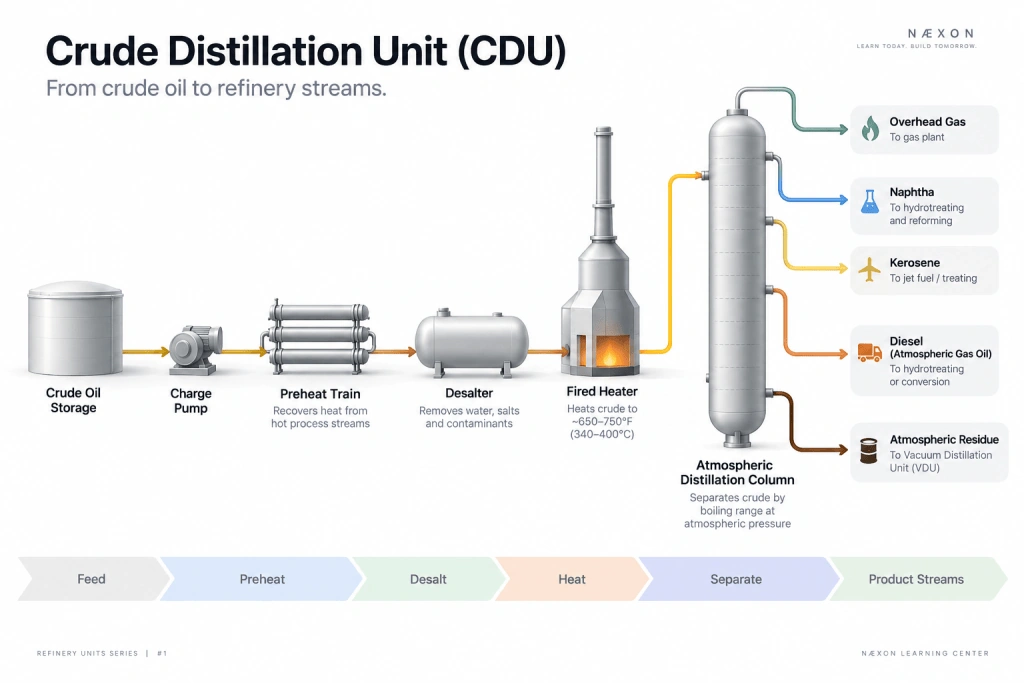
Crude Distillation Unit (CDU): Where Refining Begins
How a crude distillation unit heats and separates crude oil into refinery streams by boiling range, from light gases to atmospheric residue.
 View lesson
LESSON 02
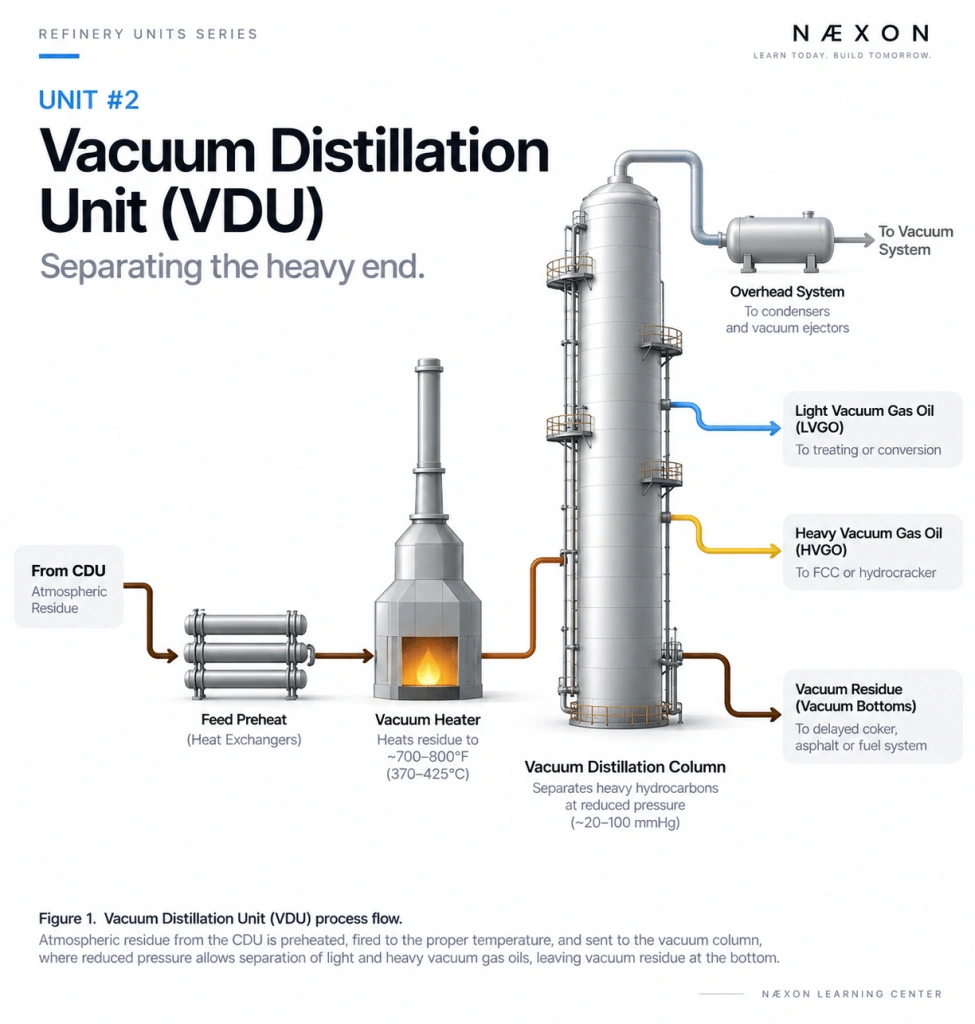
Vacuum Distillation Unit (VDU): Separating the Heavy End
How a vacuum distillation unit separates atmospheric residue into vacuum gas oils and heavier residue at reduced pressure.
 View lesson
LESSON 03
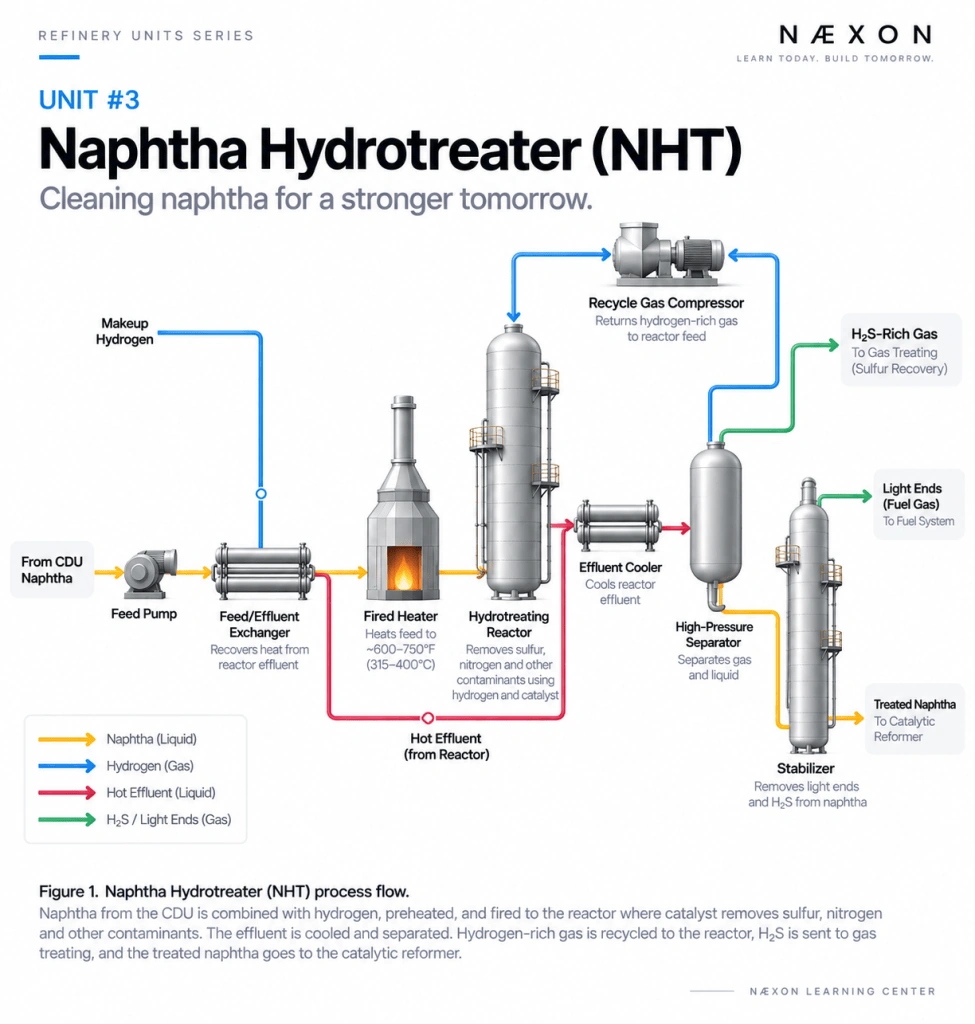
Naphtha Hydrotreater (NHT): Cleaning Naphtha Before Gasoline Processing
How a naphtha hydrotreater uses hydrogen and catalyst to remove sulfur and other contaminants before downstream gasoline processing.
 View lesson
LESSON 04
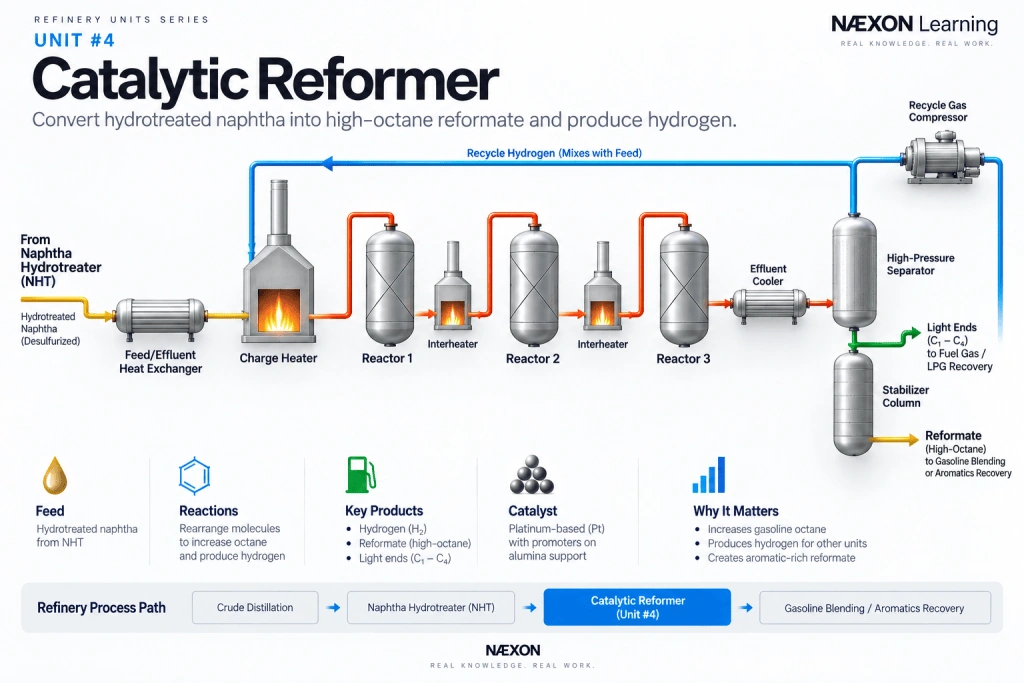
Refinery Unit #4 — Catalytic Reformer
How a catalytic reformer turns hydrotreated naphtha into high-octane reformate and hydrogen-rich gas using heated catalyst reactors.
 View lesson
LESSON 05
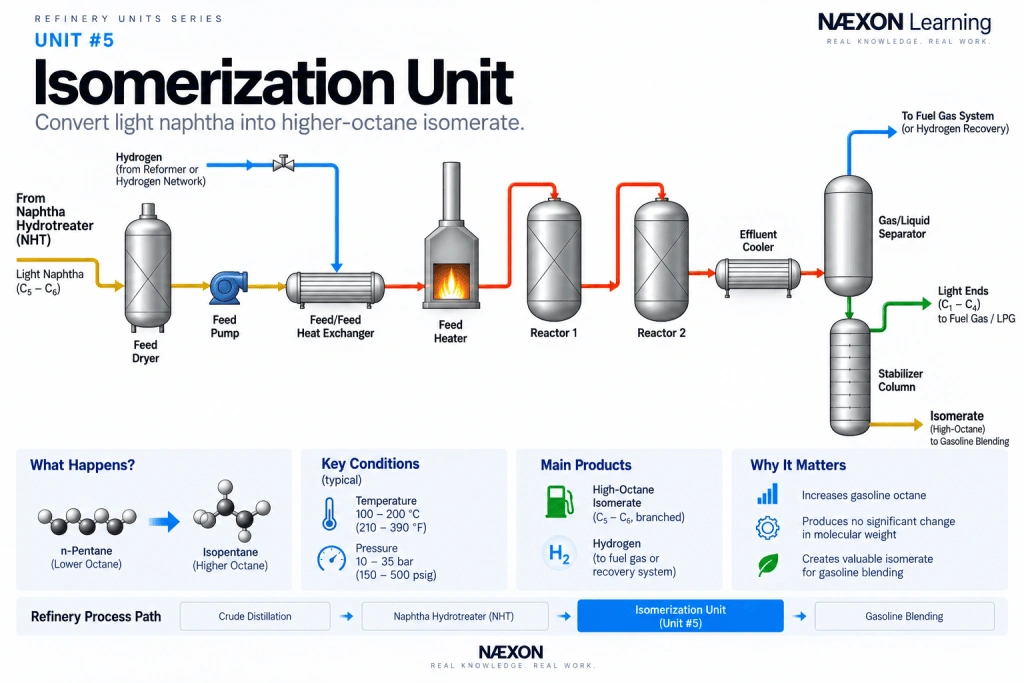
Isomerization Unit: How Refineries Turn Light Naphtha Into Higher-Octane Gasoline
How an isomerization unit rearranges light naphtha molecules into higher-octane isomerate for gasoline blending.
 View lesson
LESSON 06
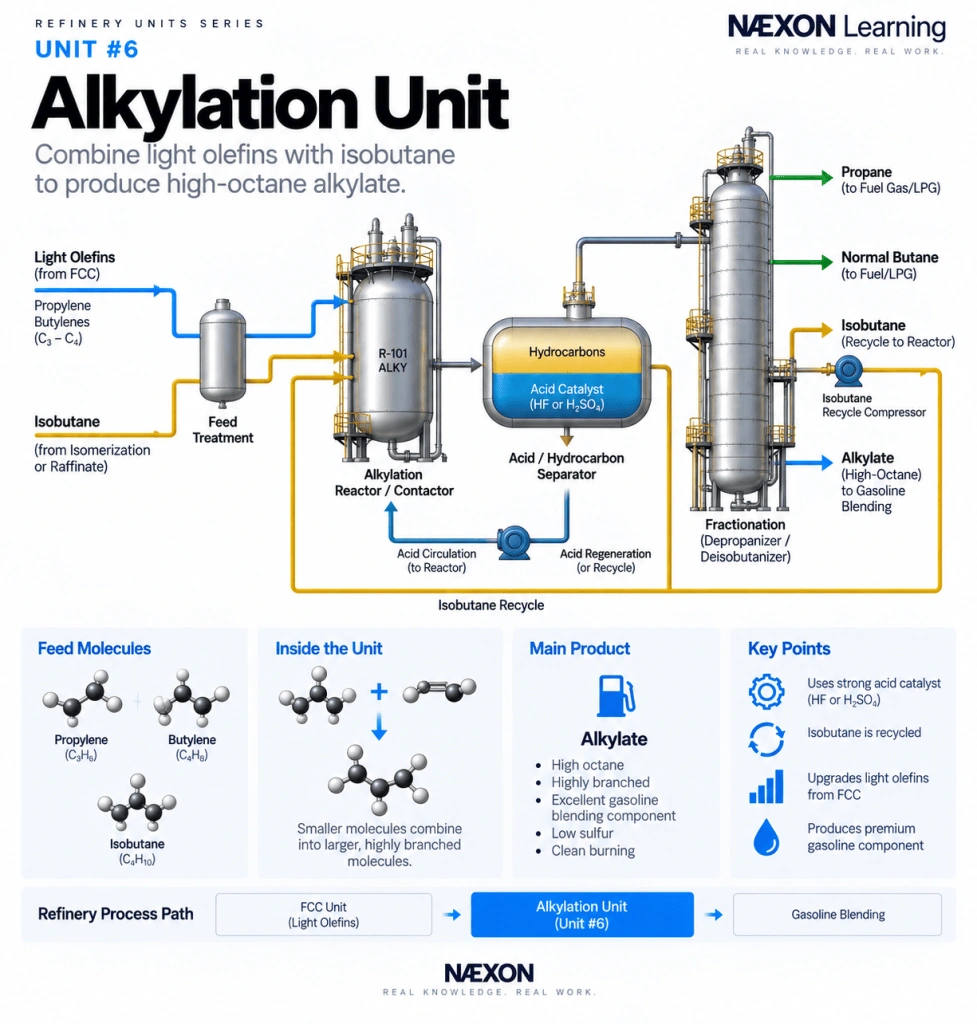
Alkylation Unit: How Refineries Make High-Octane Alkylate
How a refinery combines isobutane with light olefins in an alkylation unit to make high-octane gasoline blendstock.
 View lesson
LESSON 07
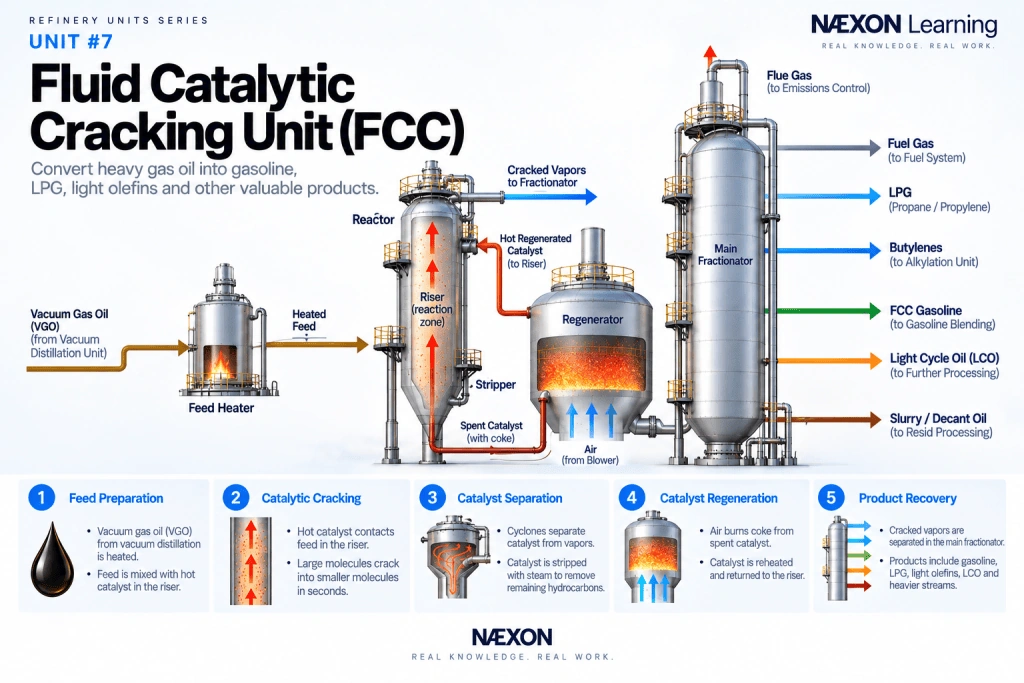
Fluid Catalytic Cracking Unit (FCC): How Refineries Turn Heavy Gas Oil Into Gasoline and Light Products
How the FCC cracks vacuum gas oil with circulating catalyst to produce gasoline-range material, LPG, and other light products.
 View lesson
LESSON 08
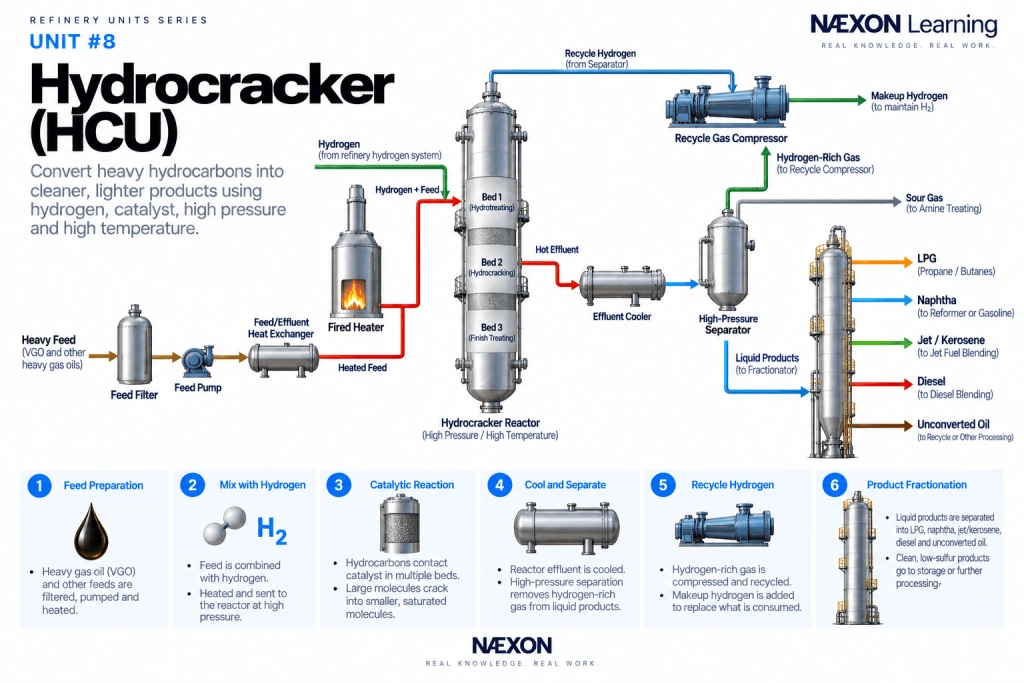
Hydrocracker: How Refineries Convert Heavy Oil Into Diesel, Jet Fuel and Naphtha
How a hydrocracker uses hydrogen, pressure, temperature, and catalyst to make lighter diesel, jet-range, and naphtha streams.
 View lesson
LESSON 09
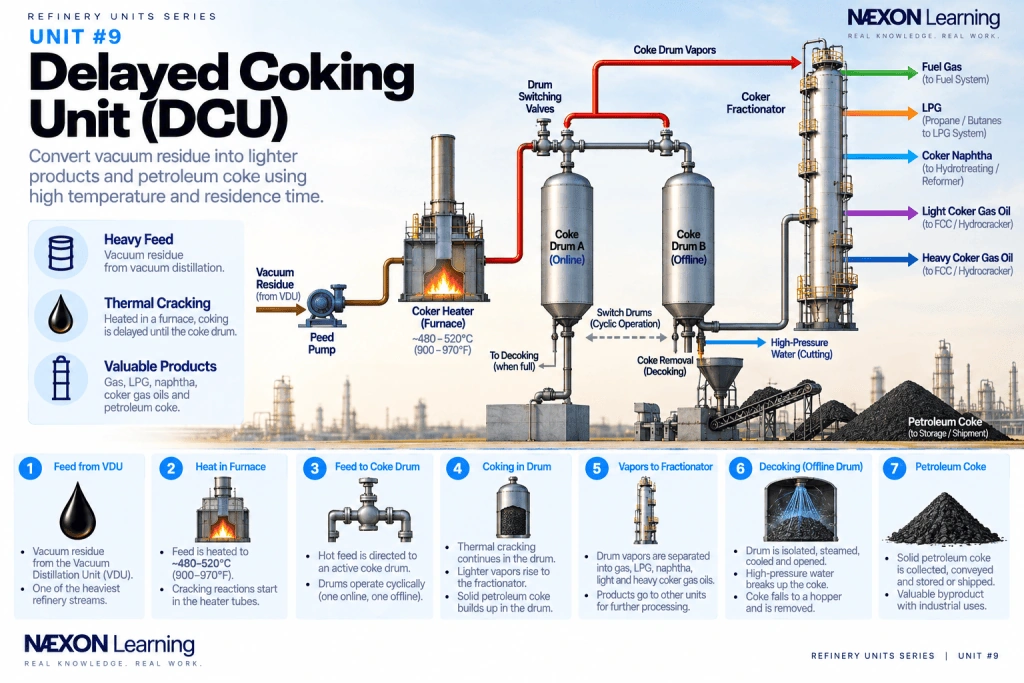
Delayed Coking Unit (DCU): How Refineries Turn Vacuum Residue Into Lighter Products and Petroleum Coke
How a delayed coker thermally cracks vacuum residue into lighter hydrocarbons and solid petroleum coke.
 View lesson
LESSON 10
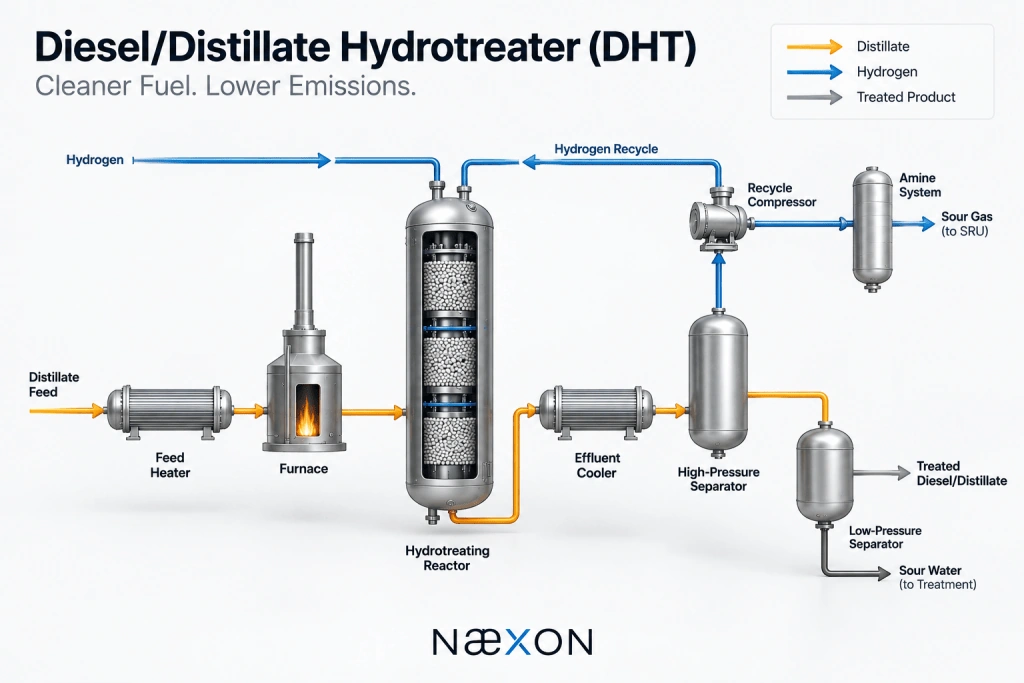
Diesel/Distillate Hydrotreater (DHT): How Refineries Produce Cleaner, Low-Sulfur Diesel
How diesel-range feed combines with hydrogen and catalyst, then passes through separation and stripping to produce treated distillate.
- View lesson
LESSON 11
Refinery Unit Series #12 — Amine Treating Unit
How circulating amine absorbs hydrogen sulfide from sour refinery gas and sends acid gas to sulfur recovery.
- View lesson
LESSON 12
Sulfur Recovery Unit (SRU): How Refineries Turn Hydrogen Sulfide Into Elemental Sulfur
How a refinery sulfur recovery unit converts hydrogen sulfide-rich acid gas into elemental sulfur through the Claus process.
- View lesson
LESSON 13
Sour Water Stripper (SWS): How Refineries Remove Hydrogen Sulfide and Ammonia From Process Water
How a sour water stripper removes hydrogen sulfide and ammonia from refinery process water before downstream handling.
- View lesson
LESSON 14
Tail Gas Treating Unit (TGTU): How Refineries Recover More Sulfur After the SRU
How tail gas treating recovers additional sulfur compounds after the Claus sulfur recovery unit and returns hydrogen sulfide for processing.
- View lesson
LESSON 15
Hydrogen Production Unit (H₂ Plant): How Refineries Make Hydrogen for Hydrotreaters and Hydrocrackers
How a refinery hydrogen plant uses steam methane reforming and purification to supply hydrotreaters and hydrocrackers.
 View lesson
LESSON 16
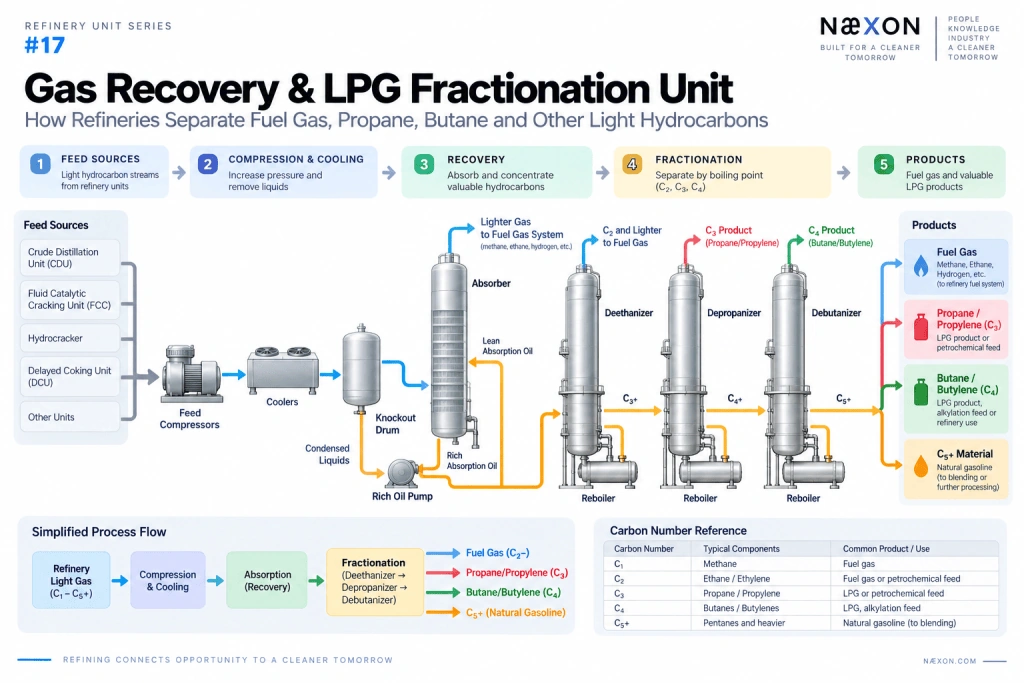
Gas Recovery & LPG Fractionation Unit: How Refineries Separate Fuel Gas, Propane, Butane and Other Light Hydrocarbons
How refineries recover and separate light hydrocarbon gases into fuel gas, C3 and C4 products, and C5-plus material.
- View lesson
LESSON 17
Merox Treating Unit: How Refineries Remove Mercaptans From LPG, Kerosene and Other Fuel Streams
Learn how Merox treating uses caustic solution, catalyst, and oxygen to treat mercaptans in LPG, kerosene, and other refinery streams.
 View lesson
LESSON 18
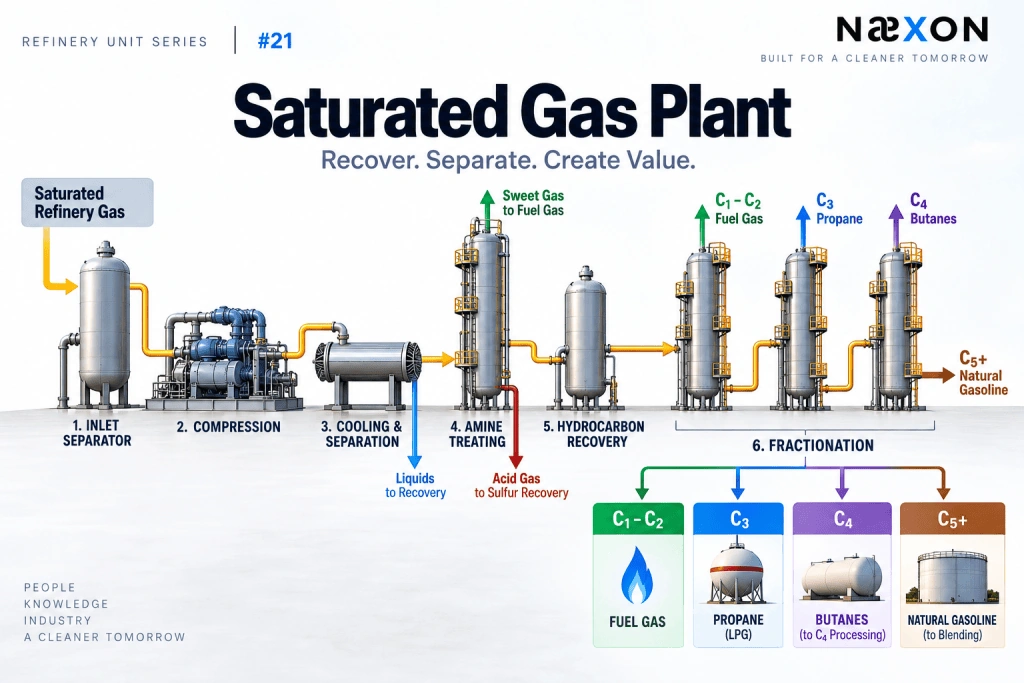
Saturated Gas Plant: How Refineries Recover and Separate Light Hydrocarbons From Crude and Hydroprocessing Units
How a saturated gas plant treats refinery gases and recovers propane, butane, and heavier hydrocarbons.
- View lesson
LESSON 19
FCC Wet Gas Plant: How Refineries Recover Fuel Gas, Propylene, Butylene and Gasoline From FCC Vapors
How an FCC wet gas plant compresses and separates cracked vapors into fuel gas, LPG components, and stabilized gasoline.
 View lesson
LESSON 20
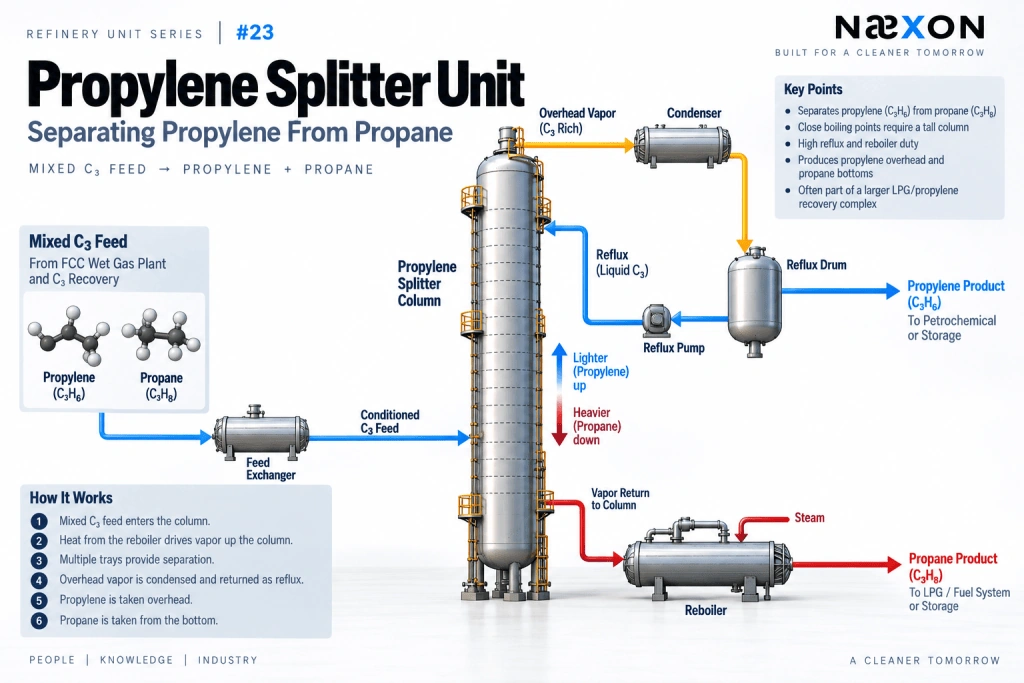
Propylene Splitter Unit: How Refineries Separate Propylene From Propane
Why separating propylene from propane requires specialized fractionation and where the splitter fits in FCC gas recovery.
 View lesson
LESSON 21
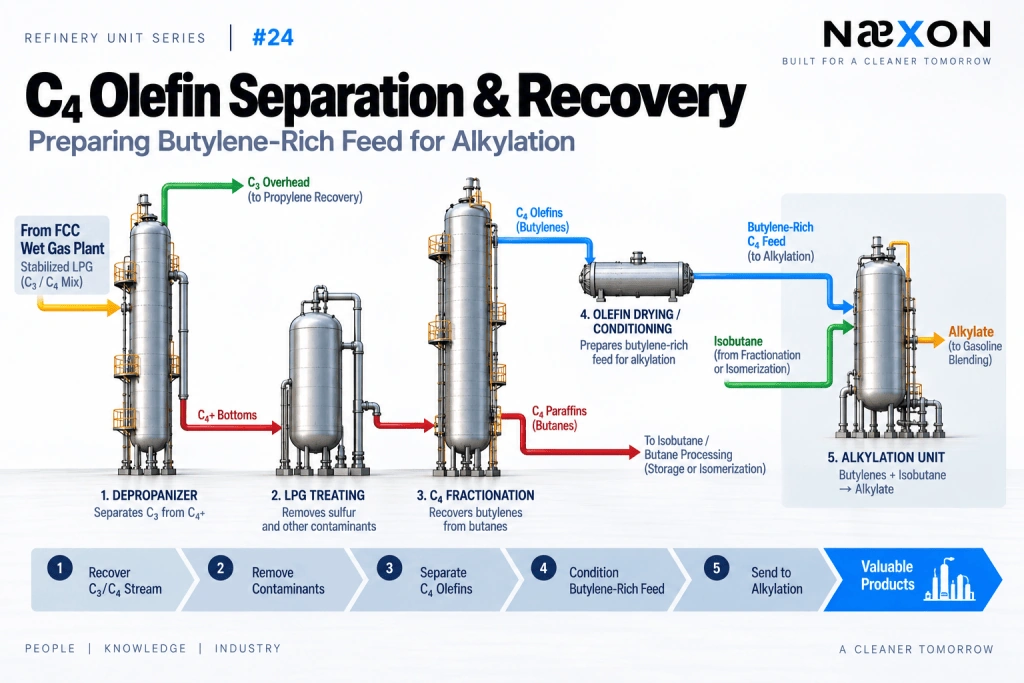
C₄ Olefin Separation & Recovery: How Refineries Prepare Butylene-Rich Feed for Alkylation
How refineries recover, treat, and condition butylene-rich C4 material from FCC gas for downstream alkylation.
 View lesson
LESSON 22
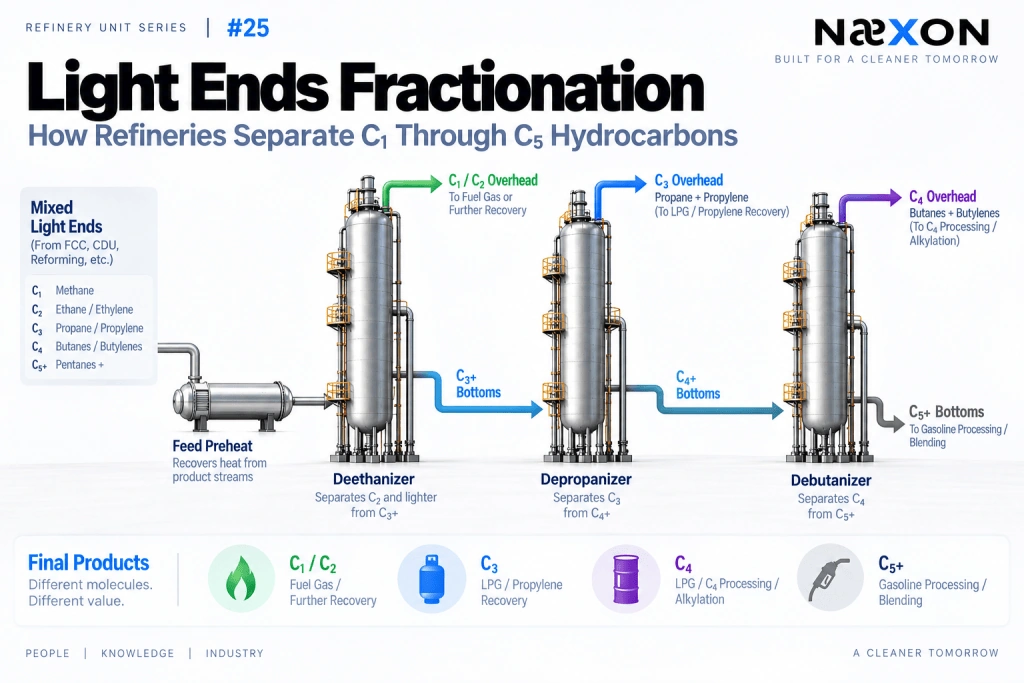
Light Ends Fractionation: How Refineries Separate C₁ Through C₅ Hydrocarbons
A guide to refinery fractionation of mixed light hydrocarbons into useful C1, C2, C3, C4, and C5-plus streams.
 View lesson
LESSON 23
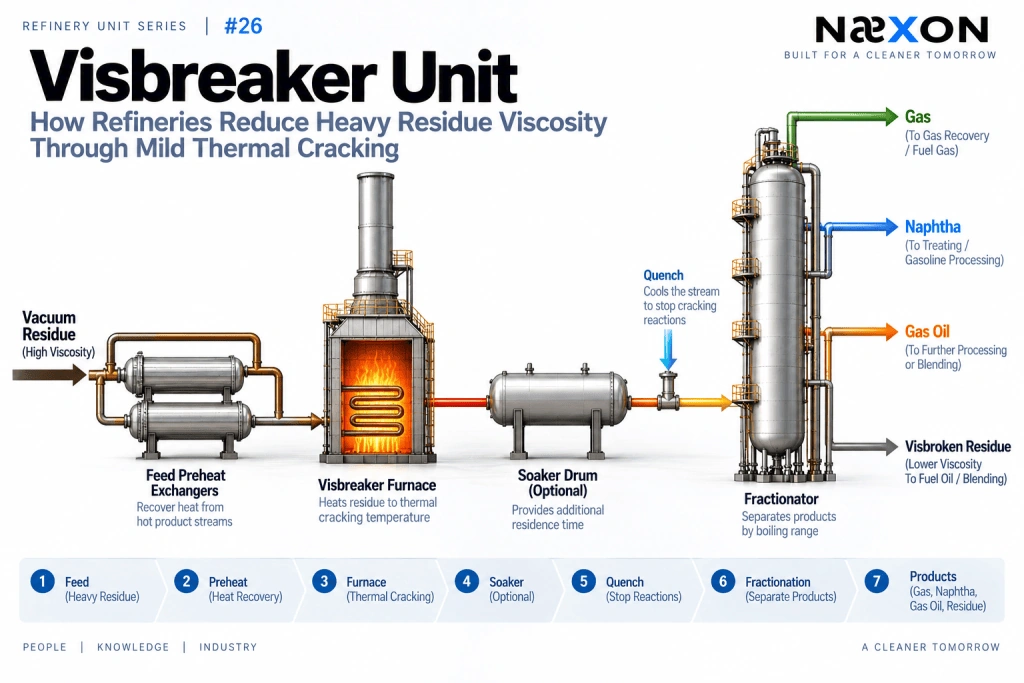
Visbreaker Unit: How Refineries Reduce Heavy Residue Viscosity Through Mild Thermal Cracking
Learn how a visbreaker reduces heavy residue viscosity through controlled thermal cracking and recovers lighter fractions.
 View lesson
LESSON 24
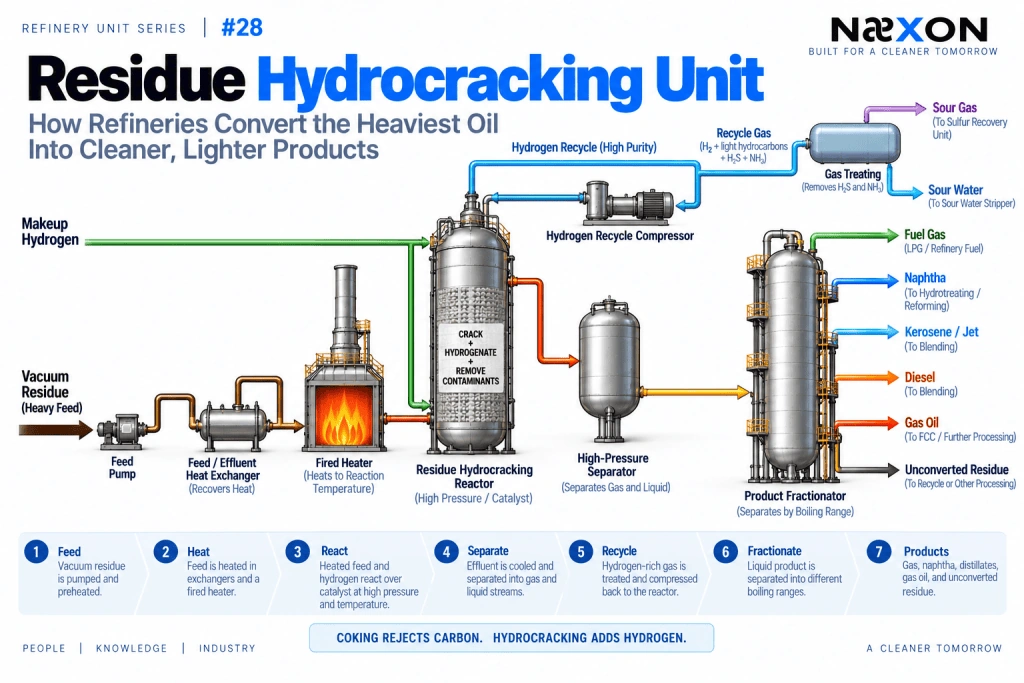
Residue Hydrocracking: How Refineries Convert the Heaviest Oil Into Cleaner, Lighter Products
How residue hydrocracking uses hydrogen, pressure, and catalysts to convert heavy refinery residue into lighter products.
 View lesson
LESSON 25
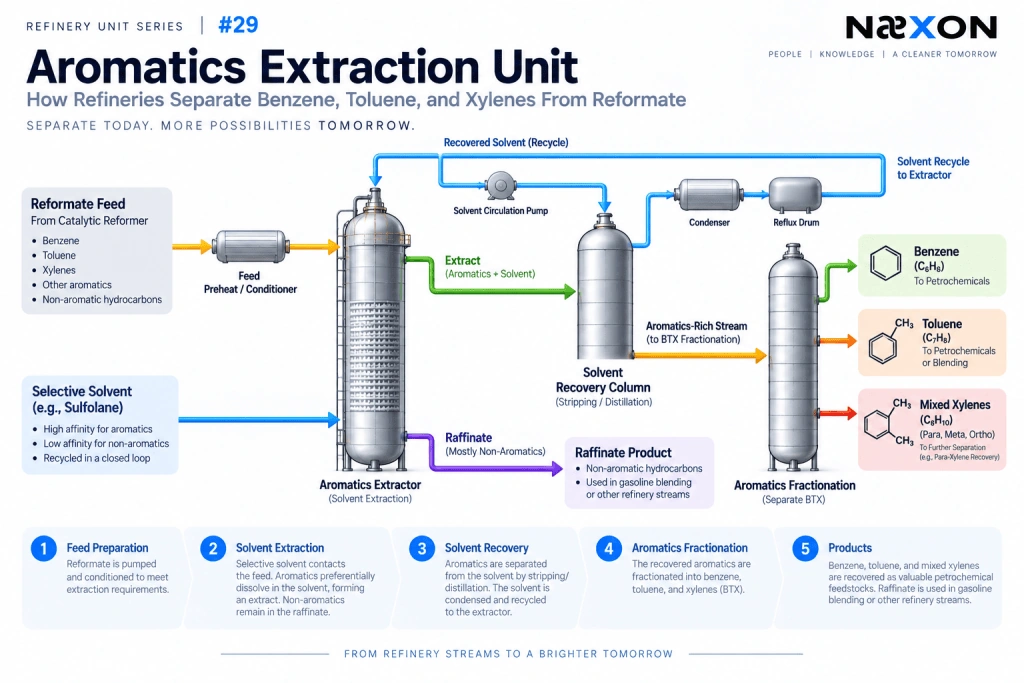
Aromatics Extraction Unit: How Refineries Separate Benzene, Toluene, and Xylenes From Reformate
How an aromatics extraction system separates benzene, toluene, and xylenes from catalytic reformer product streams.
 View lesson
LESSON 26
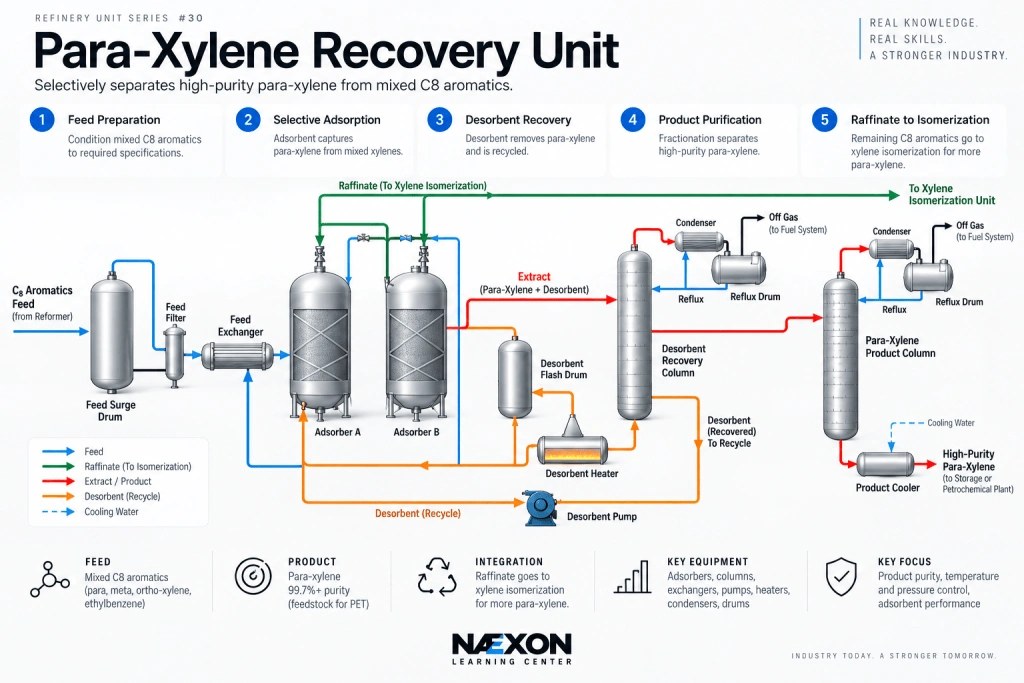
Para-Xylene Recovery Unit: How Refineries Separate High-Purity Para-Xylene
How integrated refinery and petrochemical plants recover high-purity para-xylene from mixed C8 aromatics using specialized separation.