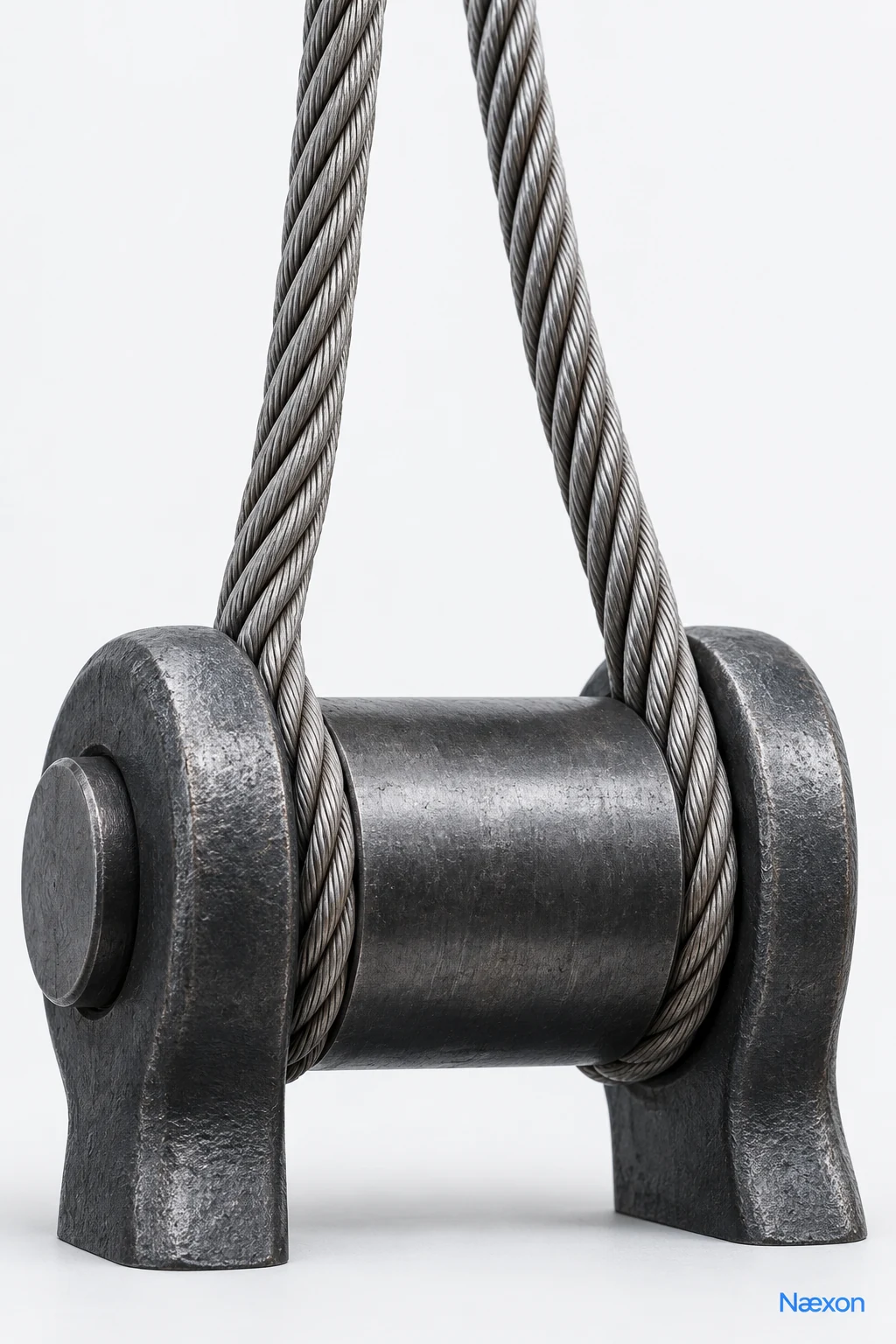
Morning Edition · Riggers · Apprentice · Fundamentals · 10-minute read
What you will learn: Define D and d, calculate a wire-rope sling’s D/d ratio, identify the bearing surface that controls the bend, and decide when the approved capacity information must be checked before a lift proceeds.
A wire-rope sling can carry the same tag and form the same basket hitch on two different loads, yet the bend in the rope may be completely different. Around a broad vessel shell, the rope curves gradually. Around a small pin, narrow shackle body, or tight corner, the rope bends much more sharply. That bend matters because a sling’s rated capacity is tied to stated conditions—not just the rope diameter printed on its tag.
The field question is simple: how large is the surface the rope bends around compared with the rope itself? The D/d ratio puts that comparison into one number. It does not approve a lift by itself, and it does not replace the sling identification, manufacturer tables, lift plan, inspection, edge protection, or qualified supervision.
What D and d mean
D is the diameter of the curved bearing surface around which the sling body bends. Depending on the arrangement, that surface may be a cylindrical load, a trunnion, a pin, the body of a shackle, or another rounded support. d is the nominal diameter of the wire-rope sling body. For a multi-part sling, the controlling document may define d as the component-rope diameter, so the sling manufacturer’s terminology must be followed.
The formula is:
D/d ratio = bearing diameter D ÷ sling diameter d
Both dimensions must use the same unit. Inches divided by inches or millimeters divided by millimeters leaves a unitless ratio. A result of 8 means the bearing diameter is eight times the sling diameter, written as 8:1.
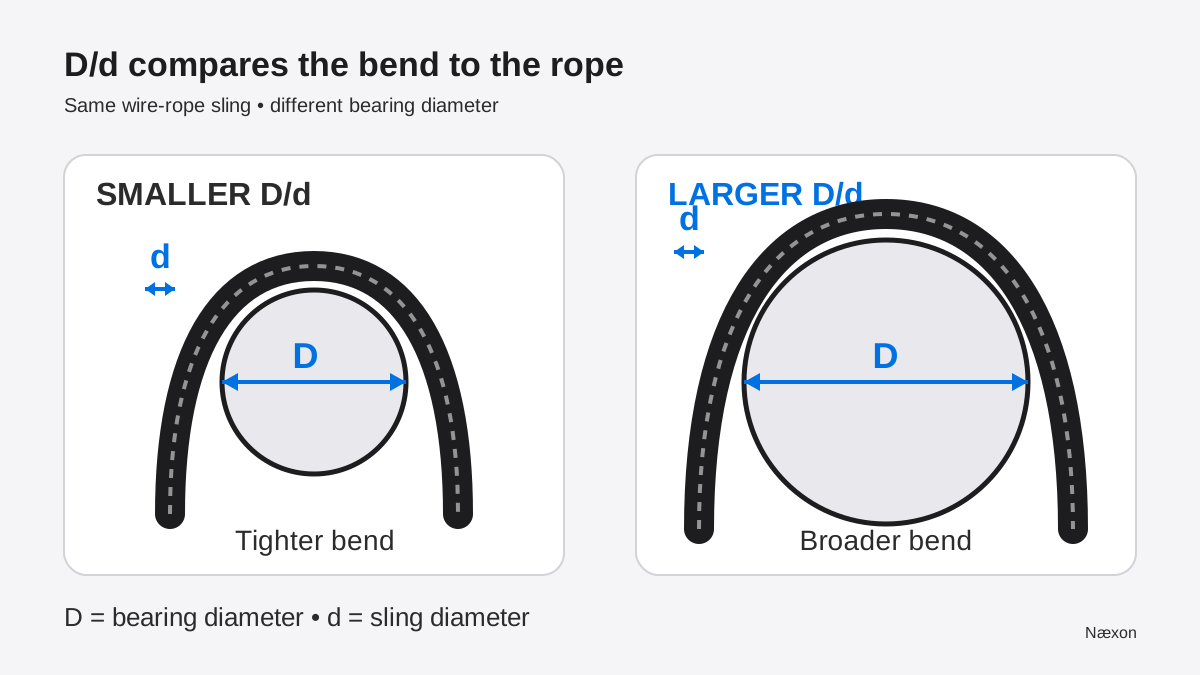
Figure 1 shows the geometry, but the ratio is not a visual grade such as “good” or “bad.” Its meaning comes from the rated-capacity basis and reduction information for the exact sling construction and hitch. Published wire-rope basket ratings are commonly tied to a stated minimum D/d basis. If the actual bend is smaller than that basis, the listed rating cannot simply be copied into the lift calculation.
Why a tight bend changes rope behavior
Wire rope is an assembly of wires, strands, and a core designed to share load while remaining flexible. Bending forces the outer parts of the rope to travel farther around the curve while the inner parts travel a shorter path. The strands and wires adjust relative to one another, and the contact pressure becomes more concentrated as the bend becomes tighter.
A smaller D/d ratio therefore increases bending severity. It can reduce the efficiency available from the rope in that configuration and can contribute to distortion, crushing, or permanent set when the arrangement, load, or hardware is unsuitable. The exact effect is not universal. Rope construction, sling construction, hitch, bearing shape, and manufacturer data all matter.
This is why a rigger should never borrow a reduction percentage from memory or from a chart for another sling. One source may address a six-strand mechanical-splice sling in a basket hitch; another may address a braided sling, grommet, or specialty product with a different published basis. The tag identifies the sling, while the manufacturer’s current table or approved lift documentation establishes how the actual D/d condition is handled.
Worked example: a six-inch bearing surface
Assume a training example uses a 3/4-inch nominal wire-rope sling around a cylindrical bearing surface with a measured 6-inch diameter. These values are illustrative, not a recommendation for a real lift.
Let D = 6 in and d = 3/4 in = 0.75 in. Carry the units through the calculation:
D/d = 6 in ÷ 0.75 in = 8
The result is 8:1. The inches cancel, which confirms that the ratio is unitless. A second check uses multiplication: 0.75 in × 8 = 6 in, so the arithmetic returns the measured bearing diameter.
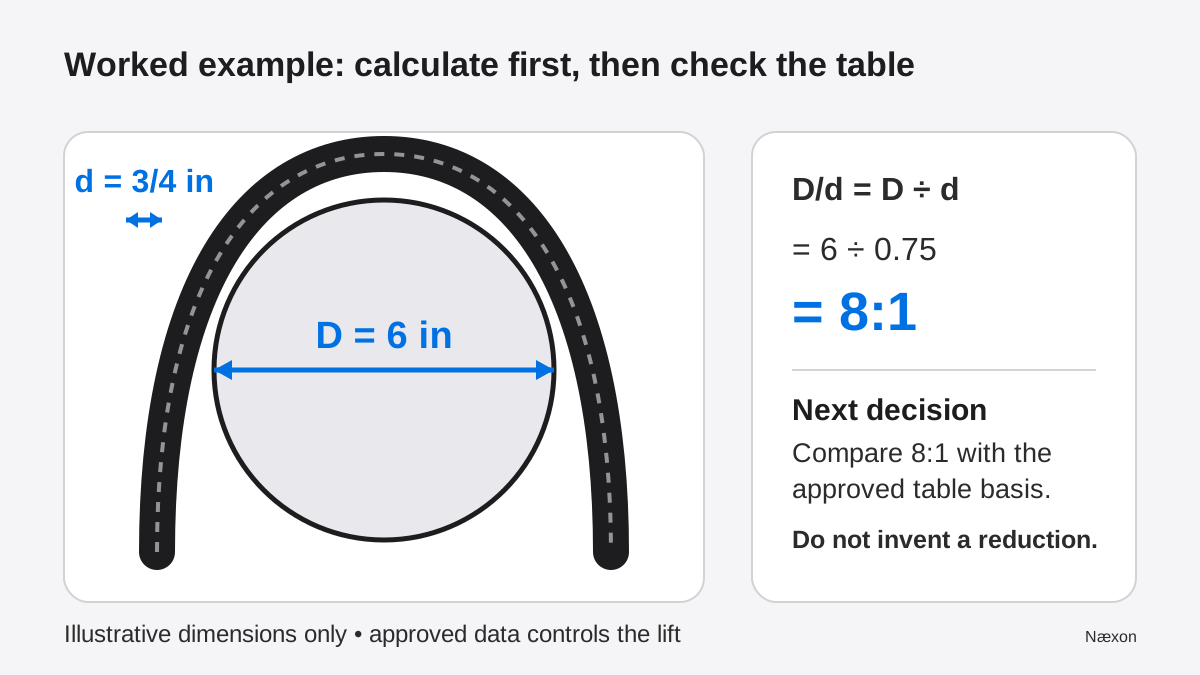
A reasonableness check also helps. Because 6 inches is clearly several times larger than 3/4 inch, the answer should be greater than 1. Because eight pieces measuring 3/4 inch total 6 inches, 8:1 is reasonable.
The next step is not to invent a capacity. Suppose the approved basket-hitch table being considered states that its ratings are based on a minimum D/d ratio of 25:1. The actual 8:1 condition is below that table basis. That mismatch tells the crew to stop using the unadjusted table value and obtain the applicable manufacturer reduction or qualified-person determination. It does not tell the crew what the revised capacity is.
Find the controlling bearing surface
The most common field error is measuring the wrong object. The load may be six feet wide, but the sling might actually bend over a two-inch trunnion, a narrow shackle body, or a small pin. D is the diameter where the sling body changes direction under load. It is not automatically the overall load diameter, the shackle-pin diameter listed in a catalog, or the opening width between shackle ears.
Follow the loaded path with your eyes. Identify every place the sling body bears and bends. If two surfaces have different diameters, the smaller controlling bend may govern the check. Also confirm that the surface is genuinely rounded. A flat plate edge does not become a six-inch bearing diameter merely because the load is six inches thick; edges require separate protection and engineering consideration.
A field method for checking D/d
- Identify the exact sling. Read the legible tag and confirm sling type, nominal diameter, hitch ratings, and any manufacturer limitations.
- Trace the loaded sling body. Locate each bearing surface that changes the rope’s direction, including load contact and rigging hardware.
- Measure the correct D. Use the actual curved bearing diameter at the loaded contact. Do not substitute an overall hardware dimension.
- Confirm d. Use the sling-body or component-rope diameter required by the controlling documentation.
- Use one unit system. Convert all dimensions to inches or all to millimeters before dividing.
- Calculate D ÷ d. Write the result as a ratio and independently multiply d by the result to recover D.
- Compare with approved information. Check the sling manufacturer’s current capacity table, reduction guidance, lift plan, and site procedure for that sling and hitch.
- Stop when the basis does not match. If the actual ratio is below the table basis, the surface is not truly cylindrical, the tag is illegible, or the applicable reduction cannot be verified, do not assign a capacity from memory.
Incorrect approach versus correct approach
The incorrect approach is to read “basket” on the tag, double a vertical rating, and ignore what the sling bends around. That fails because a basket value is published for stated conditions, including its D/d basis and sling-angle basis. A tight bend may make the unadjusted value inapplicable even when the sling is otherwise correctly identified.
The correct approach separates three checks: hitch geometry, sling angle, and bend geometry. D/d addresses the bend only. Sling-angle effects still have to be handled by the approved rating method, and the rigging must still control the load. Passing one check never erases the others.
Troubleshooting a D/d check
If two people calculate different ratios, compare the values they used for D and d before debating the arithmetic. One may have measured the shackle pin while the sling body actually bears on the bow. Another may have used the finished multi-part sling-body diameter when the table calls for component-rope diameter. Resolve the definition with the exact manufacturer document.
If the sling does not sit smoothly on the bearing surface, stop. Side loading, point contact, a sharp edge, a crowded hook, an oversized object forced into a sling eye, or a twisted sling can create problems that a simple D/d number does not solve. Reconfigure only under the lift plan and qualified direction.
Escalate when the sling tag is missing or illegible, the rope shows kinking, crushing, birdcaging, broken wires, heat damage, corrosion, or other rejection indicators, the capacity table basis cannot be confirmed, a reduction would be required but no approved value is available, or the arrangement involves unusual or noncylindrical bearing geometry.
Common mistakes
Frequent errors include using radius instead of diameter, mixing inches and millimeters, measuring the overall load instead of the actual contact surface, using shackle opening width as D, applying a six-strand curve to a different sling construction, assuming a larger shackle is automatically acceptable without checking its own capacity and loading, and treating a calculated ratio as permission to lift.
Another mistake is solving only the D/d question. The crew must still verify the load weight, center of gravity, hitch, sling angles, hardware compatibility, edge protection, inspection status, environmental conditions, and exclusion-zone controls required by the lift plan.
Field Rules
- D is the loaded bearing diameter; d is the sling diameter defined by the controlling document.
- Use the same units before dividing.
- A smaller D/d ratio means a tighter bend.
- The ratio describes geometry, not an approved capacity by itself.
- Match the sling construction and hitch to the correct manufacturer table.
- If the actual ratio is below the table basis, stop and obtain the approved reduction or determination.
Knowledge Check
- A 5/8-inch sling bends around a 5-inch cylindrical surface. What is the D/d ratio?
- A load is 24 inches wide, but the sling body turns over a 3-inch trunnion. Which dimension is D for that bend?
- Your calculation gives 10:1, while the approved table states its basket ratings are based on 25:1. Can you use the listed basket value without further information?
- Two riggers obtain different ratios from the same arrangement. What should they compare first?
- A ratio meets the table basis, but the rope is kinked. Does the ratio make the sling acceptable?
Answers
- 8:1. Convert 5/8 inch to 0.625 inch, then calculate 5 ÷ 0.625 = 8.
- The 3-inch trunnion. D is the bearing diameter where the loaded sling body bends, not the overall load width.
- No. The actual bend is below the stated table basis. Obtain the applicable manufacturer reduction or qualified determination before assigning capacity.
- Their definitions and measurements for D and d. Most disagreements come from selecting a different contact surface or a different rope-diameter definition.
- No. D/d does not override inspection criteria. Remove the sling from service as required by the applicable procedure and have it evaluated by the authorized person.
Practical Exercise
On paper, sketch a 1/2-inch wire-rope sling around three cylindrical training surfaces with diameters of 2 inches, 5 inches, and 12.5 inches. Label D and d, then calculate each ratio. Your expected results are 4:1, 10:1, and 25:1. Verify each by multiplying 0.5 inch by the ratio.
Next, circle the information you would still need before assigning capacity: sling tag, sling construction, hitch, sling angle, manufacturer table and its D/d basis, inspection status, load weight, center of gravity, hardware ratings, and lift plan. This is a drawing and calculation exercise only; do not use the values to authorize a lift.
Related learning
Use the sling-length and rise method to understand how sling angle changes leg tension after the bend geometry is checked. Review how sling angle changes the load on rigging for the prerequisite force relationship. Continue with center of gravity in rigging and what to check when a suspended load starts rotating to connect sling selection with load behavior.