
For workers in refineries, petrochemical plants, pipelines, power generation, utilities and heavy industrial construction, flame-resistant clothing isn’t ordinary workwear. What you put on before the shift may be part of the protective system required for the hazards you’re exposed to.
The online FR market has grown considerably, giving tradespeople access to everything from traditional work shirts and jeans to arc-rated outerwear, rain gear and specialized protective equipment. Some retailers specialize almost entirely in protective clothing, while others have built enormous workwear brands around comfort, durability and recognizable styling.
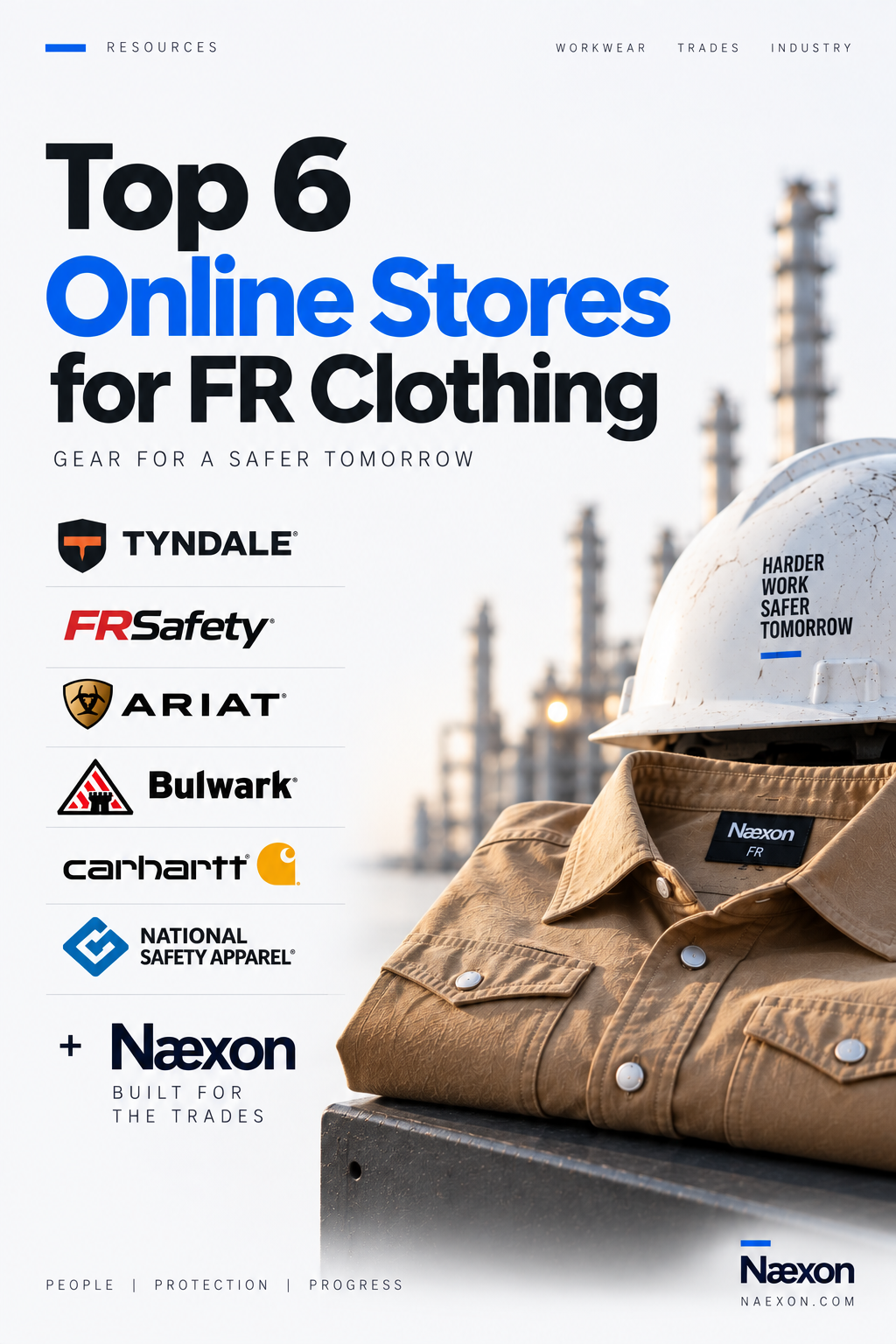
Here are six of the biggest names worth knowing, followed by a newer alternative being built specifically around the skilled trades.
1. Tyndale
Tyndale is one of the most specialized names in the FR market. Instead of treating flame-resistant clothing as a small section of a larger workwear catalog, protective clothing is at the center of its business.
Its selection covers shirts, pants, jeans, sweatshirts, jackets, rain gear, high-visibility FR clothing and other specialized protective products. Tyndale also manufactures its own clothing while distributing additional FR brands.
This makes it particularly relevant for oil and gas companies, utilities and industrial employers looking beyond individual purchases and toward larger managed clothing programs.
For workers who prioritize a deep selection of protective clothing and clearly identified safety specifications, Tyndale is one of the major names to know.
Best for: Large FR selection, industrial programs and specialized protective workwear.
2. FRSafety
FRSafety is another destination built around workers who specifically need flame-resistant and arc-rated clothing rather than general-purpose workwear.
Its biggest advantage is the ability to shop across different FR categories and manufacturers in one place. That can be useful for experienced workers who already know the protection level, fabric, fit or brand they prefer.
For refinery, electrical, utility and oil-and-gas workers who want to compare multiple FR options without searching through thousands of unrelated workwear products, a specialized retailer like this makes sense.
Best for: Comparing FR clothing and protective-workwear options in one place.
3. Ariat
Ariat helped make FR clothing look considerably less like a uniform.
The company is particularly recognizable for Western-influenced workwear, including FR button-down and snap shirts, jeans, hoodies, jackets and other clothing designed for demanding jobs.
That combination has made the brand especially visible around oilfields, pipelines, refineries and industrial projects where workers want required protection without giving up the style and fit they prefer outside the gate.
Ariat is particularly appealing to workers who care as much about how their FR clothing fits and looks as they do about traditional workwear durability.
Best for: Western-style FR workwear, jeans and everyday industrial clothing.
4. Bulwark Protection
Bulwark has been associated with industrial protective clothing for decades and is a familiar name across industries where flash-fire and arc-flash hazards are concerns.
Rather than building its reputation primarily around fashion or general workwear, Bulwark focuses heavily on protective garments for industrial environments.
Its broad range of work shirts, pants, coveralls and outerwear makes it especially relevant for refinery, petrochemical, utility and manufacturing workers.
For tradespeople who prefer traditional industrial FR clothing with an established workwear identity, Bulwark remains an important option.
Best for: Traditional industrial FR clothing and broad workplace applications.
5. Carhartt
Few workwear names are as recognizable on American jobsites as Carhartt.
Its advantage is familiarity. Many tradespeople already know how Carhartt clothing fits, feels and holds up under physical work, and the company’s flame-resistant offerings extend that workwear approach into environments requiring specialized protection.
Carhartt can be especially attractive to workers who don’t want their FR wardrobe to feel completely different from the workwear they already use.
It also benefits from being much broader than an FR-only company, allowing workers to stay within a familiar workwear ecosystem.
Best for: Traditional rugged workwear from a widely recognized brand.
6. National Safety Apparel
National Safety Apparel occupies the more technical end of the protective-clothing market.
Its product range extends beyond everyday FR shirts and pants into specialized PPE intended for hazards such as arc flash, flash fire and extreme industrial environments.
That makes the company particularly relevant to electrical workers, utilities, industrial maintenance personnel and companies whose PPE requirements go beyond basic daily FR workwear.
A pipefitter simply looking for another work shirt may not need everything this type of supplier offers. An electrical worker preparing for a specific arc-flash exposure may have very different requirements.
Best for: Specialized industrial PPE and higher-hazard applications.
Also Worth Knowing: Næxon
Næxon is taking a different approach.
Instead of trying to become another enormous general workwear catalog, Næxon is being built around the people who actually weld, fit, fabricate, rig, build and maintain industrial America.
That means refinery workers, pipefitters, welders, boilermakers, millwrights, electricians, ironworkers, pipeline crews and the thousands of craftspeople who move from project to project and shutdown to shutdown.
One example is the Næxon FR Pearl Snap Shirt, which combines flame-resistant workwear with the classic pearl-snap styling already familiar throughout the industrial trades. The current design uses FR twill, reinforced construction, pearl-snap closures and a working fit intended for demanding industrial environments.
Rather than hiding industrial clothing behind corporate styling, the goal is to make workwear that actually looks like it belongs to the trades.
Best for: Tradespeople looking for industrial-focused FR workwear with a more distinctive style.
The Important Part: Don’t Shop by Brand Alone
There is one thing more important than any company name on this list.
The garment has to match the hazard.
“FR” by itself doesn’t tell you everything you need to know. Flash-fire protection and arc-flash protection involve different hazards and requirements. Depending on the work, specifications such as NFPA 2112 certification, ASTM F1506 compliance and an appropriate arc rating may be important.
Never assume every garment sold by an FR manufacturer provides the same level or type of protection. Check the individual garment’s label and technical specifications against your employer’s hazard assessment and PPE requirements.
That applies to every brand—including Næxon.
What Industrial Workers Should Look For
A good FR shirt has to do more than survive a product description.
It has to remain comfortable through a 10- or 12-hour shift. It needs enough mobility to climb, fit pipe, weld, pull cable or work from a lift. Seams and closures need to tolerate repeated use. The garment needs to survive the laundering required by the manufacturer while maintaining the protection for which it was designed.
And perhaps most importantly, workers need to know exactly what they’re wearing.
The best FR companies don’t simply put the letters FR on a shirt. They make it easy for workers to understand the garment’s protective specifications and intended application.
More Competition Is Good for the Trades
Tyndale, FRSafety, Ariat, Bulwark, Carhartt and National Safety Apparel approach the FR market differently. Some specialize in technical PPE. Some concentrate on large industrial programs. Others have built their reputation around workwear style and comfort.
Næxon enters that market from another direction: the skilled trades themselves.
There is room for workwear designed around the culture of the people wearing it while still taking industrial protection seriously.
Because at 5:30 in the morning outside a refinery gate, workers aren’t thinking about marketing.
They’re thinking about the shift ahead.
Built for the trades. Built for the work. Built Næxon Tough.
Leave a Reply