Facts checked October 16, 2026. Project targets and announced investments remain subject to change.
A hundred-million-square-foot chip factory gets attention fast. For the people who actually build industrial facilities, the next questions are more practical: Where is it going? What is confirmed? What needs to be installed before anything can run?
Terafab is the semiconductor manufacturing initiative associated with Elon Musk’s SpaceX and Tesla. The name is Terafab, one word. Its ambition is enormous, but the useful story sits between the promotional renderings and the construction details. Here is what the public record supports today.
What Terafab is supposed to do
The project’s official website describes a factory combining logic chips, memory and advanced packaging. Those are different parts of the semiconductor production chain. Bringing them together is intended to shorten the path between designing chips, making them and preparing them for use.
The planned applications include Tesla vehicles and Optimus robots, alongside SpaceX’s proposed orbital computing infrastructure. That last part matters: the factory project and the future systems its chips might support are separate things. Announcing a chip factory does not establish that a space-based data-center network is already operating.
Terafab advertises a long-term output ambition of one terawatt of compute per year. That is a project target, not measured production. It should not be read as a verified one-terawatt electrical demand at the Texas construction site, either. A headline about future chips is not a utility load study.
Austin and Grimes County are different pieces
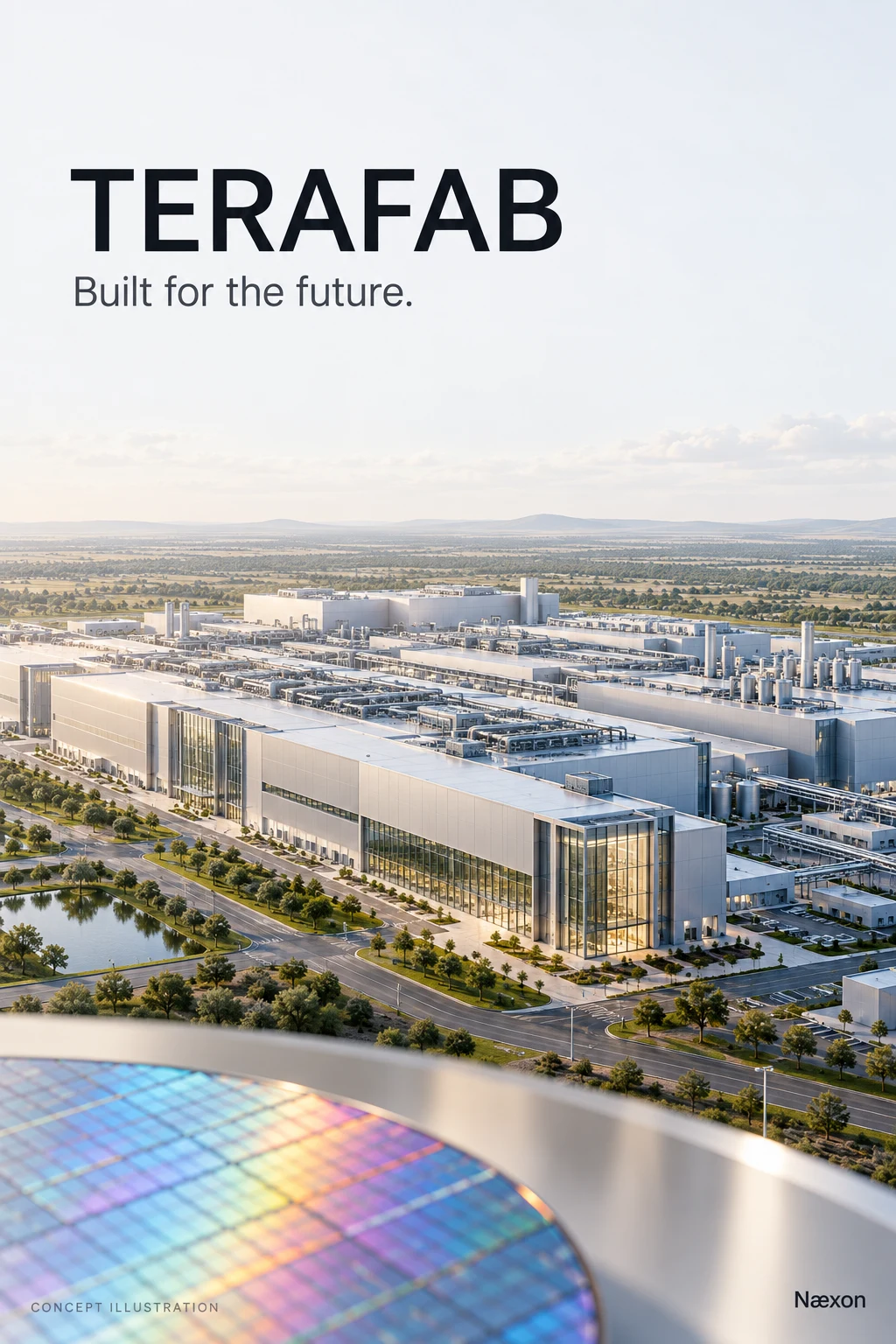
SpaceX’s August 6 announcement identified Grimes County, Texas, as the location for the larger Terafab facility. The same announcement said Tesla had broken ground in April on a research fab at Giga Texas’s North Campus near Austin, describing that smaller development as a precursor.
Keeping those locations straight prevents a common mistake. Progress on the Austin research facility is not proof that the entire Grimes County manufacturing complex is complete.
The City of College Station’s economic-development office places the planned Grimes County site near Gibbons Creek Reservoir, approximately 20 miles east of College Station. It describes a phased development extending over multiple years, with schedules subject to change.
The big numbers need labels
Texas Governor Greg Abbott’s August 6 announcement identified more than $16.8 billion in first-phase capital investment and 3,000 expected new jobs. It also announced a $30 million Texas Enterprise Fund grant and the project’s qualification under the state’s JETI incentive program.
Those figures describe an announced investment and employment plan. They are not evidence that the money has all been spent or that 3,000 positions are currently open.
The same state announcement describes a 100-million-square-foot facility. College Station’s project overview separately identifies potential investment of up to approximately $119 billion across four phases described in public filings. The first phase and the potential full buildout should not be mixed together as one settled price tag.
A huge plan can be real without every future phase being guaranteed.
What changed this week
On October 15, TSMC addressed Terafab directly during its third-quarter earnings call. Chairman and CEO C.C. Wei said teams had been sent to evaluate Texas and that discussions with Terafab were ongoing. He also said the fab would have to be run by TSMC under an arrangement involving the company.
The important point is the status: discussions. TSMC did not announce a completed Terafab agreement in that exchange. Ownership, operating arrangements and the final structure should not be presented as settled.
Intel is another confirmed name associated with the initiative. Intel’s April 23 earnings materials describe its partnership with SpaceX, xAI and Tesla to support Terafab. That establishes involvement, but it does not answer every question about who will install, own or operate each part of the future campus.
Why industrial crews should care
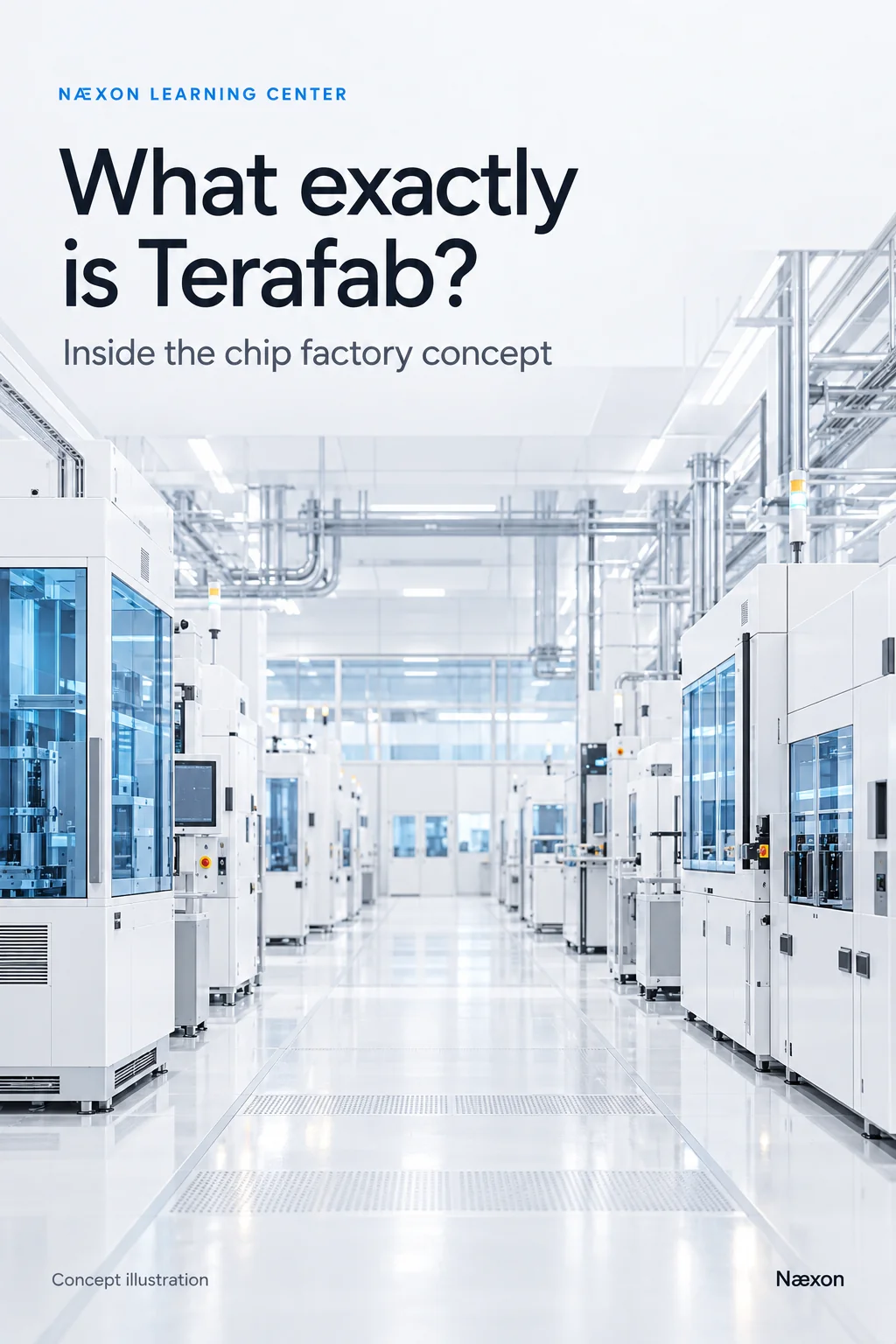
A semiconductor fab is not simply a warehouse with expensive machines inside it. Intel’s explanation of a conventional fab shows why: the cleanroom depends on supporting systems for filtered air, controlled conditions, utilities and equipment. Its subfab contains systems such as vacuum pumps, chemical valve boxes and life-safety equipment.
That is industry context, not a verified Terafab construction drawing. It explains why these projects extend well beyond structural steel and a finished roof.
Terafab’s own recruitment gives a more specific signal. At this check, Tesla listed an Electrical Engineer, Tool Hookup role in Austin and a Construction Project Manager, Process Gas & Chem role in Anderson. The electrical role describes power distribution, grounding, cable tray, installation coordination and commissioning at the interface between facility systems and production tools.
Those are real, identifiable functions. They are not confirmation of a mass call for welders, a particular contractor award, a wage scale or per diem. Anyone considering a move should verify the actual employer, location and written terms before making plans.
For general pipe and fitting dimensions, Næxon’s In-dex reference can help with lookup work. Project specifications and current governing standards still control the installation.
What still needs to be proved
SpaceX says the project intends to use Gibbons Creek Reservoir water rather than local groundwater, with on-site wastewater treatment and water-conservation measures. Those are company commitments. Actual consumption, operating performance and environmental compliance require their own evidence.
This review did not establish a complete, current permit register, an independently verified completion percentage or commercial chip output from the full Grimes County complex. It also did not establish a guaranteed production-start date. None should be filled in with guesses.
The milestones worth watching are concrete: documented construction progress, equipment installation, utility readiness, commissioning and qualified production. A rendering cannot substitute for any of them.
Terafab deserves attention because the announced scope is substantial and named companies and public agencies are involved. For the trades, the sensible approach is straightforward: follow the work as it becomes verifiable, and keep the ambition separate from what is already built.