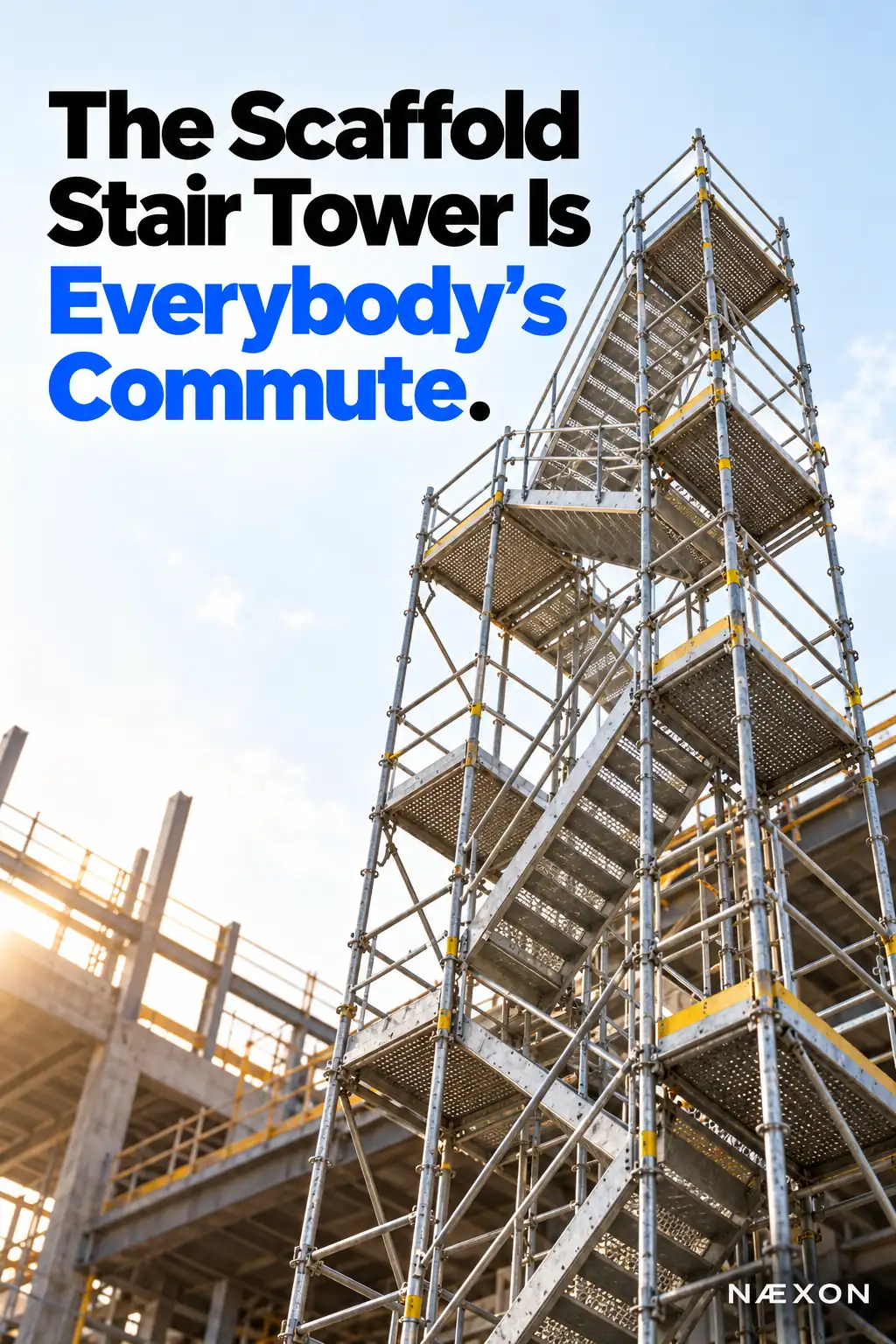
The first person up the scaffold stair tower may be a pipefitter with a tape measure. The next one could be an electrician carrying a small parts bag. Then comes an inspector, a welder, a foreman and somebody who has already forgotten why he walked back down.
For most of the project, the stair tower feels like part of the scenery. It is simply there—landing after landing, shift after shift, handling the morning climb and the afternoon descent.
But it did not appear by itself. A scaffold crew built the project’s vertical commute, and every craft depends on that work before their own work can start.
The route is part of the job
OSHA’s scaffold standard requires a proper means of access when a platform is more than two feet above or below the point of access. Stair towers are one of the permitted options. On a busy industrial project, that requirement becomes something workers experience hundreds of times a day: boots on treads, hands near rails, people moving tools and paperwork between elevations.
A good access route does more than connect the ground to a platform. It gives the project a predictable way to move. People know where to enter, where to land and how to clear space for the next worker. That predictability matters when several crafts are sharing the same structure.
The technical side begins with the scaffold crew and the competent person. Our Learning Center explanation of scaffold foundations and load paths shows how much careful work sits below the first step. The rest of us mostly notice the tower once it saves us from another ladder climb.
Everybody uses it; not everybody owns the decision
Shared access creates a familiar jobsite misunderstanding: if everybody uses the tower, somebody may assume everybody can adjust it.
They cannot. OSHA requires scaffold erection, movement, dismantling and alteration to be performed under the supervision and direction of a qualified competent person, by experienced and trained employees selected for that work. A rail that feels inconvenient, a brace that blocks the shortest route or a component that appears “almost right” is not an invitation for field creativity.
Use the access as provided. If something appears damaged, loose, out of square or different from the approved condition, stop and report it through the site’s process. The same principle applies when a scaffold bay will not stay square: recognizing a problem is useful; unauthorized adjustment is not the fix.
The scaffold builder at the bottom is not guarding a personal collection of tubes and clamps. That worker is protecting a structure the whole project will trust.
The stair tower is not a storage shelf
Once a route becomes familiar, clutter tries to move in. A water bottle waits on one landing. A length of material rests beside another. Somebody sets down a glove, a rag or a small tool “for one minute,” which is jobsite time for “until somebody else has to deal with it.”
OSHA’s general scaffold requirements say debris must not be allowed to accumulate on platforms. The practical crew version is easier to remember: leave the route ready for the next person.
That means carrying out what you carried in, following the site’s material-handling rules and keeping landings and travel paths available for their intended use. It also means resisting the urge to hold a planning meeting in the narrowest possible location.
A stair tower is the vertical version of a hallway. If four people stop halfway up to discuss tomorrow’s lift, everyone below them has suddenly joined the meeting.
Up has traffic; down has tired traffic
The morning climb gets most of the attention, but the tower works both directions. Workers are coming down for material, break, inspections and shift change while another group is still going up.
Good shared-access habits are ordinary: stay aware of other workers, keep one hand available when the site procedure calls for it, secure permitted items the way the employer requires, and do not rush around somebody on a landing. Follow posted direction, capacity limits and site controls rather than inventing a passing lane.
End of shift deserves extra patience. Boots are heavier, attention is divided and everybody can already see the parking lot in their mind. The tower is still part of the work area until both feet reach the designated exit.
The scaffold crew sees tomorrow’s crowd
Other crafts often judge access by the moment they need it. Scaffold crews have to think ahead: where workers will approach, which elevations must be reached, what surrounding work may change and how the structure will remain controlled through inspections and modifications.
That planning is one more example of why the workers supporting the job deserve real credit. A project may celebrate the final weld, energized system or completed piece of equipment. None of those moments happen efficiently if the crews cannot reach the work.
The stair tower is not glamorous. It will not be in the ribbon-cutting photo. Most workers will remember the number of flights more clearly than the names of the people who built them.
Still, every morning it performs the same quiet service: it turns elevation into a commute.
Respect the route. Keep it clear. Report what looks wrong. Leave the alterations to the people qualified to make them.
Then keep moving. There is probably somebody two landings below wondering why the stair tower has stopped again.