Evening Edition • Primary trade: Carpenters and scaffold builders • Skill level: Apprentice to intermediate • Classification: Troubleshooting • Estimated reading time: 10 minutes
What you’ll learn: separate plumb, level, and square; recognize how a brace, frame, connection, or foundation can rack a fabricated-frame scaffold bay; use diagonals as a diagnostic; and know when to stop and escalate.
The first lift is standing, but one cross brace fights the lock. A worker pulls harder, the brace finally catches, and the opposite frame leans. That is not a stubborn part to overpower. It is evidence that the bay geometry, support, component match, or frame condition needs to be checked.
This lesson covers a common fabricated-frame scaffold bay at ground level. It is a troubleshooting framework, not an erection procedure or permission to use a scaffold. A competent person directs scaffold erection, alteration, movement, dismantling, and inspection. The approved configuration, manufacturer instructions, site rules, and engineered design control the actual parts, dimensions, tolerances, ties, loads, and corrective work.
Plumb, level, and square are different checks
Plumb describes whether a frame leg or upright is vertical. Level describes whether a selected horizontal member or platform line is horizontal. Square describes the bay’s corner geometry: in the intended rectangular configuration, adjacent directions meet at right angles and the two diagonals agree.
A bay can pass one check and fail another. Both end frames can look vertical while the plan view is skewed. A platform line can be level while the frames are laterally displaced. One leg can settle and create all three symptoms. Treat the words as separate observations instead of using “looks straight” as a complete inspection.
If the component names are unfamiliar, first review scaffolding parts, components, and terminology. This lesson assumes you can identify a frame leg, cross brace, brace lock, base plate, screw jack, and coupling pin.
What racking means
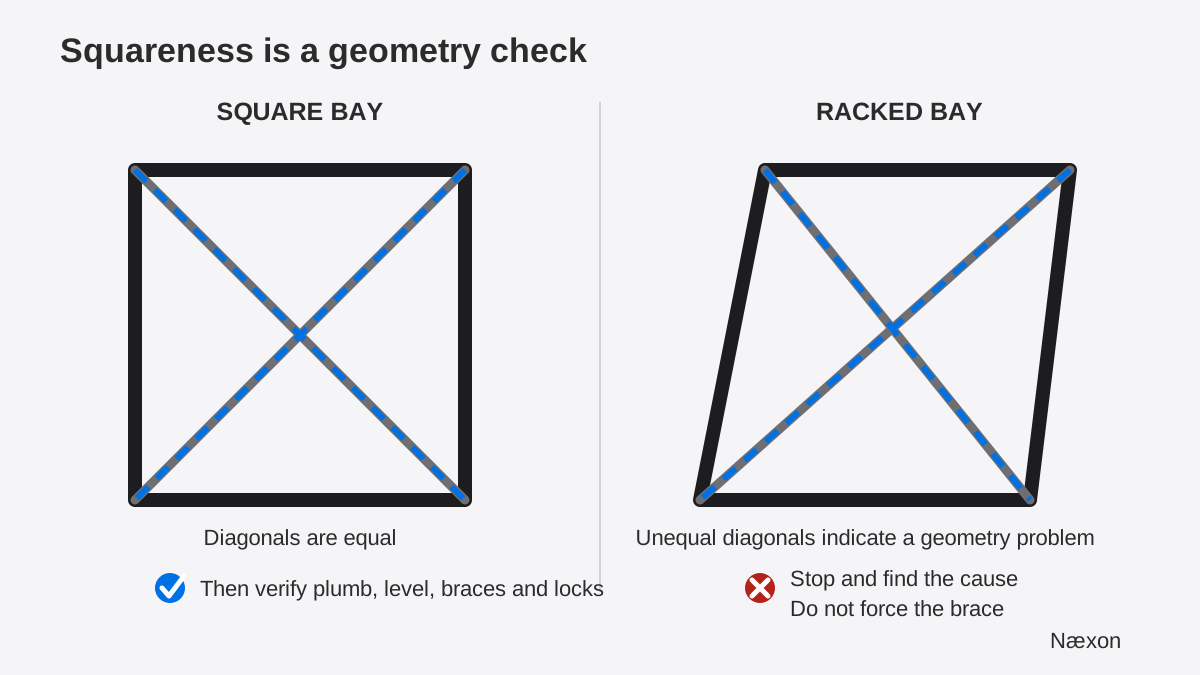
Racking is a sideways distortion that changes a rectangular bay toward a parallelogram. The side lengths may appear unchanged while the corner angles and diagonals change. In a fabricated-frame scaffold, correctly selected and secured cross, horizontal, or diagonal bracing restrains the frames laterally and helps keep the vertical members aligned.
Figure 1 isolates the geometry. On the left, a matching rectangular bay has equal diagonals. On the right, the bay has skewed: one diagonal shortened while the other lengthened. Equal diagonals do not approve the scaffold by themselves. They are one useful check after component identity, foundation, plumb, level, bracing, locks, and frame condition have been verified.
Why a brace that will not connect is useful evidence
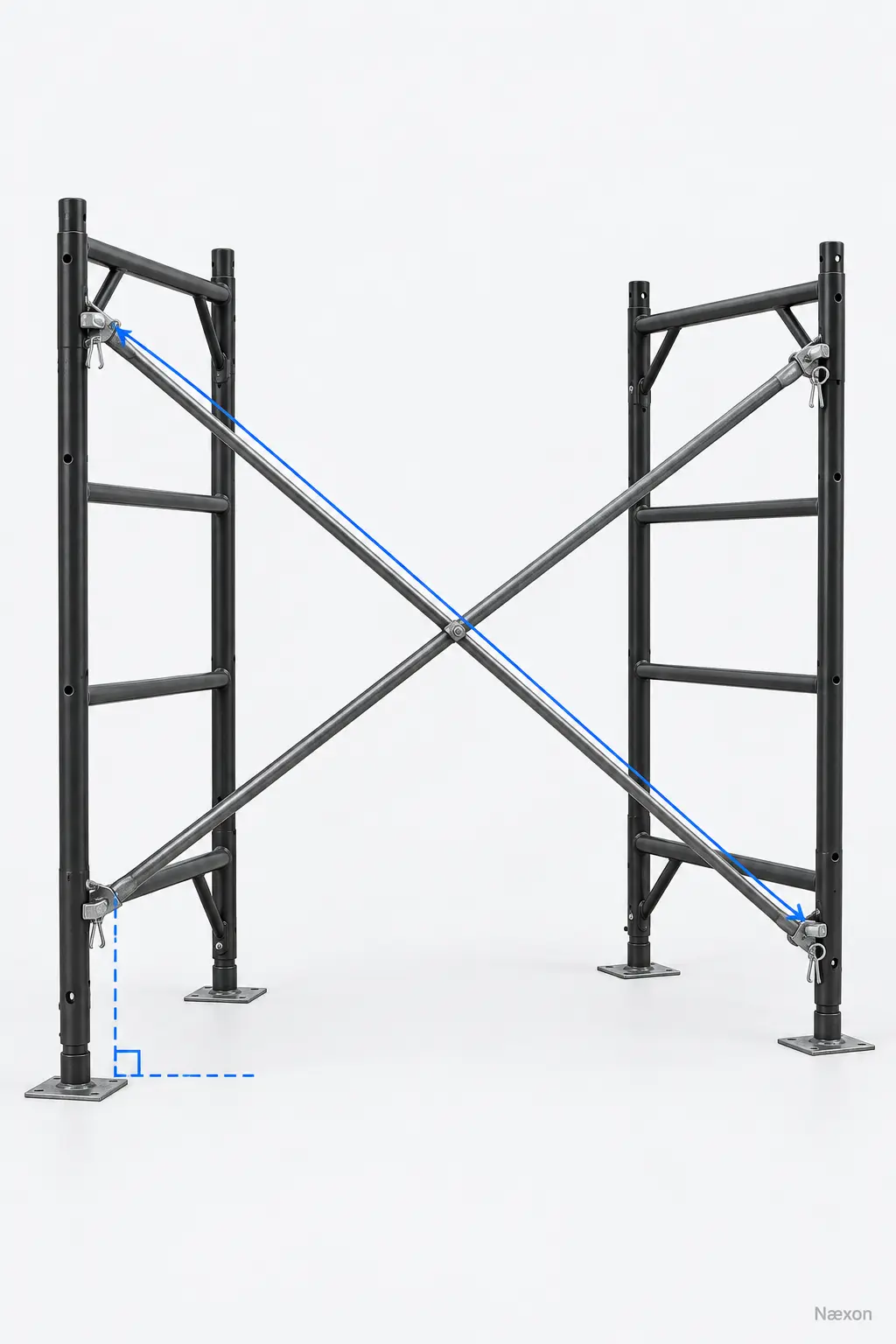
A cross brace is made for a specific connection pattern and bay geometry. If a verified matching brace will not reach both locks with the frames in the approved arrangement, something else is wrong. Possibilities include an incorrect brace or frame, a brace installed at the wrong points, a lock that is not fully available, an out-of-level base, unequal jack settings, a settled support, a bent member, a distorted frame, or an impact that shifted the assembly.
Forcing the brace is the common incorrect approach. It can load damaged or mismatched parts, pull a frame out of plumb, conceal a foundation problem, or leave a connection only partly engaged. The correct approach is to stop, control access, and work from the support and component identity upward. A brace should secure the approved geometry; it should not be used as a lever to manufacture it.
Worked example: what two diagonals can tell you
Assume a paper exercise uses a rectangular training bay that is 60 inches wide and 60 inches high between the same four reference points. These are illustrative dimensions, not a scaffold model specification. Let a = 60 in, b = 60 in, and c be the theoretical diagonal.
For a right-angle rectangle, the Pythagorean theorem gives c = √(a² + b²). Carrying the units through:
c = √[(60 in)² + (60 in)²] = √(3,600 in² + 3,600 in²) = √7,200 in² = 84.852… in
Rounded to the nearest tenth for this exercise, c ≈ 84.9 in. An independent check squares the rounded result: 84.9 in × 84.9 in = 7,208.01 in², close to 7,200 in² because of rounding. The result is reasonable because the diagonal must be longer than one 60-inch side but shorter than two sides laid end to end.
Now assume the two measured diagonals are 82.5 inches and 87.2 inches. Their difference is 87.2 in − 82.5 in = 4.7 in. The unequal readings show that those four reference points do not form the intended square geometry, or that the measurement points or technique were inconsistent. They do not identify the cause and do not create a 4.7-inch correction.
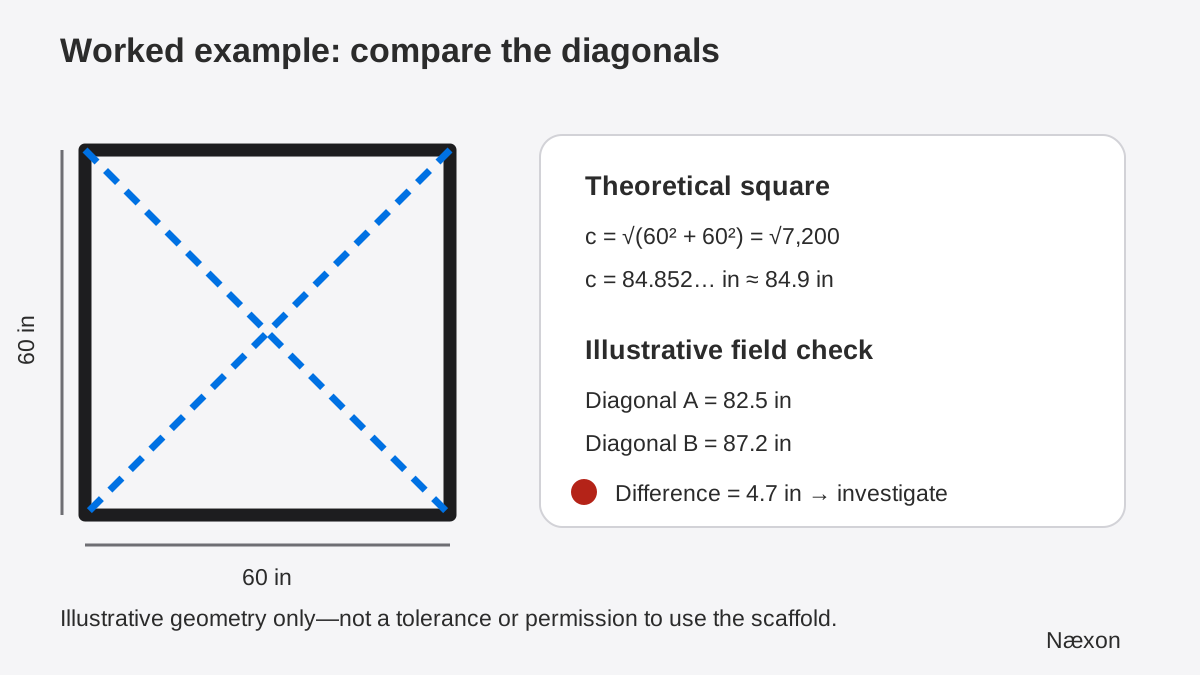
The diagonal calculation is geometry only. Actual reference points, allowable variation, component dimensions, and acceptance decisions come from the scaffold system’s instructions, approved design, and competent person. For more layout practice, use Field Formulas for Scaffold Builders.
A practical diagnostic sequence
- Stop and control the bay. Do not climb, load, move, or continue upward on a bay whose geometry or brace connection is in doubt. Follow the site’s barricade and reporting procedure.
- Confirm the system and parts. Verify the frame type, brace length, connection points, locks, coupling devices, base components, and approved configuration. Similar-looking parts are not proof of compatibility.
- Inspect the foundation first. Check each base plate, mud sill, support surface, and approved adjustable component for full contact, level support, settlement, movement, damage, or unauthorized packing. The scaffold foundation load-path lesson explains why one moving leg can distort the bay above it.
- Check frames and connections. Look for bent tubes, cracked welds, damaged lock hardware, distorted pins, impact marks, mixed components, and connections that are not seated or secured as required.
- Check level and plumb separately. Use the approved tools and reference surfaces. Identify which leg, frame, or lift changes the reading instead of adjusting everything at once.
- Compare the diagonals if the system procedure supports it. Measure between consistent reference points. Repeat the measurement to rule out a hooked tape, sag, obstruction, or different endpoints.
- Correct the verified cause under competent-person direction. Restore the approved foundation and component arrangement. Remove damaged or incompatible parts from service according to site procedure. Never heat, bend, hammer, drill, or field-modify a component unless the manufacturer or engineer specifically authorizes it.
- Recheck the complete bay. Confirm the braces and connections are secured, frames are plumb, horizontals are level, geometry matches the approved arrangement, and the inspection is accepted before loading or adding height.
Troubleshooting the symptom
One brace is short while the matching brace fits: compare part identification, connection points, and condition. A bent frame, distorted brace, incorrect part, or wrong attachment location can create the mismatch. Do not substitute a part merely because it reaches.
Both braces fit until one base is adjusted: return to the foundation and adjustment sequence. Unequal support or an out-of-level base can twist the frame pair. Do not use brace tension to counteract a support problem.
The bay measures square at the bottom but not at the top: inspect each frame for damage and plumb, confirm coupling or stacking connections, and check whether an external contact or incomplete brace connection is displacing the upper points.
The bay returns out of square after correction: look for settlement, loose or unlatched connections, impact, movement of adjacent bays, changing loads, or incompatible components. A repeat failure means the cause was not removed.
There is visible damage, a cracked weld, a bent tube, or a lock that will not secure: stop and escalate. Geometry checks cannot qualify a damaged structural component for service.
Common mistakes
Do not confuse a calculated diagonal with an approved brace length. Brace geometry includes connection locations and hardware that a simple corner-to-corner calculation does not capture. Do not assume equal diagonals prove every frame is plumb or every connection is secure. Do not adjust one screw jack blindly while the bay is loaded, and do not pack a gap with scrap to make a level show centered.
Another mistake is measuring between different points. A diagonal from the outside of one tube to the center of another cannot be compared with a second diagonal taken center to center. Mark or identify equivalent reference points, keep the tape path consistent, and repeat the result.
Field Rules
- Do not force a brace that will not connect normally in the approved arrangement.
- Check foundation, parts, connections, level, plumb, and square as separate conditions.
- Use the same reference points for both diagonals.
- Treat unequal diagonals as evidence to investigate, not a correction amount.
- Remove damaged or incompatible components from service under the site procedure.
- Do not load or extend a questionable bay until the competent person accepts it.
Knowledge Check
- A bay’s end frames are plumb, but its diagonals differ. What condition is still in doubt?
- A verified matching cross brace will not engage its second lock. What is the first defensible response: pull harder, substitute a longer brace, or stop and inspect the bay?
- For an illustrative rectangle 36 inches wide and 48 inches high, what is the theoretical diagonal?
- Both diagonals agree after one base plate has settled into soft ground. Is the bay approved for continued use?
- Why can a brace that fits still be unsafe?
Answers
1. Squareness is still in doubt. Plumb describes vertical alignment; it does not prove the four bay corners form the intended rectangle.
2. Stop and inspect under competent-person direction. Verify the foundation, component match, frame condition, connection points, locks, level, and plumb before any correction.
3. 60 inches. Calculate √(36² + 48²) = √(1,296 + 2,304) = √3,600 = 60 in. This is geometry, not a brace selection.
4. No. Settlement is a changed condition that can affect support and stability. Restrict use and have the competent person inspect the foundation and full scaffold, regardless of the diagonal reading.
5. It may be the wrong component, attached at wrong points, partly latched, damaged, or installed in a bay with another unresolved defect. Fit alone does not establish compatibility or secure connection.
Practical Exercise
On paper, draw a 60-inch by 60-inch rectangular bay and calculate both theoretical diagonals. Then sketch the same side lengths as a parallelogram and label one diagonal 82.5 inches and the other 87.2 inches. Write a five-item inspection order beginning with the foundation and ending with competent-person acceptance.
Your checking result should include a theoretical diagonal of 84.9 inches to the nearest tenth, a 4.7-inch difference between the illustrative field readings, and an explanation that neither value is an acceptance tolerance. Keep this exercise paper-based or perform measurements only on an unloaded training assembly under qualified supervision.
Related learning
Use the foundation lesson as the prerequisite for support and settlement clues. Continue with scaffold layout math for diagonal and elevation practice, then study scaffold load capacity and duty ratings to separate geometry checks from capacity and approved design.