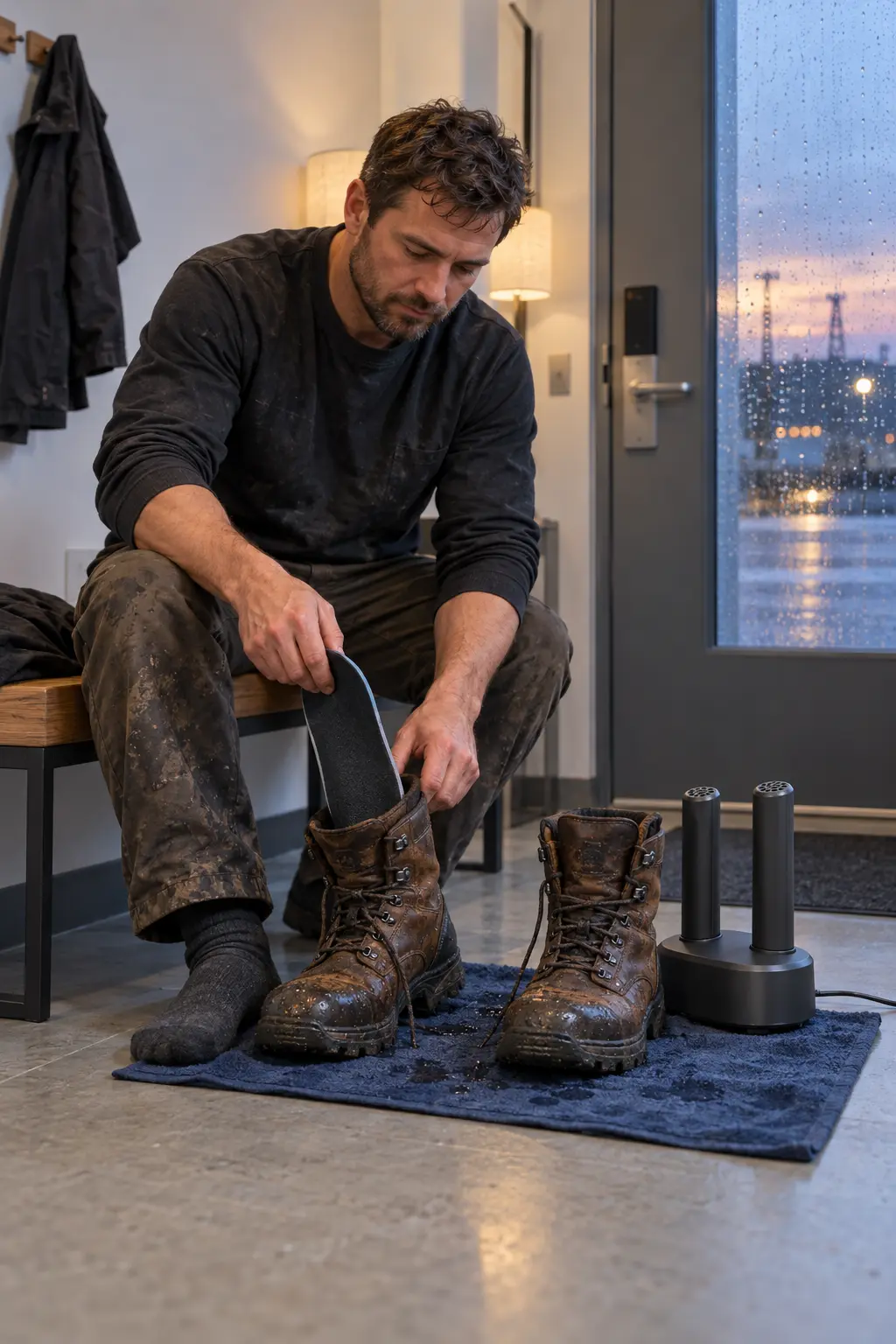
A wet shift does not end when you clock out. It follows you into the truck, rides home on the floor mat and finally parks beside the door in the shape of two heavy work boots.
That is when the nightly negotiation begins. You can deal with them now, or you can meet them again before sunrise—still damp, colder than expected and somehow offended that nobody solved the problem while you slept.
Experienced road hands learn that boot care is not a weekend project. On rainy jobs, it is a ten-minute end-of-shift habit that makes the next morning less miserable.
The rain shift gets one more task
Start by checking what actually got wet. Sometimes the outside is soaked while a waterproof liner kept the inside comfortable. Other times water came over the collar, sweat built up through a long shift, or yesterday's dampness never fully left.
Brush or wipe off loose mud where the site and lodging allow. Loosen the laces. Open the tongue. If the boot maker allows the footbed to be removed, take it out so air can reach more of the interior. Then put everything in a stable place where water will not damage the floor or create a walking hazard.
This is the boot version of giving a road-job room a workable routine. The goal is not to turn the entry into a cobbler shop. It is to keep one wet pair from taking over tomorrow morning.
Airflow beats punishment
Wet boots invite bad ideas because everybody wants a fast answer. The heater vent looks powerful. The hair dryer is nearby. Somebody knows a shortcut involving the warmest surface in the room.
Leather and direct high heat are not good partners. Red Wing's published care guidance says to let boots air-dry at room temperature and avoid direct heat sources such as radiators or hair dryers because they can dry out the leather. The dramatic approach may make the outside feel warm, but warm is not the same as evenly dry.
Make space for air instead. A manufacturer-approved boot dryer that moves gently warmed air can help with wet interiors; Danner specifically recommends a boot dryer after wear when boots become wet inside. Use the equipment according to its instructions, place it on a stable dry surface and keep cords out of the walking path.
No boot dryer? Open the boots and give them time in a ventilated room. Do not improvise a heater, bury them under clothing or create an electrical experiment beside a puddle. Tomorrow's socks do not need that much excitement.
The footbed has its own shift
The removable footbed is easy to forget because it is doing its work out of sight. When the inside of the boot is damp, that layer can hold moisture even after the upper begins to feel better.
Set removable footbeds beside the boots instead of leaving them sealed inside, but follow the boot manufacturer's instructions. Not every liner or insert is meant to be pulled, washed or heated the same way. A custom orthotic deserves its own care directions, too.
While everything is open, look for the ordinary problems that rain makes easier to notice: a lace beginning to fray, a split seam, loose hardware, a worn sole edge or damage around the toe. This is an inspection, not a late-night repair contest. If the boot's protective features may be compromised, follow the employer's requirements and the manufacturer's guidance before the next shift.
Keep jobsite material out of the room
Mud and rainwater are one thing. Workplace contamination is another.
NIOSH warns that chemicals can travel home on work shoes and clothing. If the job involves lead, asbestos, process chemicals or another controlled exposure, the site's hygiene, changing, cleaning and storage rules come first. Do not bring contaminated boots into a hotel room or family space just because they also happen to be wet.
A blue towel and a boot dryer are a practical answer for ordinary rain. They are not a decontamination procedure. When the condition is outside normal care, stop and use the approved process.
Two pairs can buy time
Workers who spend long stretches in wet conditions often rotate footwear when the job and budget allow. The advantage is simple: one pair gets a full chance to dry while the other works. Rotation does not excuse poor inspection, and the backup still has to meet every site and task requirement.
If you only have one pair, the evening routine matters more. Start early instead of discovering the problem while the coffee is brewing. Keep dry socks separate from wet gear. Check the next day's weather and pack the permitted rain layers before the alarm—not after it.
That planning connects with the road crew's weekly laundry reset. Clean clothes help, but dry footwear is what makes the first walk across the parking lot feel possible.
Morning tells you whether the routine worked
Before you put the boots on, check them with your hands and your nose. The interior should feel dry enough for use, the footbeds should be back in place correctly, and nothing should have changed shape beside a heat source. Look at the tread and closure again under good light.
Then match the boot to the work. Dry does not automatically mean suitable. Toe protection, electrical-hazard construction, metatarsal protection, slip resistance and other requirements depend on the site and task. Our overview of dressing for pipeline work in extreme weather makes the same larger point: weather preparation still sits inside the job's PPE rules.
A good overnight routine is not glamorous. Nobody gathers the crew to admire a properly opened tongue and a towel placed under two boots.
But at 4:45 in the morning, dry socks sliding into dry boots feels like competent management.
Wet boots do not fix themselves overnight. Fortunately, they do not require a committee either.