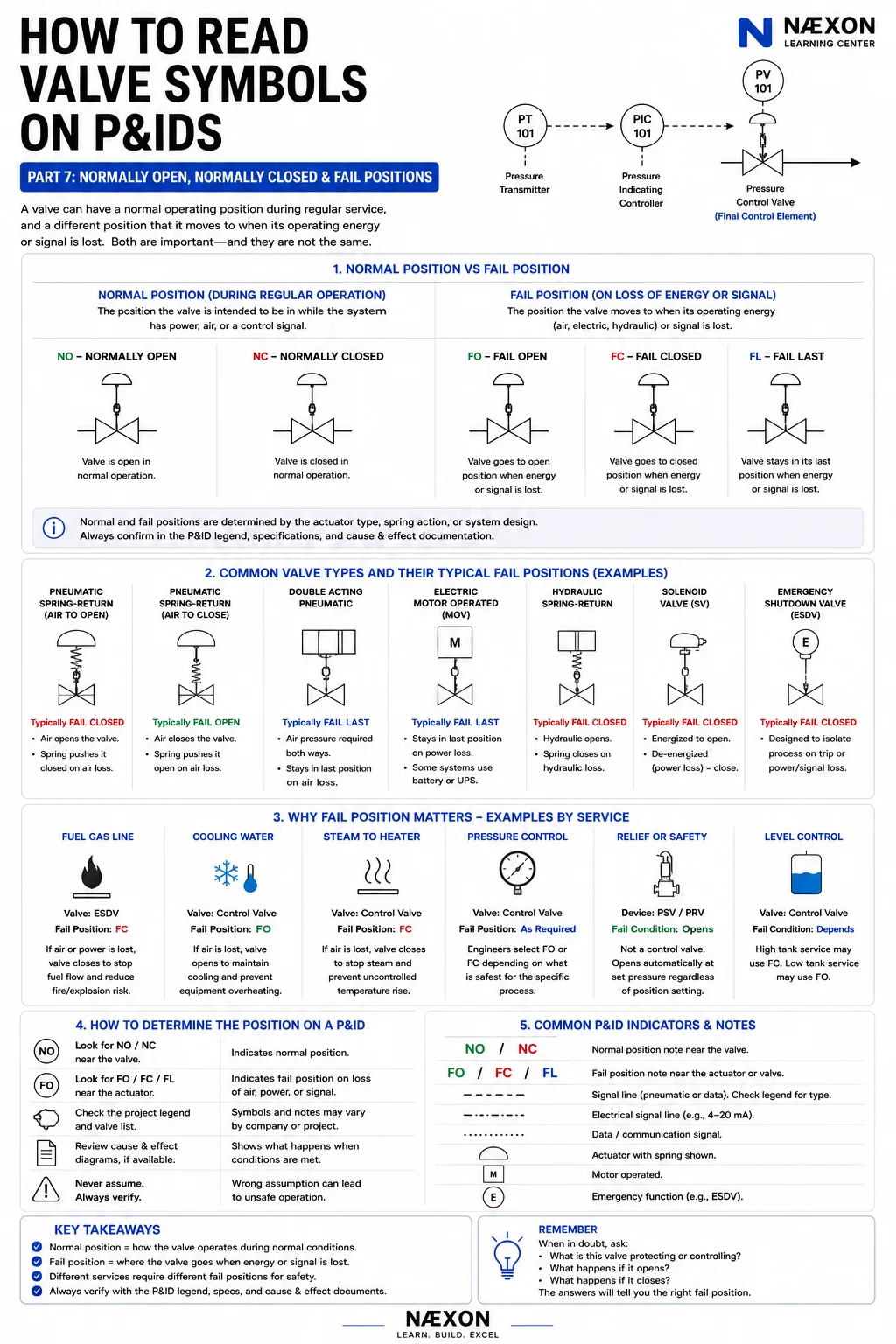
How to Read Valve Symbols on P&IDs — Part 7: Normally Open, Normally Closed & Fail Positions
Part 7 explains normal operating position and the position an actuated valve takes after loss of energy or signal.
Read article →NÆXON INDUSTRIES
718 articles
Part 7 explains normal operating position and the position an actuated valve takes after loss of energy or signal.
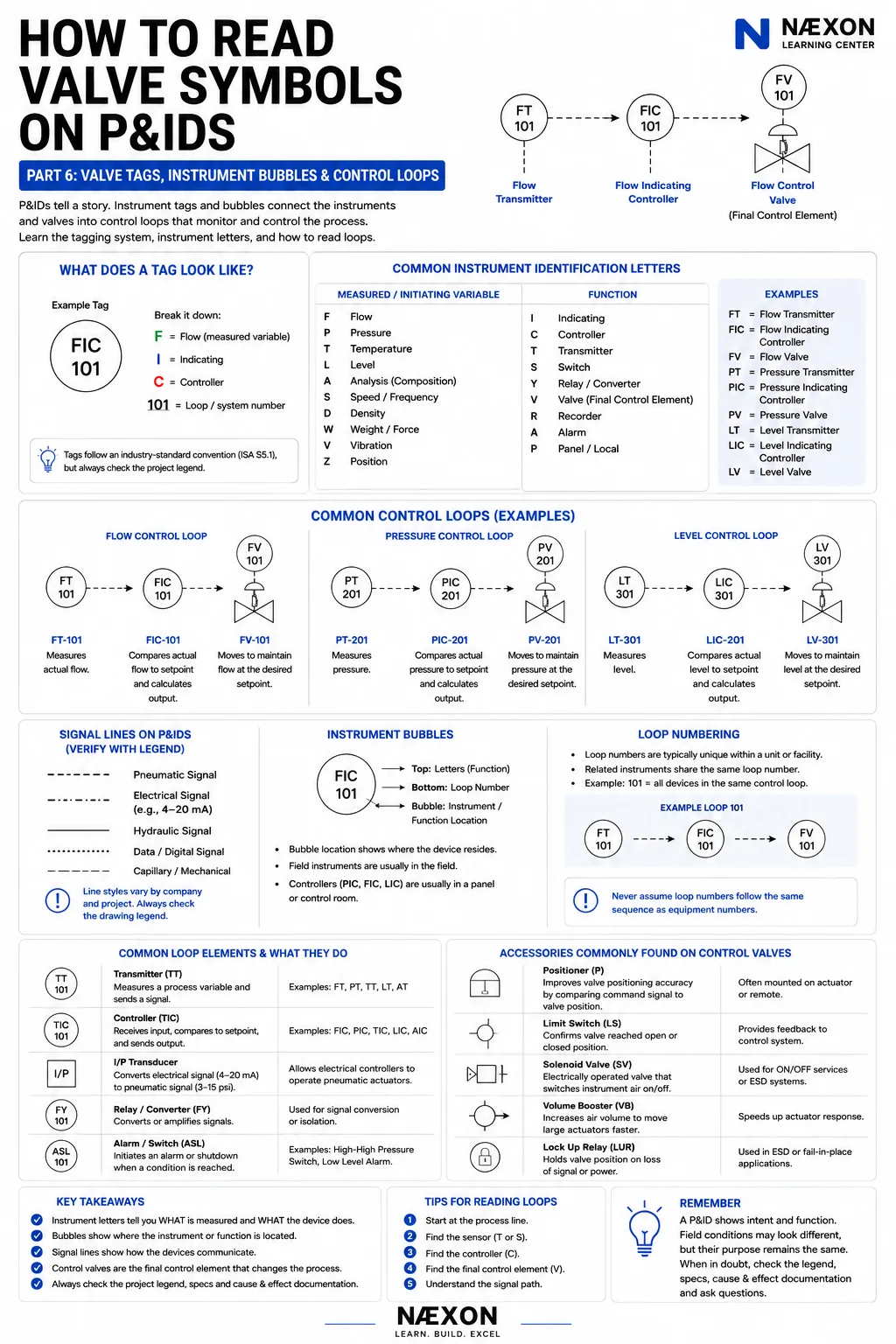
Read article →Part 6 connects valve tags with transmitters, controllers, final control elements, and the signal lines between them.
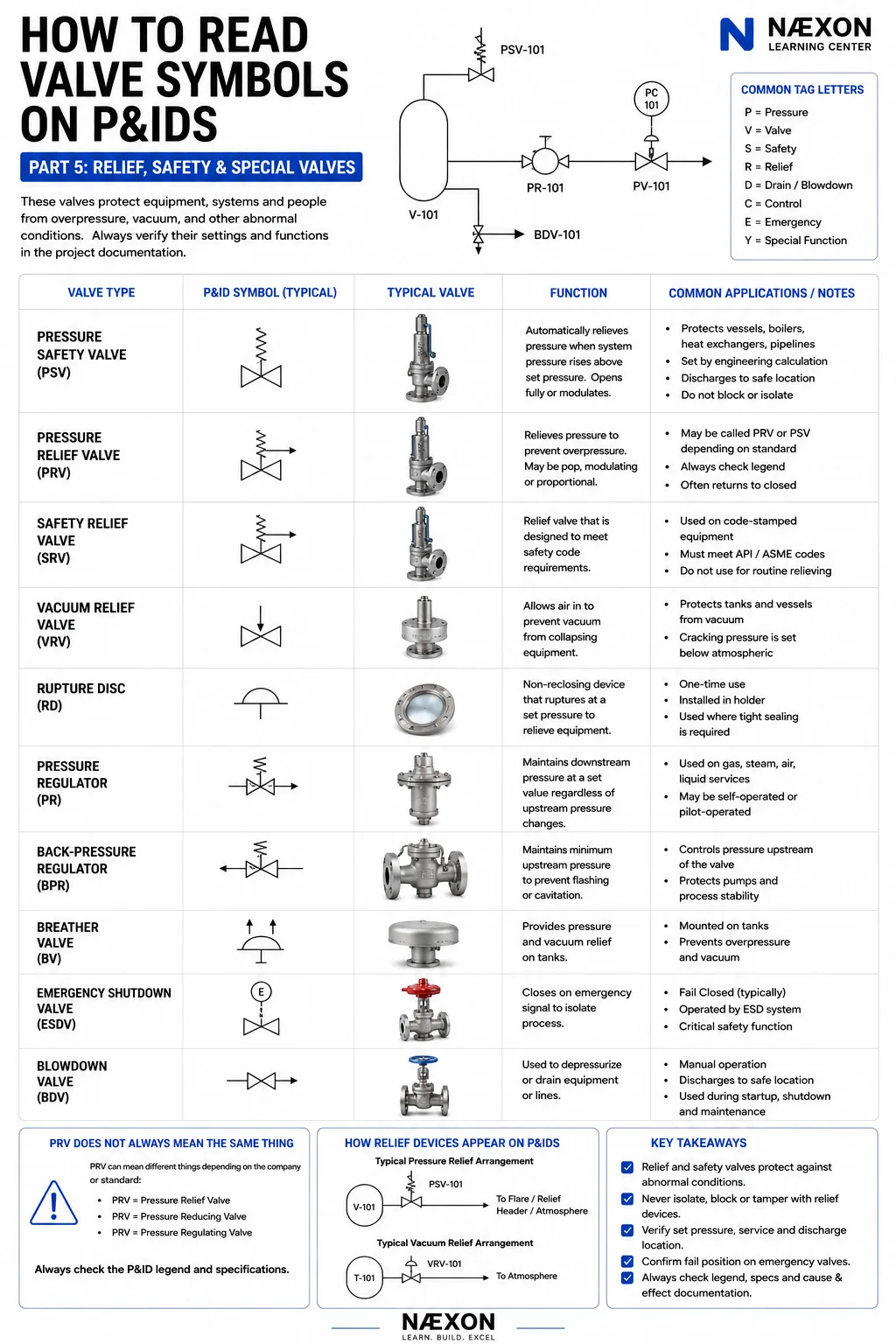
Read article →Part 5 covers symbols used to protect equipment, manage abnormal pressure, and move processes toward safer states.
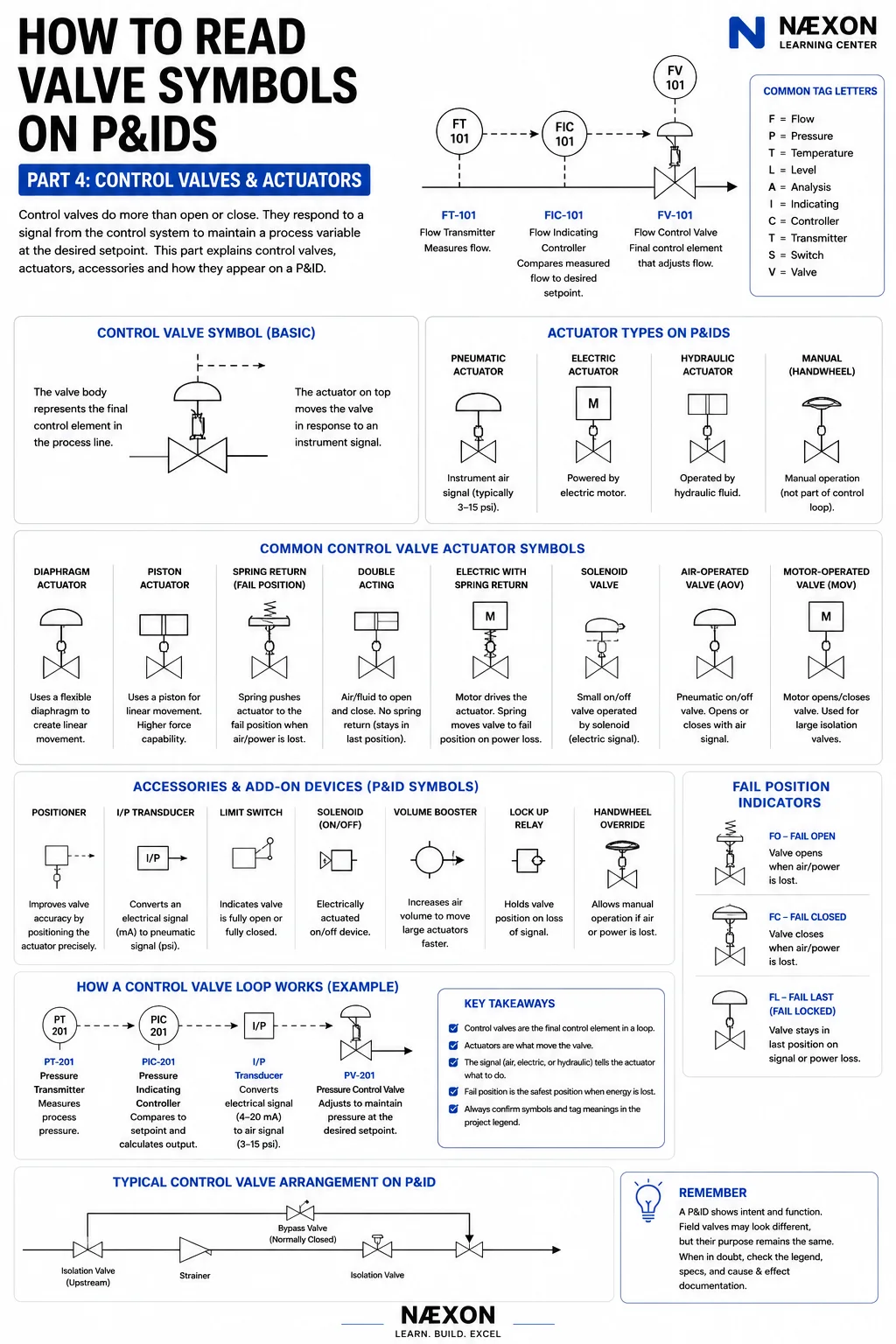
Read article →Part 4 explains control valves as final control elements and shows how pneumatic, electric, and hydraulic actuators fit the loop.
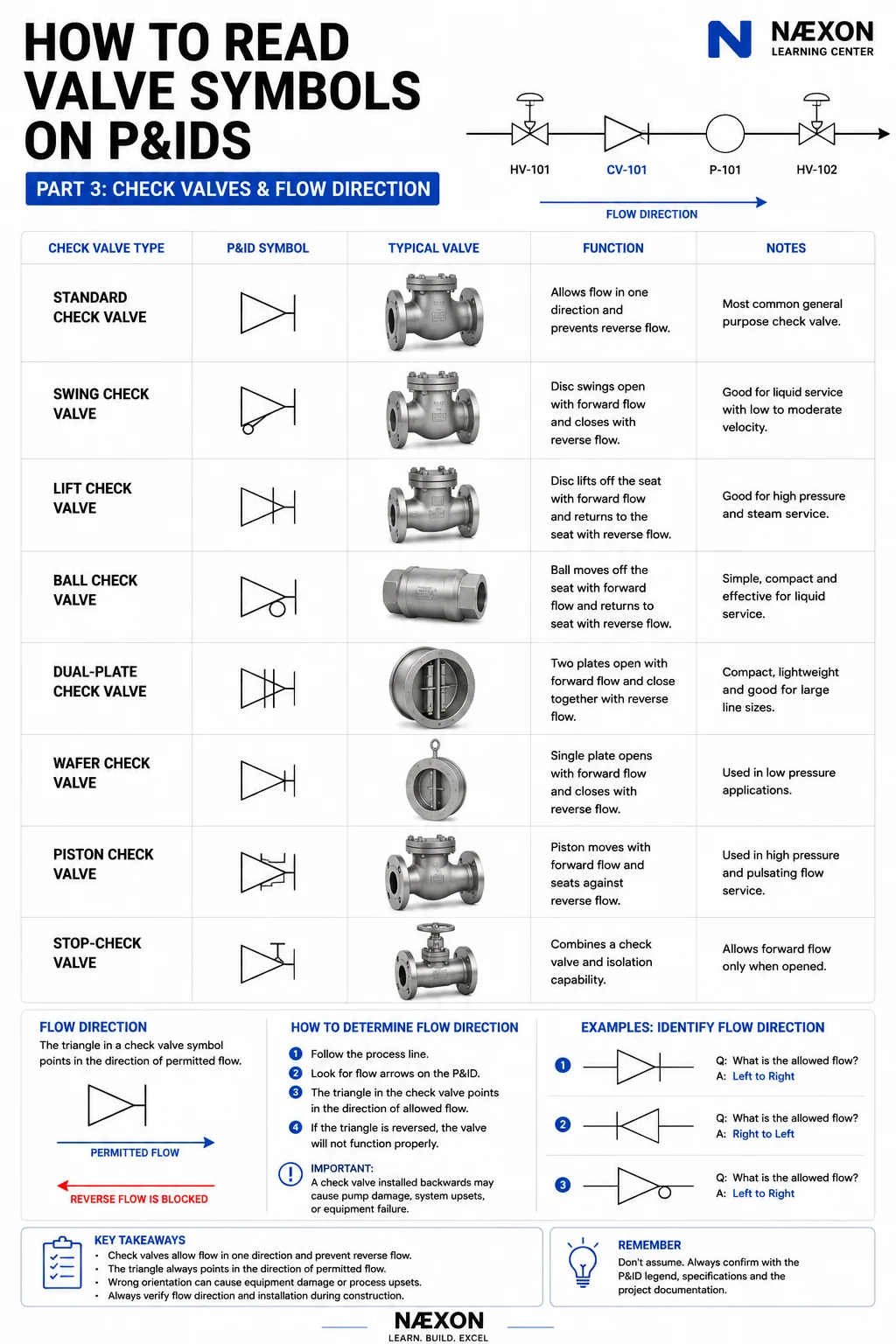
Read article →Part 3 introduces check-valve symbols and the importance of tracing process flow direction on a P&ID.
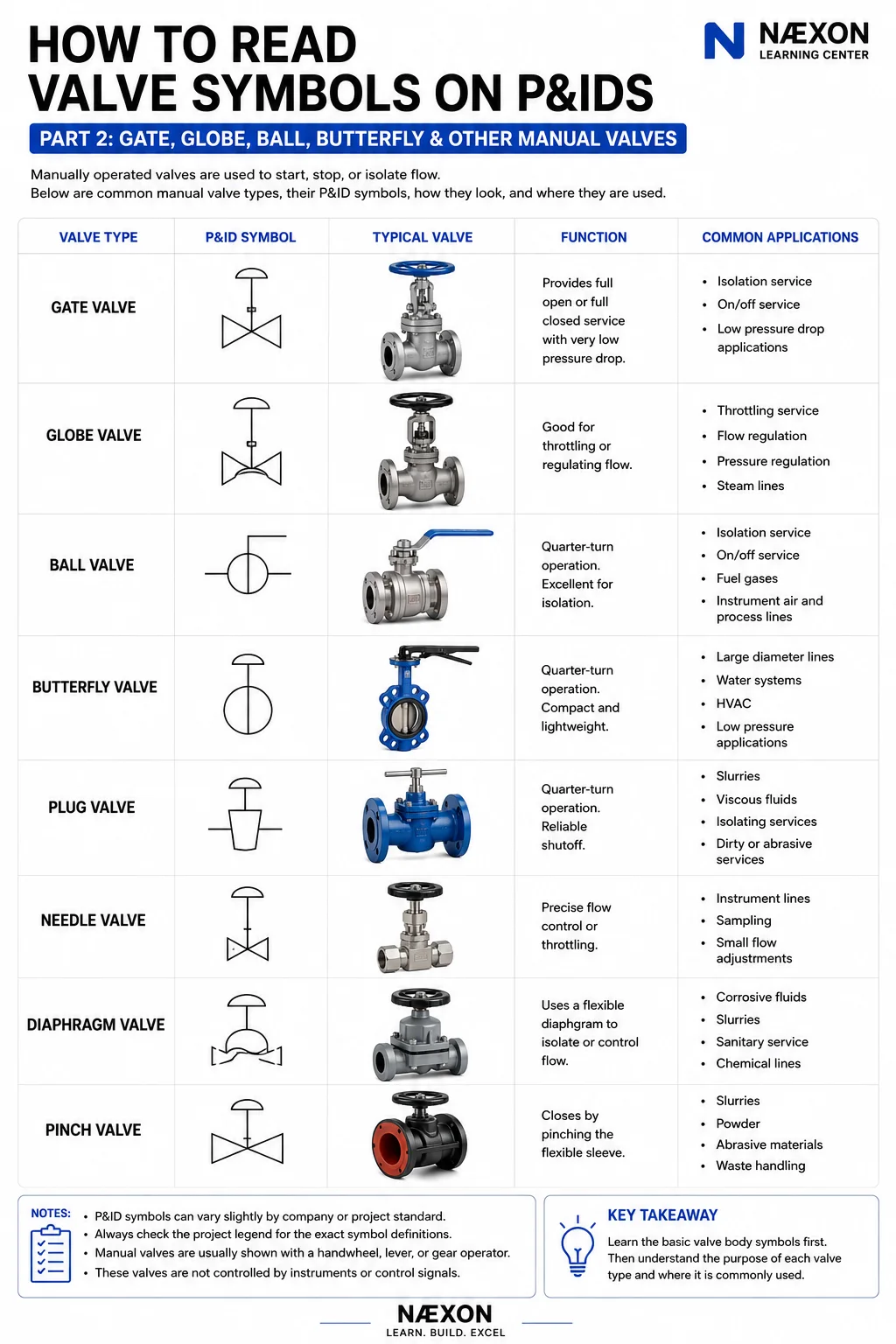
Read article →Part 2 applies a repeatable reading method to common manual valve symbols and their process functions.
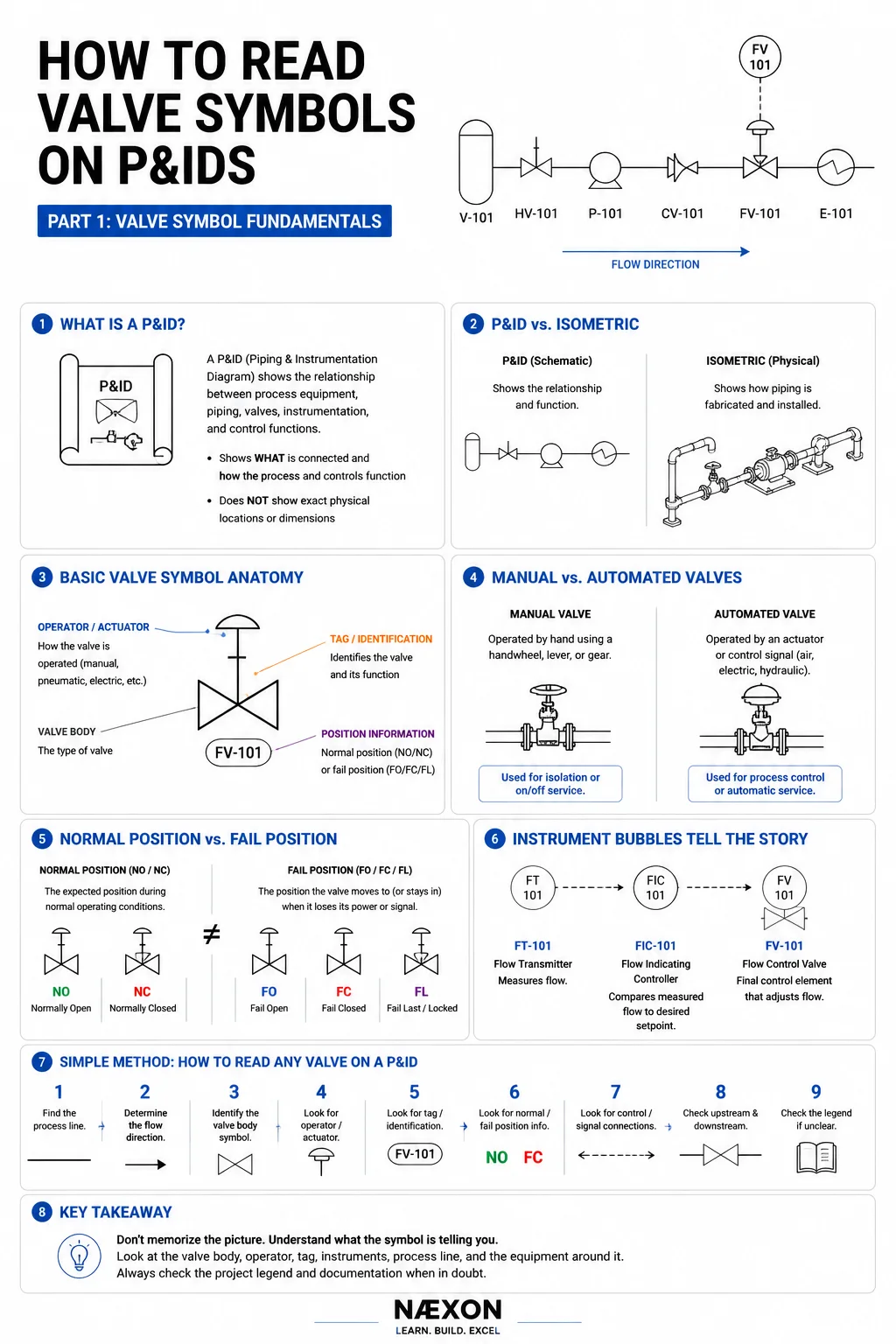
Read article →Part 1 introduces valve-symbol construction and a step-by-step method for approaching unfamiliar P&ID symbols without guessing.
Read article →As verified August 19, 2026, this Career report listed CTR, Trillium, and Turner craft jobs. Confirm current availability, pay, per diem, and terms.
Read article →Experienced refinery workers treat small warning signs seriously because ordinary tasks can escalate quickly when hazards are underestimated.
Read article →Tungsten preparation changes TIG arc behavior. Compare sharper, moderate, and blunter grinds for different welding conditions.
Read article →A chest pocket seems minor until it is used all shift. Practical placement and construction make it part of the work shirt’s function.
Read article →Two-holing places bolt holes equally around the vertical centerline. Basic layout tools can establish that orientation when pins are unavailable.
Read article →