TIG Root Pass Techniques: Keyhole, Lay-Wire, and Dab Methods Explained
A TIG root pass depends on penetration, fusion, heat, and filler control. This guide compares three common approaches for open-root pipe welding.
Read article →NÆXON INDUSTRIES
220 articles
A TIG root pass depends on penetration, fusion, heat, and filler control. This guide compares three common approaches for open-root pipe welding.
Read article →Cup walking uses the ceramic cup for support; freehand relies on hand control. Both can produce sound pipe welds when applied well.
Read article →Compare key Class 150 and 300 flange dimensions and bolt patterns. Verify final dimensions against the applicable standard and project specification.
Read article →Use actual pipe outside diameter to divide the branch circumference and calculate the saddle curve for a branch fitting to a header.
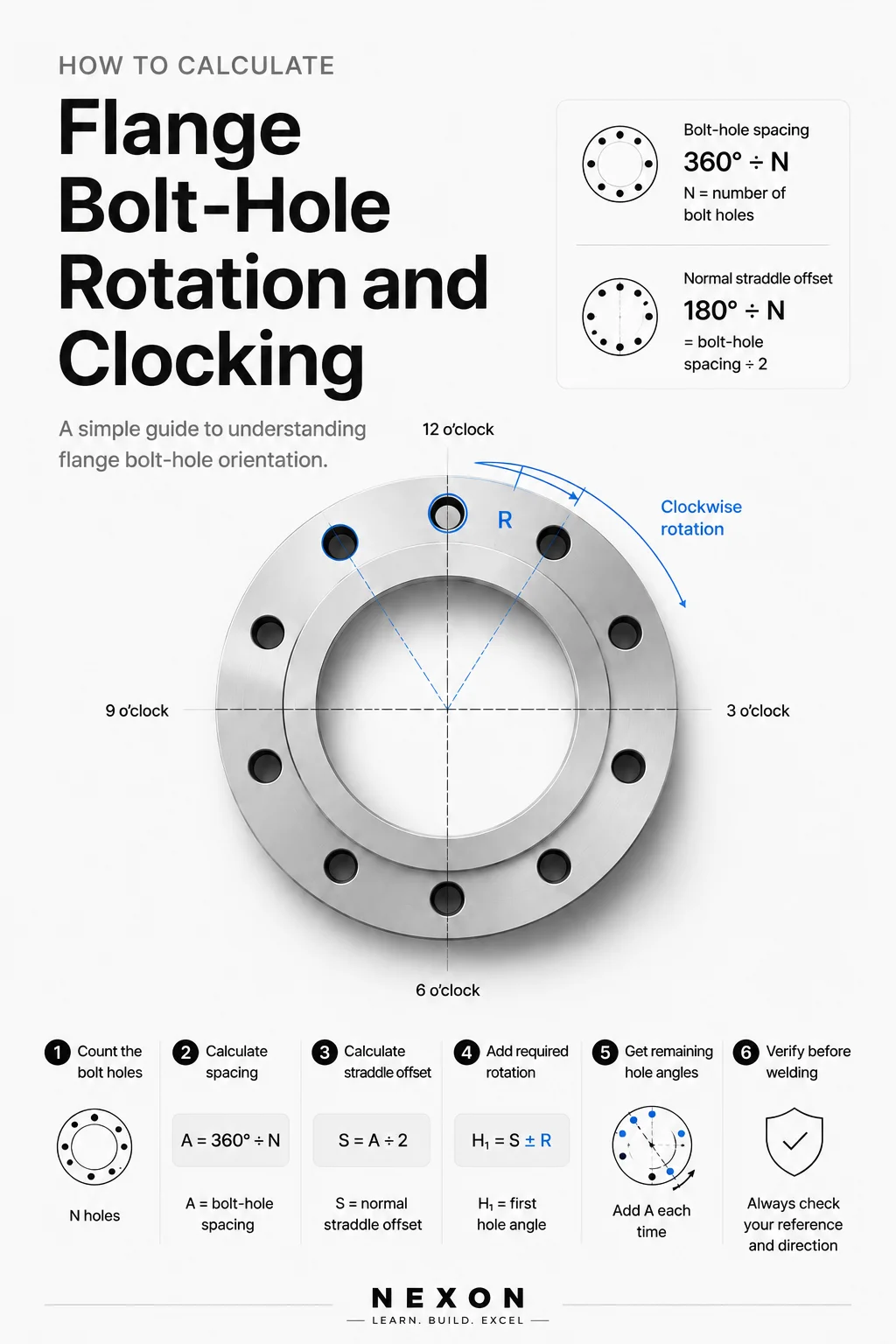
Read article →Flange clocking sets the rotational position of a bolt pattern. Use hole count and a clear reference to calculate spacing and straddle angle.
Read article →Accurate penetration layout starts with trustworthy references. Check centerline, elevation, sleeve size, and nearby conflicts before cutting.
Read article →For a true 45° offset, travel equals set × 1.414 and run equals set. Subtract fitting takeoffs to determine the straight pipe cut length.
Read article →A homemade flange wrench uses two pins and a handle to rotate threaded flanges. Use only approved materials, fabrication methods, and applications.
Read article →A spool can match its drawing and still miss in the field when small deviations accumulate across equipment, steel, supports, and connected piping.
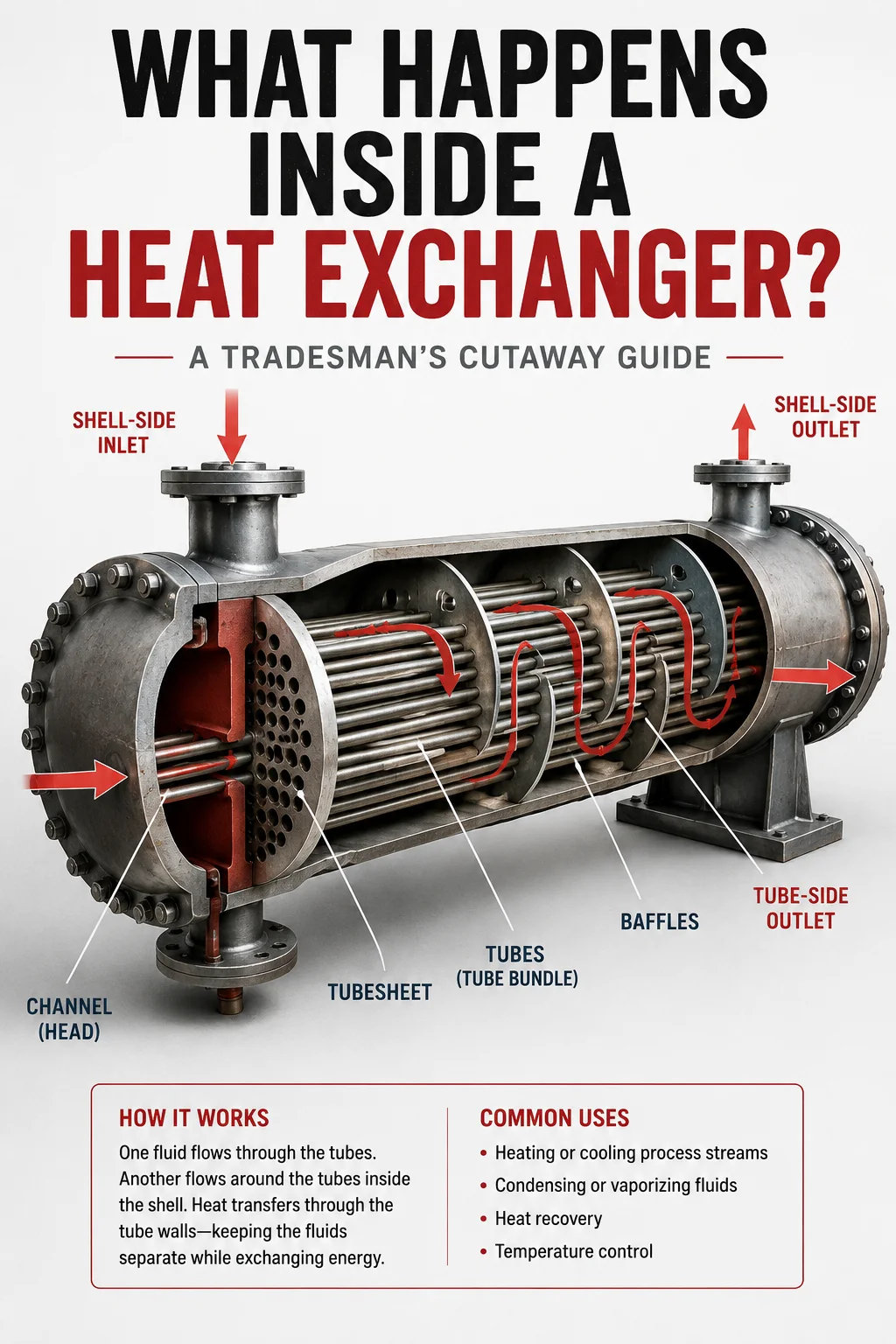
Read article →A shell-and-tube exchanger transfers heat between separate process streams. Understanding each flow path helps explain maintenance and piping arrangements.
Read article →Z87 and Z87+ are not interchangeable markings. This guide explains high-impact qualification, eyewear limitations, side protection, and selecting protection for industrial hazards.
Read article →The Z87 marking connects safety eyewear to the ANSI/ISEA Z87.1 standard. Learn how markings, impact ratings, side protection, lens features, and job hazards affect proper selection.
Read article →