Reading Industrial Elevations: Benchmarks, Datums and Finished Elevations Explained
Understand the references behind industrial elevation marks and how crews verify vertical positions in the field.
Read article →NÆXON INDUSTRIES
220 articles
Understand the references behind industrial elevation marks and how crews verify vertical positions in the field.
Read article →Learn why standardized crane hand signals and a clear signal person help crews coordinate industrial lifts.
Read article →Crane capacity changes with lift geometry. Learn how radius, boom length, and configuration relate to a machine’s load chart.
Read article →A practical guide to laying out structural steel bolt holes from reference lines and drawing dimensions without a template.
Read article →How boiler tube rolling expands a tube against a tubesheet to form a mechanical joint—and what can go wrong when expansion is insufficient or excessive.
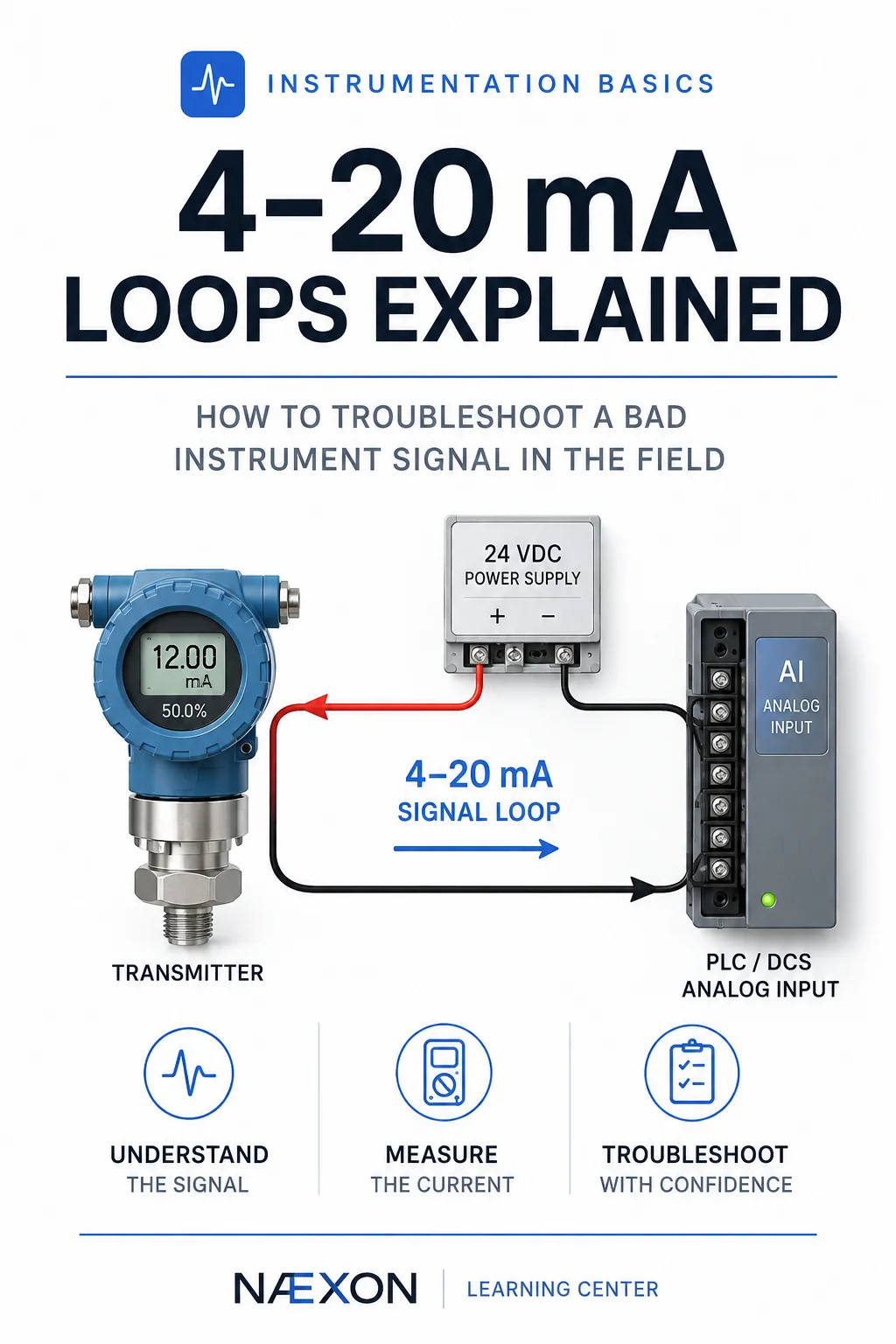
Read article →A field guide to reading 4–20 mA signals and tracing bad readings through the transmitter, loop power, wiring, and control-system input.
Read article →Soft foot can distort a motor or pump when hold-down bolts are tightened. Learn how millwrights identify and correct it before alignment.
Read article →A field guide to laying out pipe dummy legs from BOP, centerline, and TOP dimensions using the correct pipe outside diameter.
Read article →Learn reliable field methods for finding the center of a circle with common layout tools.
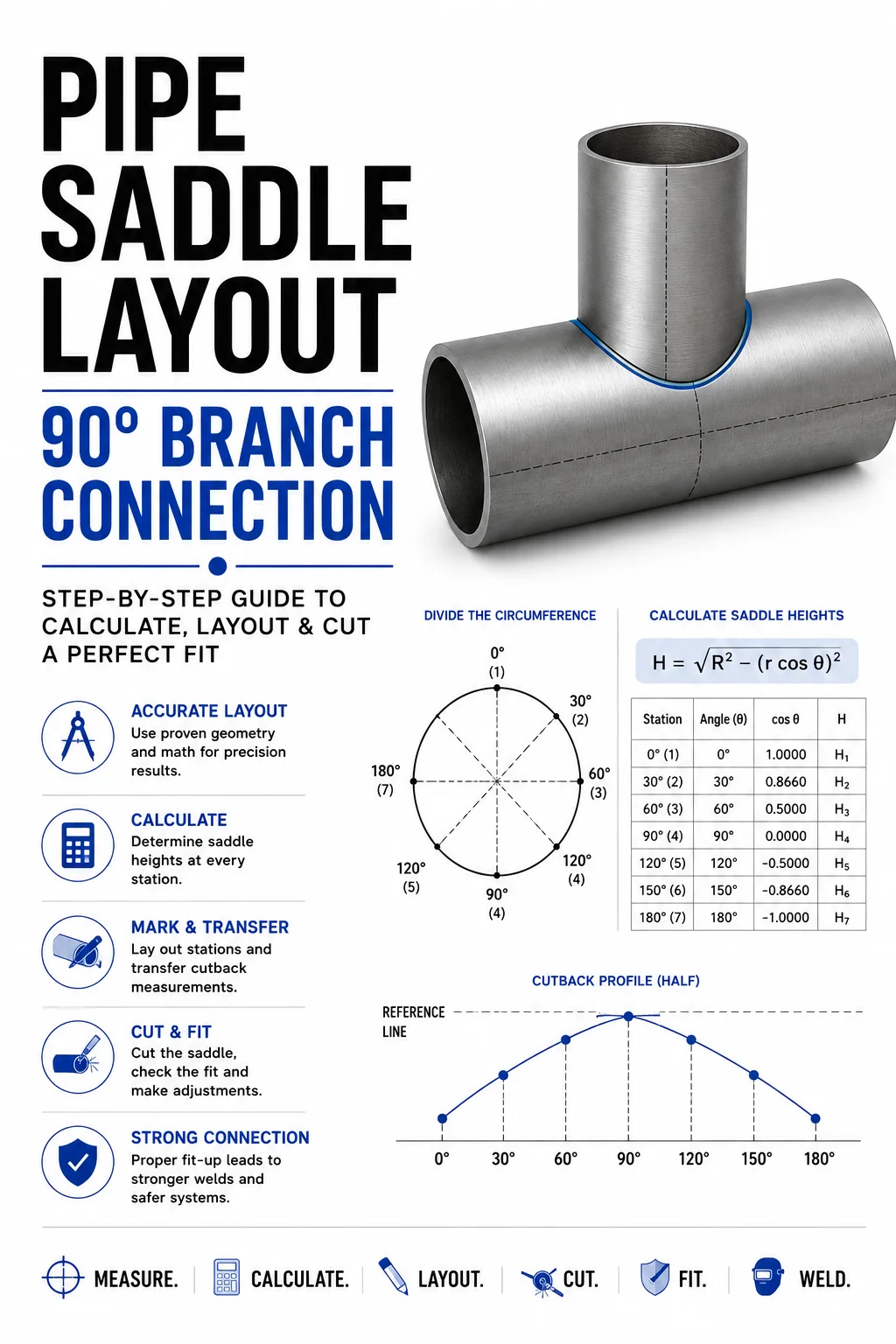
Read article →Understand the geometry behind a pipe saddle and how to lay out an accurate branch-to-header fit.
Read article →Use project benchmarks, elevations, and control lines to set concrete formwork at the correct location and height.
Read article →A field guide to checking column centerlines, base plate orientation, and anchor bolt locations before setting steel.
Read article →